Community articles
AEO 101: How to Make Your SaaS Easier to Find in AI Answers
Answer engine optimization (AEO) means improving your content so answer systems can find, understand, and use it when responding to relevant questions.…
By Uriel Bitton · · 4 min read
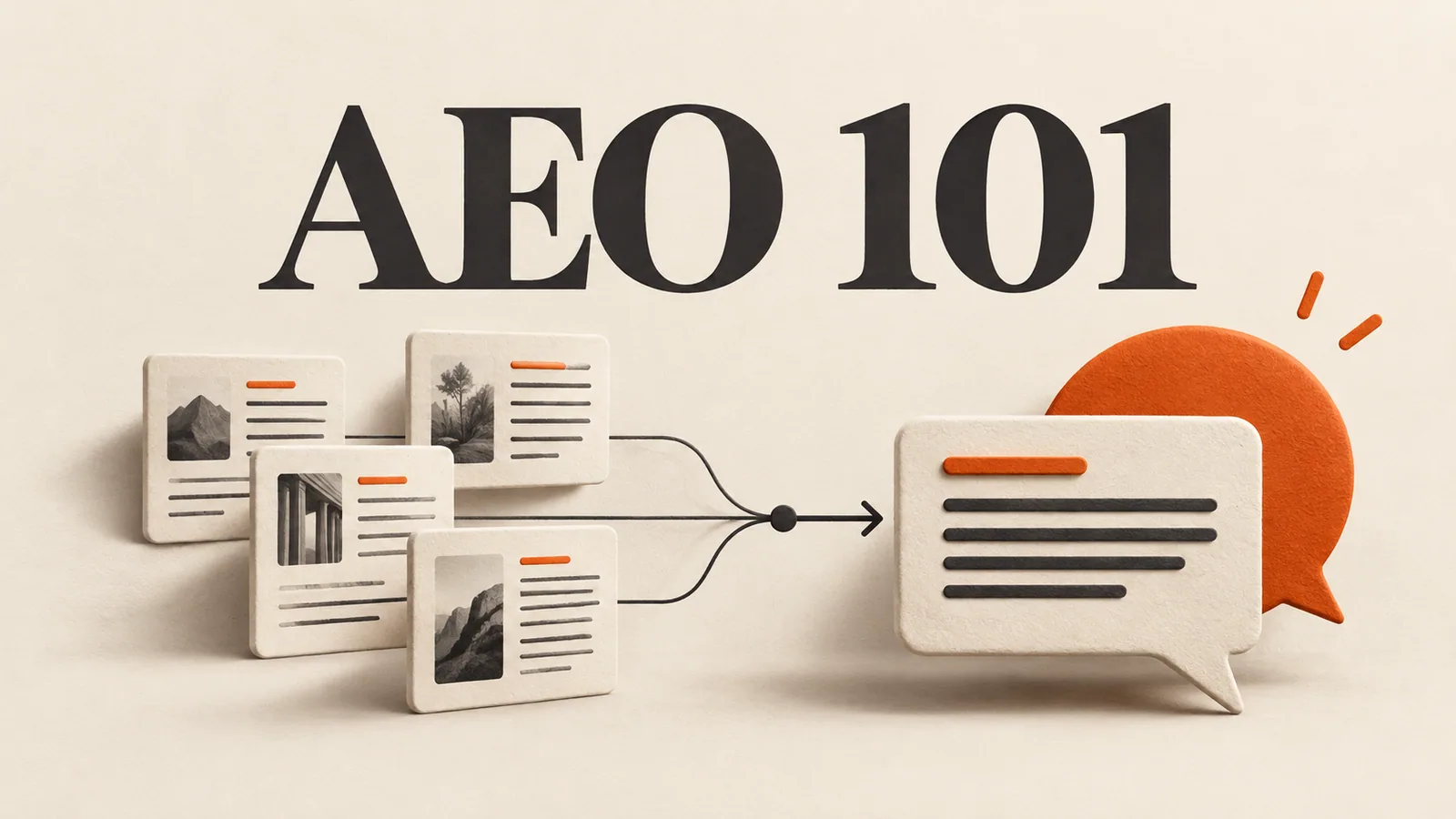
Answer engine optimization (AEO) means improving your content so answer systems can find, understand, and use it when responding to relevant questions. For a SaaS founder, the practical goal is to become a useful source when someone asks about the problem your product solves.
Start with one customer question, a clear answer, and evidence someone can check. That gives you a manageable first experiment and a page that helps readers even if an AI system never cites it.
How does AEO differ from SEO?
Search engine optimization helps people discover your pages through search. AEO focuses on whether your information appears within answers, including AI summaries and responses with source links. The work overlaps: useful content still needs to be accessible and trustworthy.
Google’s guidance says existing SEO practices remain relevant to AI Overviews and AI Mode. It requires no special optimization or dedicated schema for those features. Inclusion is never guaranteed.
Treat AEO as another reason to make your existing pages better.
Which questions should you answer first?
Start with questions people ask before choosing or using your product. Look through support messages, sales conversations, community discussions, and search queries your site already receives.
If you build appointment software, useful questions might include: “How can a small salon reduce missed appointments?” or “What should an appointment reminder include?”
Choose a question you can answer with useful detail. A narrow question gives a small team a realistic opportunity to explain something well.
For your first page, favor a question that meets three conditions: customers actually ask it, your product relates to it, and you can contribute something specific.
What does a useful answer look like?

Put the answer near the top. Follow it with the reasoning, steps, examples, and limitations a reader needs.
Here’s a hypothetical example for that appointment product.
A weak opening says: “Our powerful platform transforms customer engagement.”
A stronger opening says: “An appointment reminder should include the appointment date, time, location, and a simple way to confirm or reschedule.”
The second version gives the reader something usable immediately. The rest of the page could show a sample reminder, explain when each detail matters, and describe how the reminder fits into the booking process.
Add evidence you actually have: a screenshot, a documented experiment, a calculation, or a clearly labeled example. Explain how you reached any measured result. Google’s helpful content guidance explicitly asks whether a page contributes original information or analysis.
A practical editing test: could someone quote your answer accurately without needing three earlier paragraphs? If essential conditions would disappear, rewrite the passage to keep them beside the advice.
Can search systems reach your page?
Clear writing needs a page that can be discovered. Google says a supporting page for its AI features must be indexed and eligible to appear in Search with a snippet.
Check that your important pages are public, linked from relevant pages, and available as readable text. Look for accidental indexing restrictions. Keep titles descriptive and any structured data consistent with what visitors can see.
These checks establish eligibility. They don’t establish that an answer system will choose your page.
How should you measure progress?

Use a small, repeatable experiment. Write down ten questions a likely customer might ask. Sample them regularly in the answer tools your customers use, recording the date, question, cited pages, and whether your brand appears.
Treat those observations as a dated sample of your answer visibility. Repeat the checks before drawing conclusions.
Track identifiable referral visits and useful actions, such as trial signups or demo requests. A mention can be encouraging, but your business needs evidence that the attention reaches suitable customers.
Your first AEO task
Pick one existing page this week. Rewrite its opening to answer one customer question. Add a concrete example, check its claims, and link to it from a related page.
Ask a customer whether the revised page answers their question before expanding the experiment.
Save the original version and record what you changed. Review discovery and customer outcomes over time, allowing for other changes that could affect results.
For founders building in public, that creates something worth sharing: a clear question, a useful answer, and an experiment others can learn from.
If you're serious about ranking on Google and getting recommended by AI, try honeywerank.com now.