Community articles
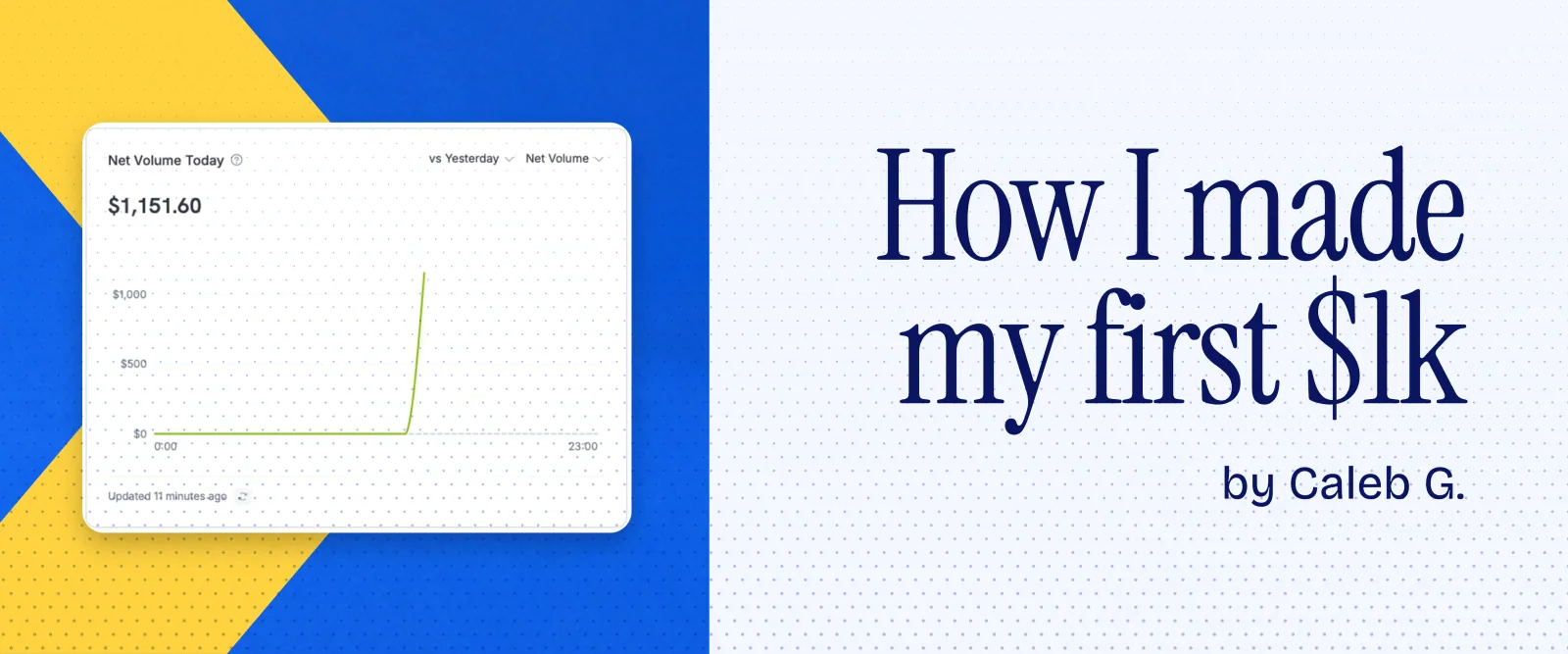
How I made my first $1k
The Struggle I spent years building apps, hoping to earn some income from them, with little to no success. In about four years, I made a whopping total of…
By Caleb G. · · 5 min read
0
The Struggle
I spent years building apps, hoping to earn some income from them, with little to no success. In about four years, I made a whopping total of ~$30. Actually, that was just two sales of my daisylanding.com app.
With every new app idea, I was convinced this would be the one that took off. I'd spend two weeks building it, ship it, and then discover that no one wanted or needed it. It was demoralizing. I had spent two weeks getting hyped up about a dream that was never anything more than a dream.
I would also brainstorm with AI, asking what it thought of each idea and how well it might do. For several of them, it told me the idea would be a success because it met a real need. That made me even more excited about finally succeeding, until I learned the same hard lesson again: no one wanted it.
The Breakthrough
One day, I was showing a friend an app I was working on when he asked whether I could build one for the construction company he worked for. He gave me a basic brief, just enough to get started, and I agreed. That was the day Cordolo (cordolo.app) was born.
About a week later, I sent him the link to the first prototype. He liked it and gave me more feedback. I kept making changes and adding features, and a week after that he showed it to his boss, who was impressed and excited about the project. Another two weeks of feedback and revisions followed, and then we set up a video call with my friend, his boss, and me.
My legs were shaking the whole meeting, but by the end they had bought the lifetime plan on the spot. I was thrilled!
The Lessons Learned
For years, I built apps I thought people needed, not what they actually needed. I was building for the ideal customer in my head, not for real people. I kept launching app after app, hoping to finally succeed. It was the shotgun approach: spray in every direction and hope something hits. All of it was based on hope, not reality.
If you want to build apps that actually help people and succeed, build them with the people you're building them for. Find someone, whether a friend, a family member, or a stranger online, and ask questions to see whether there's an opportunity to solve a real problem for them. If there is, start brainstorming together. Once you have enough information, build a prototype as fast as you can, let them try it, and keep going back and forth until it meets their needs.
As you add features, don't just add what you think is “cool” or what you assume will fix a problem they might have. Find out what their pain points really are, then build the features that solve those problems and the things they ask for.
Speed of delivery
Speed matters for two reasons.
First, if the person is excited about the product, as my friend was, you don't want to take weeks or months to deliver each update. By the time you finish, their excitement may have faded, and they may not want to continue at all. The more excited a potential customer is, the more likely they are to buy.
Second, speed builds confidence in you and your product. When customers see the changes, fixes, and additions they asked for show up quickly, they trust you (the founder) and the product more. No one wants to wait weeks or months for a bug fix or a requested feature. The more confident people are in you, the more likely they are to buy.
Personalization
If you can, personalize the app for the person you're building it for. Think of it like building a house: you don't build it the way you think looks and feels nice, you build it to the liking of the person who will live in it. The same goes for apps. Build them for the people who will actually use them, not for your own taste.
Value
At the start, my friend, and his boss thought the price was a little high for the value the app offered. So I built many more of the features they requested, and a few extras, and by the end they thought the price was far too low for what they were getting. Make sure the price matches the value. That means the value your customer sees in it, not the value you think it has. If they think the price it too high, then either lower the price or up the value.
Conclusion
If you want to succeed with your apps, build them for real people.
Find a person or a group of people and ask questions to see whether there's an app idea that would solve their problems.
Get a brief from your potential user.
Build the MVP (the smallest, simplest version of the app) as fast as you can and put it in their hands. A few bugs are expected, but make sure it's usable.
Make changes, fixes, and additions quickly so the customer's excitement and confidence stay high.
Personalize it as much as you can to the tastes of the people who will use it.
Price it at or slightly below the value your customers believe it offers.
I hope this helps you find success sooner than the shotgun approach did for me.