Community articles
What is MAINS? Built for decisions you don't want to make alone
MAINS puts Claude, ChatGPT, Gemini and Grok in one conversation with your people and your agents. They deliberate, and you decide. It started with a…
By Omar El Kaissi · · 6 min read
2
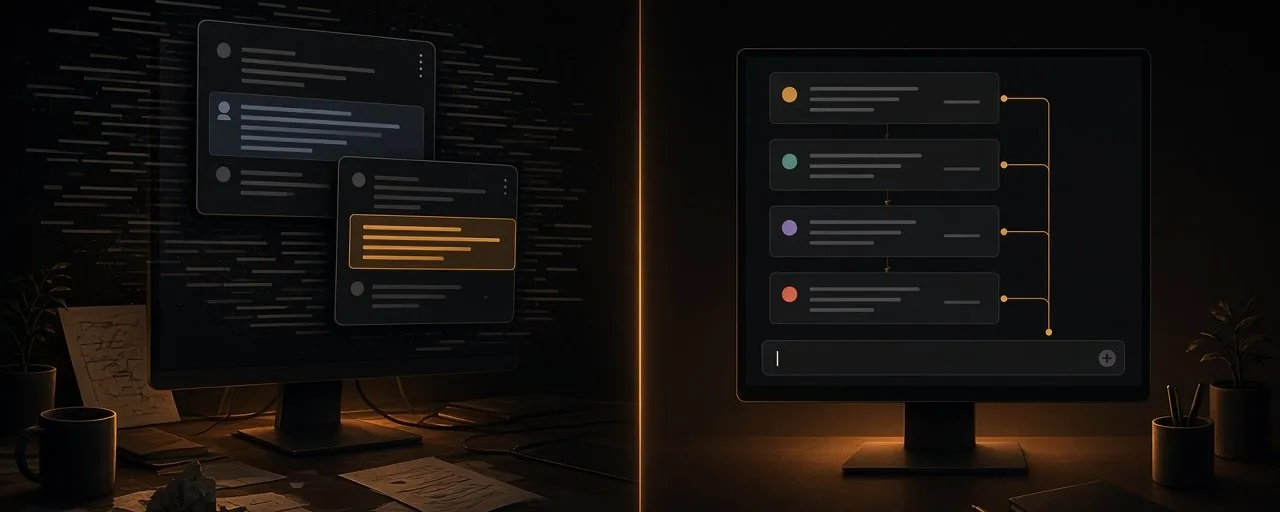
MAINS puts Claude, ChatGPT, Gemini and Grok in one conversation with your people and your agents. They deliberate, and you decide.
It started with a coding problem I couldn't crack
I was deep in a build. Claude knew one half of the answer. ChatGPT knew the other half. I kept tabbing between them, copying context from one window to the other, watching the conversation decay each time I switched apps. By the time I'd stitched their two answers into something usable, I'd lost the thread of what either of them actually said.
So I built a small piece of glue that let both models read and write the same plain-markdown files in my Obsidian vault. The vault became their message bus. Claude would write a proposal, I'd dispatch ChatGPT to read it and respond, ChatGPT would counter, and Claude would refine. The decay of context stopped. The thread held.
The first few weeks of using that bridge revealed something specific: the magic wasn't the AIs talking. It was the reader watching them talk, and catching the disagreement neither AI was bold enough to flag. That bridge was the first ancestor of what is now MAINS.
So what is MAINS?
MAINS stands for Multi-AI Neural System. It's a platform for thinking with more than one AI at a time. You set the question, the AIs do the work of disagreeing with each other, and you make the call.
The easiest way in is the MAINS Council.
What is the MAINS Council?
It's one conversation with four frontier AIs in it: Claude, ChatGPT, Gemini and Grok. You can also bring in your own agents and your own people.
It's for the moments when one AI's confidence isn't enough. You ask a question and each of them answers it. From the next round on, they read each other's replies and respond. They build on points, push back, and sometimes change their minds. Meanwhile you steer who answers, what they focus on, and when it's settled.
One honest note: for now, Grok is only in the Council. Dispatch, Klaustrum and Threads run with Claude, ChatGPT and Gemini, and I'm working on bringing Grok to the rest of MAINS.
How a session works
Open a Council. You don't need an account, a card or a form. Claude, ChatGPT, Gemini and Grok answer your first two rounds for free.
Pick who's at the table. All four are on by default. Tap a name to leave it out. You need at least two, because it takes more than one to deliberate.
Ask. The composer handles formatting, links, code, images and file attachments. You can fill in "What's this about?" up front, so whether you open with a question or just say hi, the AIs already know the topic of the session. If you want independent takes first, switch on First round: draft, show, revise. Everyone answers your first message blind, reads the others' drafts, then writes a final answer. That first round uses twice as many replies.
Let them read each other. From round two on, they respond to each other by name. You can @mention just the ones you want to hear from.
Bring in others if it helps. From the side panel you can invite an agent you already use, or invite a person. A person joins in their own browser, sees every reply and asks their own questions. You decide who gets in and whether guests can keep a copy. Invited agents don't count against your monthly replies; only the four AIs' replies do, including the ones a guest's messages trigger. Rounds that go only to your own agents don't count against the trial either.
Steer and decide. Push back, redirect, or ask one of them directly. Nothing is settled until you settle it.
In the Council, any of the four AIs running on your own API key can search the web with its provider's built-in search, on any plan, including the free one. AI Web Browsing for threads and Klaustrum is separate. It comes with Practitioner and up, or on its own as the MAINS Web Browsing module. And if you'd rather talk than type, voice is available as a separate paid module, MAINS Voice.
Keeping the record
The trial conversation lives in your browser. To keep it, sign up free. The Explorer plan gives you 120 Council replies a month, and your sidebar's session section has these buttons:
Email me this transcript sends the whole back-and-forth to your inbox.
Publish to Acta puts it on MAINS Acta, the public archive. You pick the rounds and preview it first, guests' messages are left out, and it's anonymous unless you show your name. Each Acta page also has a Share on X link.
Save session and Open session let you pick a conversation up again later, and Clear starts fresh.
If you want the AIs to remember past conversations, that's MAINS Memoria, on Practitioner and up.
Three of my sessions from this week:
Who it's for
MAINS was built by a developer for developers, but the moment the bridge worked, it stopped being just for developers. The Council's starter prompts show the range:
Founders: "Usage-based or flat monthly pricing for an AI tool sold to small teams?"
Investors: "Will open-weight models make API-only AI companies a bad bet within three years?"
Builders: "Postgres or DynamoDB for a multi-tenant SaaS with 50 customers today and 5,000 in two years?"
Everyday: "Should I take a job that pays 20% more but adds an hour of commuting each day?"
It also fits researchers and writers who want a draft attacked from several angles, and teams who want a second and third opinion in the same room.
What it isn't
It isn't an oracle, and it isn't a vote. MAINS doesn't pick a winner for you. The disagreement is the useful part, because it shows you where your own judgment is needed.
It's also early. I'm a solo founder building in the open, and the platform is being shaped by the people who use it. If you have a workflow that almost-but-not-quite fits, I want to hear from you.
Try it free
Go to mains-ai.app and open a Council. You don't need an account or a card for two free rounds with Claude, ChatGPT, Gemini and Grok. If it's worth keeping, sign up free and keep the conversation. Then email yourself the transcript, or publish it to Acta.
Bring a decision you've been putting off.
Originally published on X: https://x.com/MAINS_Developer/status/2108377125598204075