Marketing tools
Crumbr
Crumbr automates your blog posts and continuously leads how to write better.
- Category
- Marketing tools
- Stage
- Beta
- For
- Solo founders
About
Crumbr writes posts that don't read like a robot, publishes them on your domain, then shows which ones actually brought customers.
Features
- Problem
- Founders do not know which subjects are worth writing about.
- How it works
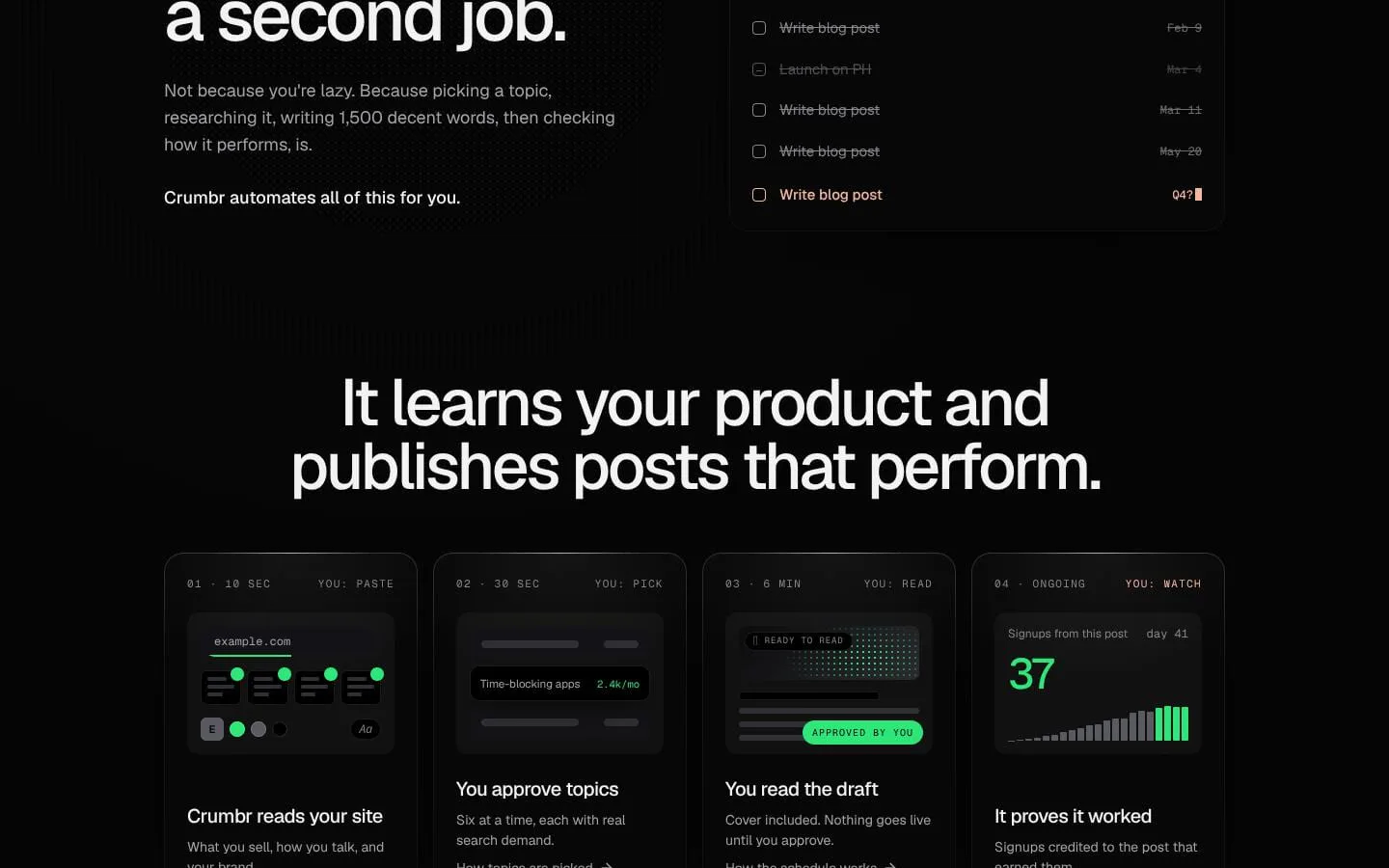
- Crumbr scans the site, search research, competitors, and Google Search Console to propose topics with search demand and business context; founders approve or dismiss them.
- Result
- A founder gets a queue of approved, relevant post ideas rather than starting from a blank page.
- Why
- Topics are matched to what the business sells and what people search for.
- Problem
- Writing and publishing regularly is difficult to sustain.
- How it works
- Crumbr creates 1,200–2,000 word drafts, cites sources, schedules work around selected publishing days and timezone, and publishes only after approval.
- Result
- A branded blog can maintain a publishing rhythm without automatic publishing.
- Why
- The founder retains editorial control while the recurring production workflow is automated.
- Problem
- AI-generated content can sound generic or make unsupported claims.
- How it works
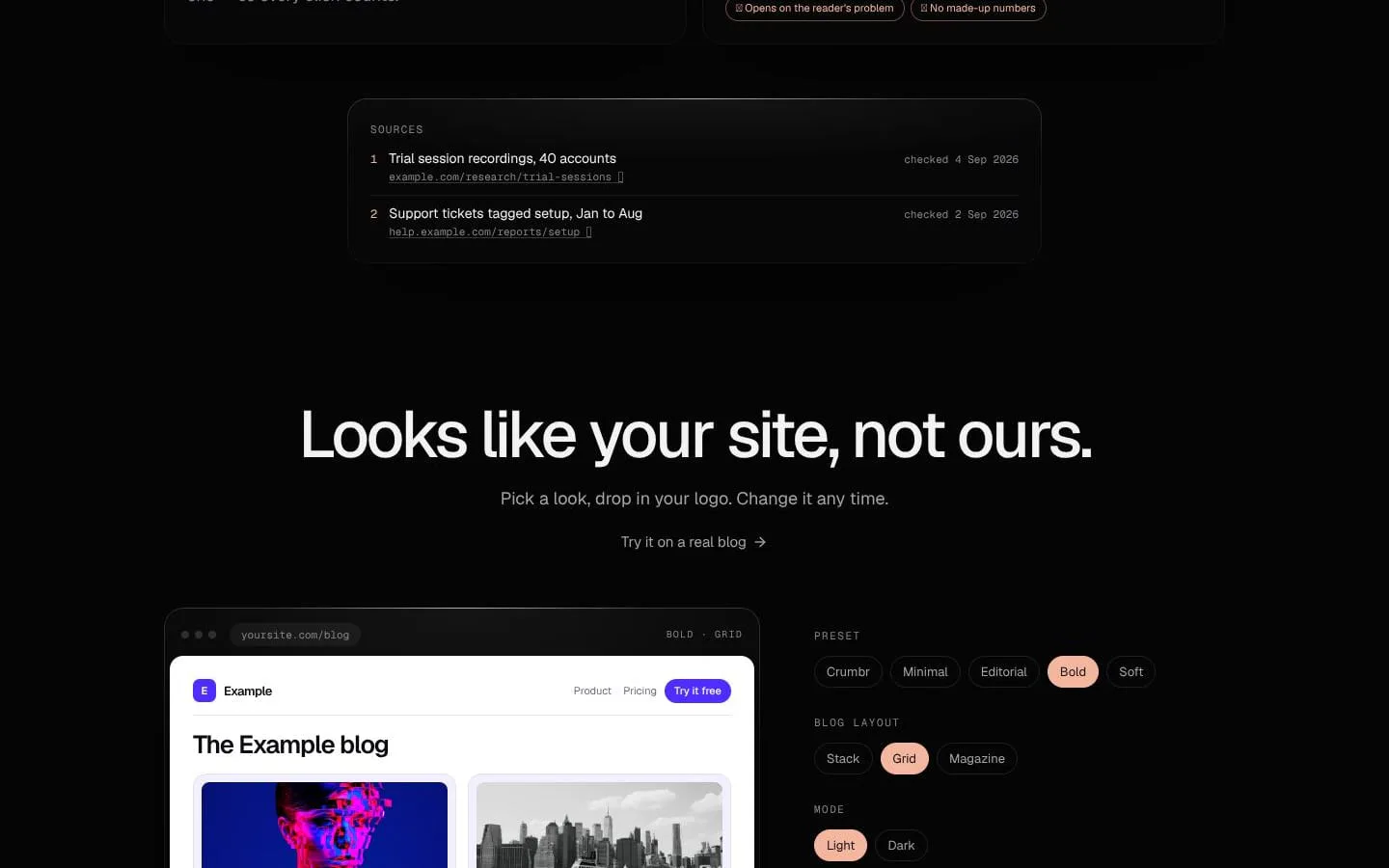
- It learns tone from the founder’s site and edits, uses researched sources with checked dates, and provides an editor for every draft.
- Result
- Posts can be reviewed, changed, or discarded before they are public.
- Why
- The product is designed to avoid stock phrasing, unsupported numbers, and writing that does not match the brand.
- Problem
- Hosted blogging platforms can dilute brand consistency and domain ownership.
- How it works
- Crumbr renders and hosts a configurable blog at a customer-controlled subfolder or subdomain, with layouts, fonts, colors, logos, covers, share images, and custom CSS.
- Result
- Founders get a customizable, branded blog while retaining their URLs and the ability to export posts as Markdown.
- Why
- Posts should look like part of the existing site and build search authority on the customer’s domain.
- Problem
- Blog metrics often stop at traffic and do not reveal business impact.
- How it works
- A cookie-free script measures views and readers; Google Search Console data supplies search metrics; a server-side signup event traces conversions back to the originating post.
- Result
- Founders can see which posts generated signups rather than optimizing for pageviews alone.
- Why
- Traffic and Google metrics are kept alongside post-level signup outcomes.
- Problem
- A blog does not improve if performance insights are not fed back into content decisions.
- How it works
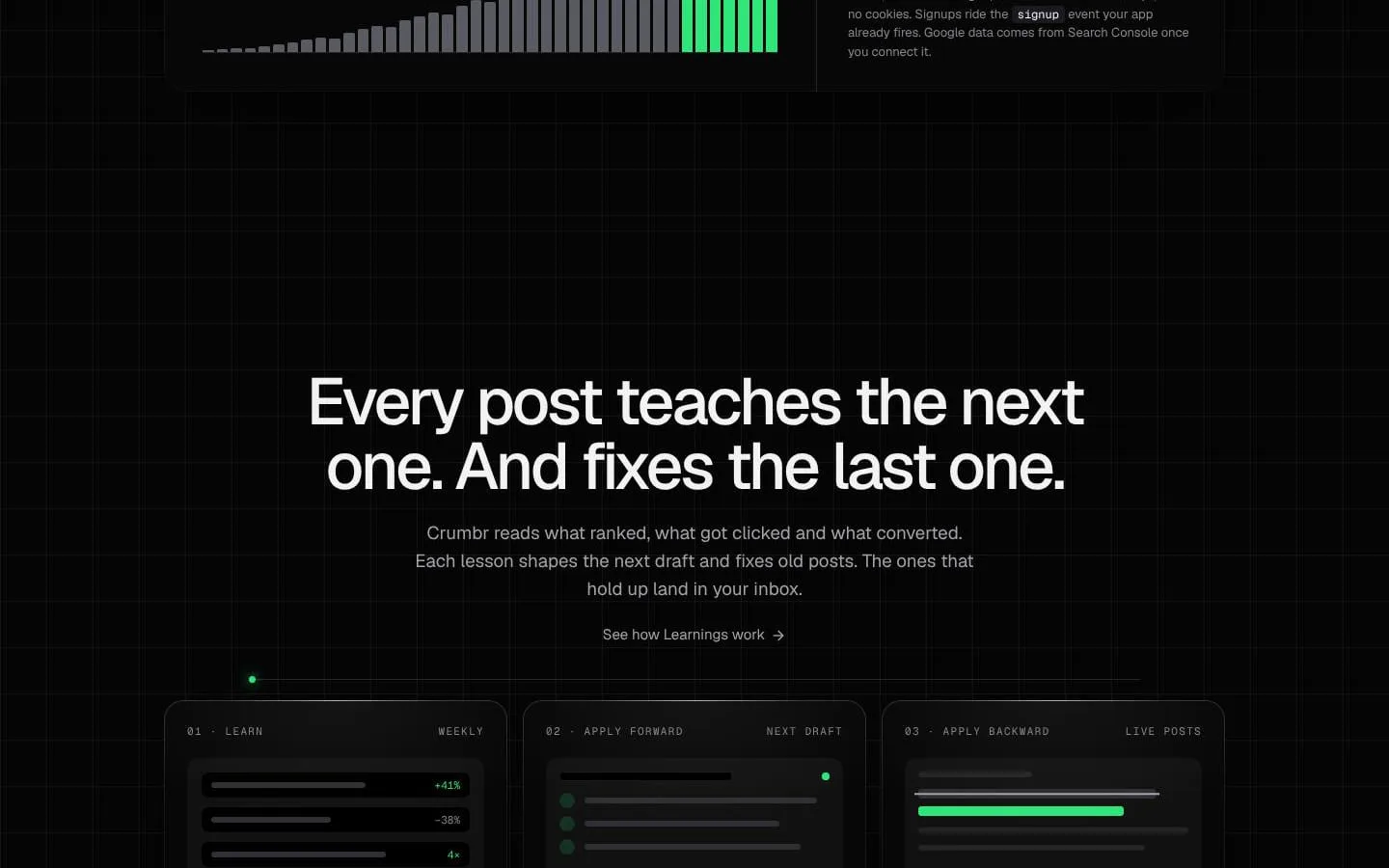
- Crumbr classifies learnings from search, reader, signup, and founder-edit data, applies confirmed patterns to new drafts, and proposes approval-gated changes to live posts.
- Result
- New and existing content can improve based on results specific to the founder’s blog.
- Why
- Hypotheses are tested before they become writing guidance, and ineffective learnings remain visible.
Screenshots