Education
PRISM
Interactive System Design Simulator
- Category
- Education
- Stage
- Growth
- For
- Engineers preparing for system design interviews and anyone who wants to understand how real systems behave as traffic grows or components fail.
About
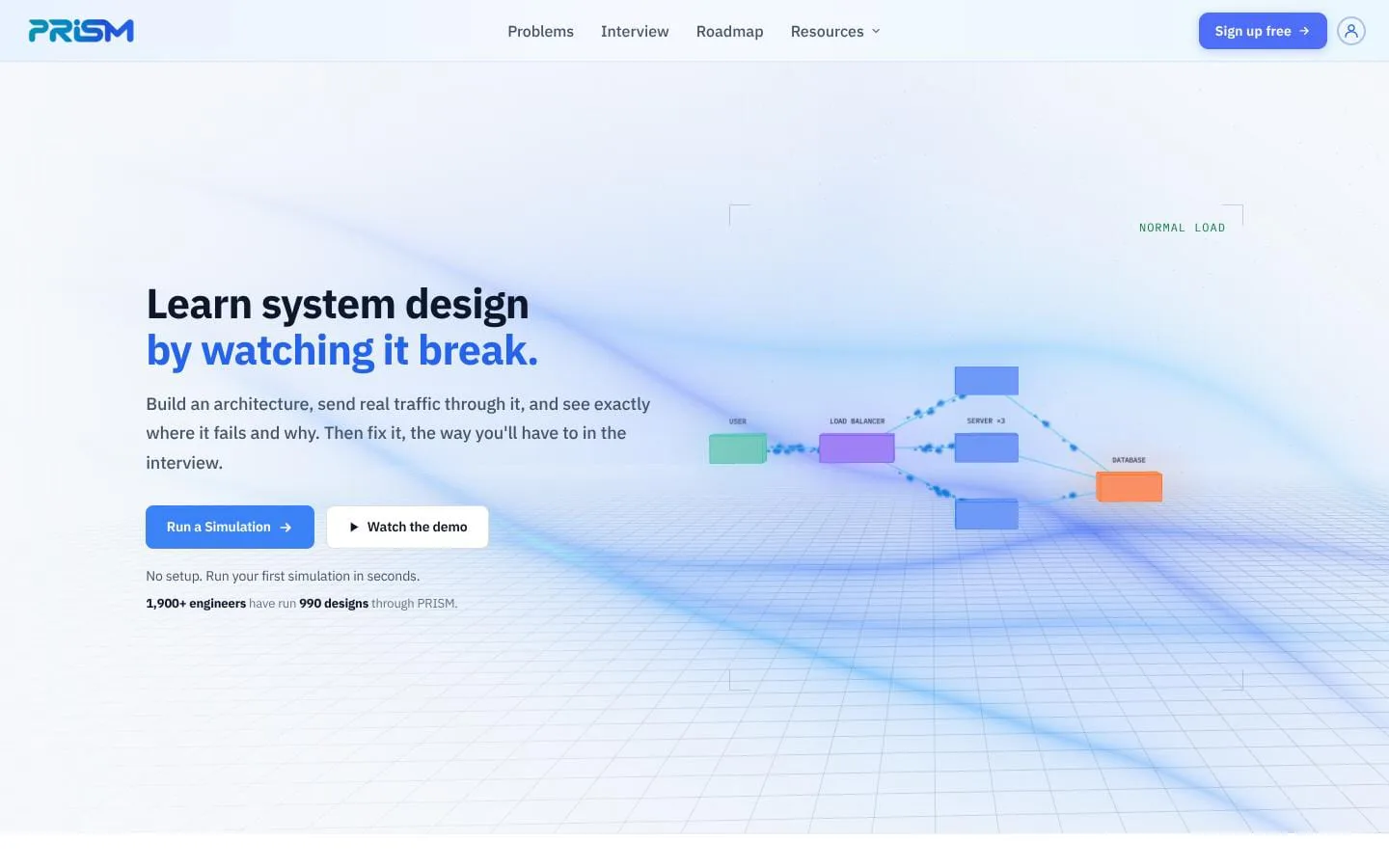
Build scalable distributed systems, simulate real traffic, find bottlenecks and cascading failures, before your interviewer does. Free interactive practice.
Features
- Problem
- A static architecture diagram cannot show how requests behave as traffic moves through a system.
- How it works
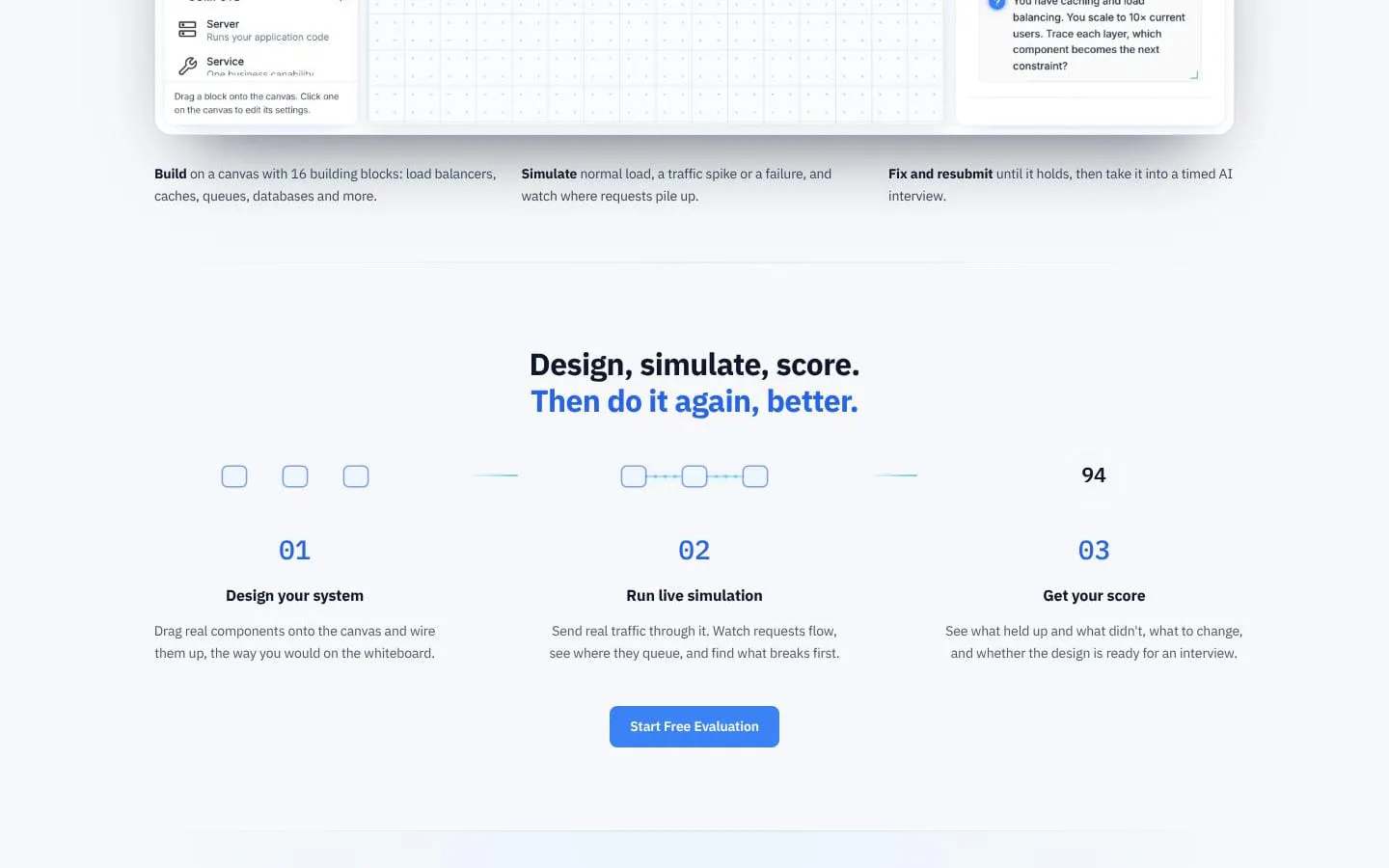
- Users build and connect system components on an interactive canvas, then simulate normal load, traffic spikes, or component failures.
- Result
- Users can see what breaks first and test whether a redesign holds up.
- Why
- Running the design makes request flow, queues, and bottlenecks visible.
- Problem
- Learners may not know which architectural choices caused poor performance or reliability.
- How it works
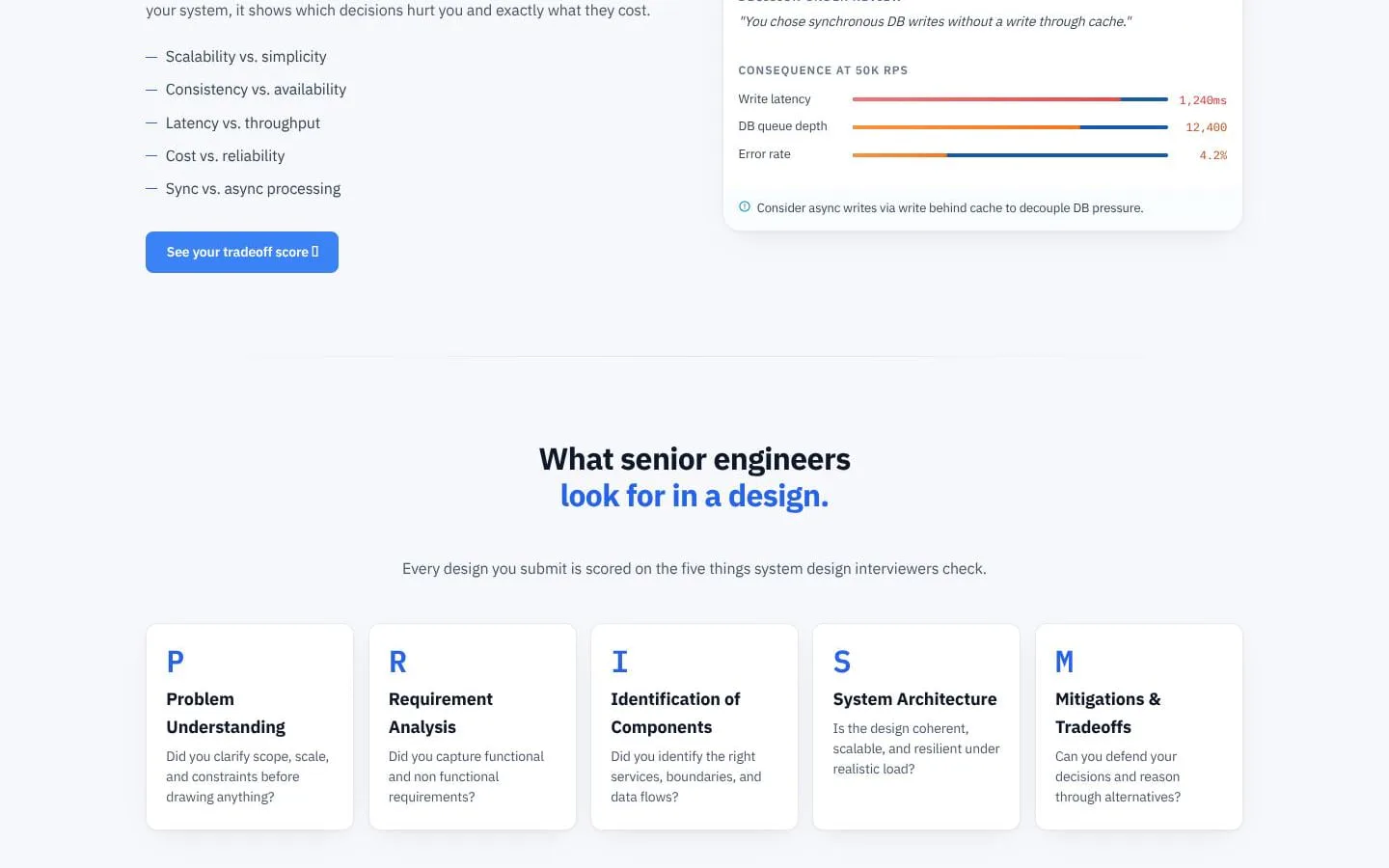
- PRISM presents failure scenarios and tradeoff examples with consequences such as latency, queue depth, error rate, and downtime risk.
- Result
- Users can identify costs and alternatives, then revise their design.
- Why
- Concrete consequences help connect design decisions to system behavior.
- Problem
- Interview preparation needs feedback against more than a single high-level architecture.
- How it works
- Evaluations cover architecture design, requirements, multiple-choice questions, and tradeoff analysis, with an AI-generated report.
- Result
- Users receive interview-style assessment and written feedback.
- Why
- A structured evaluation reflects multiple dimensions of system design interviews.
- Problem
- Practising failure diagnosis from scratch can be difficult without realistic scenarios.
- How it works
- Design & Fix presents live-system incidents for users to investigate, change, and run again.
- Result
- Users practise tracing failures to design causes and validating fixes.
- Why
- Incident exercises provide focused practice in diagnosing and fixing system problems.
- Problem
- System design concepts and interview questions can feel disconnected from hands-on practice.
- How it works
- A five-phase roadmap pairs concept learning with architecture building and testing; the problem library includes designs across difficulty levels.
- Result
- Learners can move from concepts to practical design exercises.
- Why
- A guided progression connects fundamentals to increasingly complex systems.
Product questions
What does PRISM do?
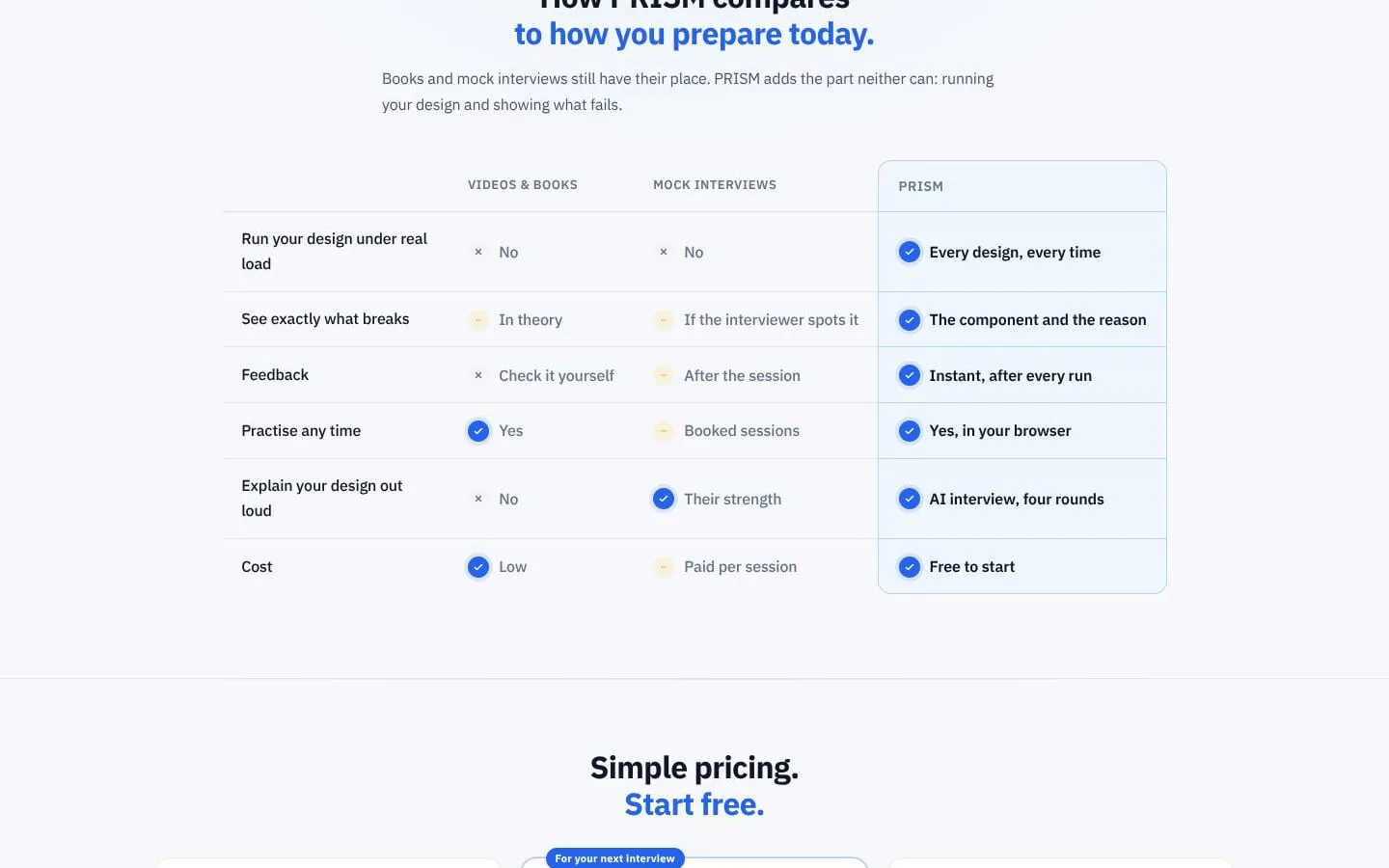
PRISM is a browser-based system design simulator for building architectures, sending simulated traffic through them, and seeing where they fail. It also offers guided learning, design evaluations, incident exercises, and timed AI mock interviews.
Who is PRISM for?
Engineers preparing for system design interviews and anyone who wants to understand how real systems behave as traffic grows or components fail.
Screenshots