Cloud infrastructure
Uptimepage
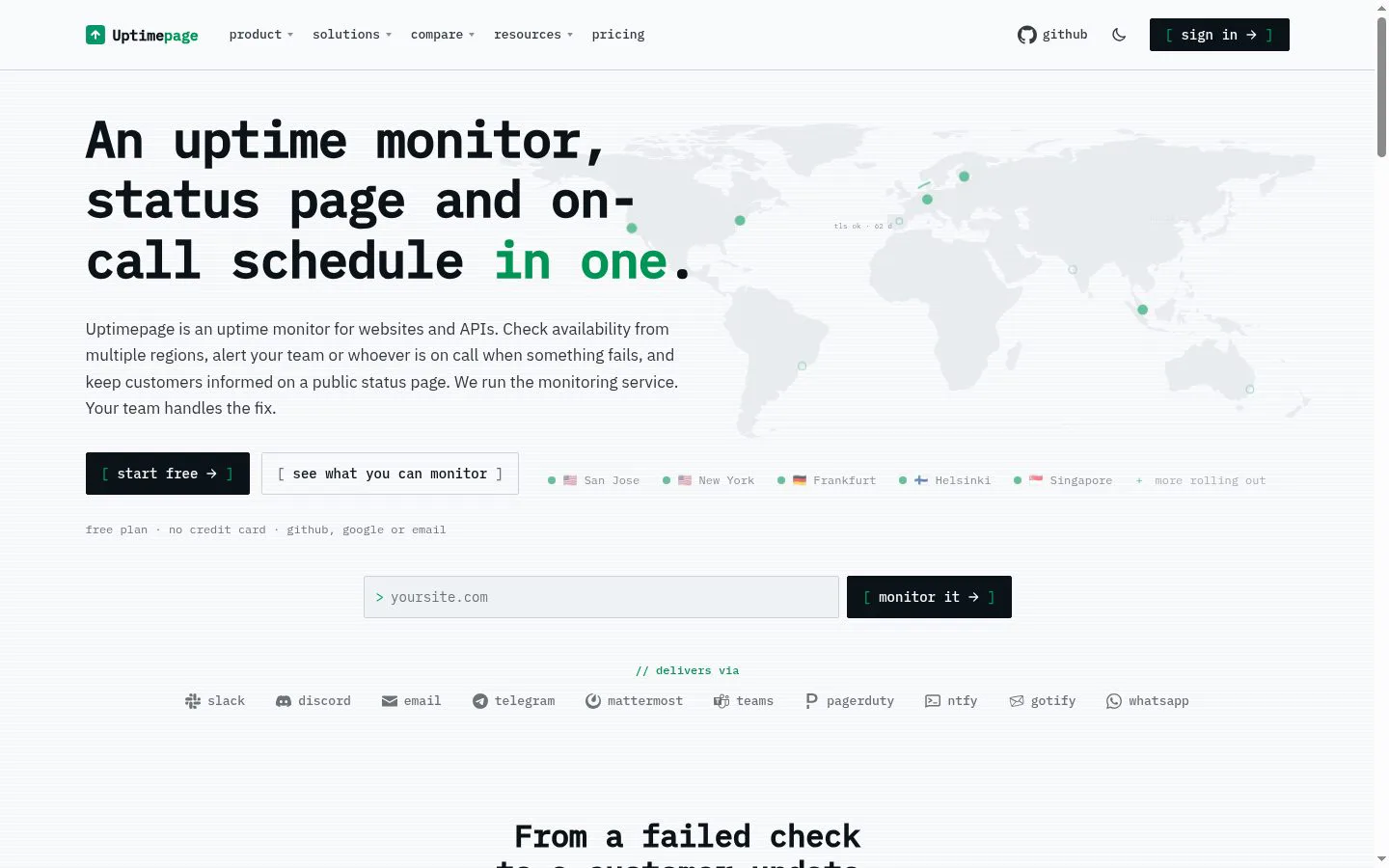
Monitor websites and APIs, alert your team, and keep customers informed with hosted status pages.
- Category
- Cloud infrastructure
- Stage
- Beta
- For
- SaaS teams, platform and SRE engineers, operations teams, and agencies managing client services.
About
Hosted uptime monitoring for websites and APIs, with multi-region checks, on-call rotations, incidents, and public status pages. Start free; open source.
Features
- Problem
- A basic page check can miss failures in APIs, dependencies, scheduled jobs, or certificates.
- How it works
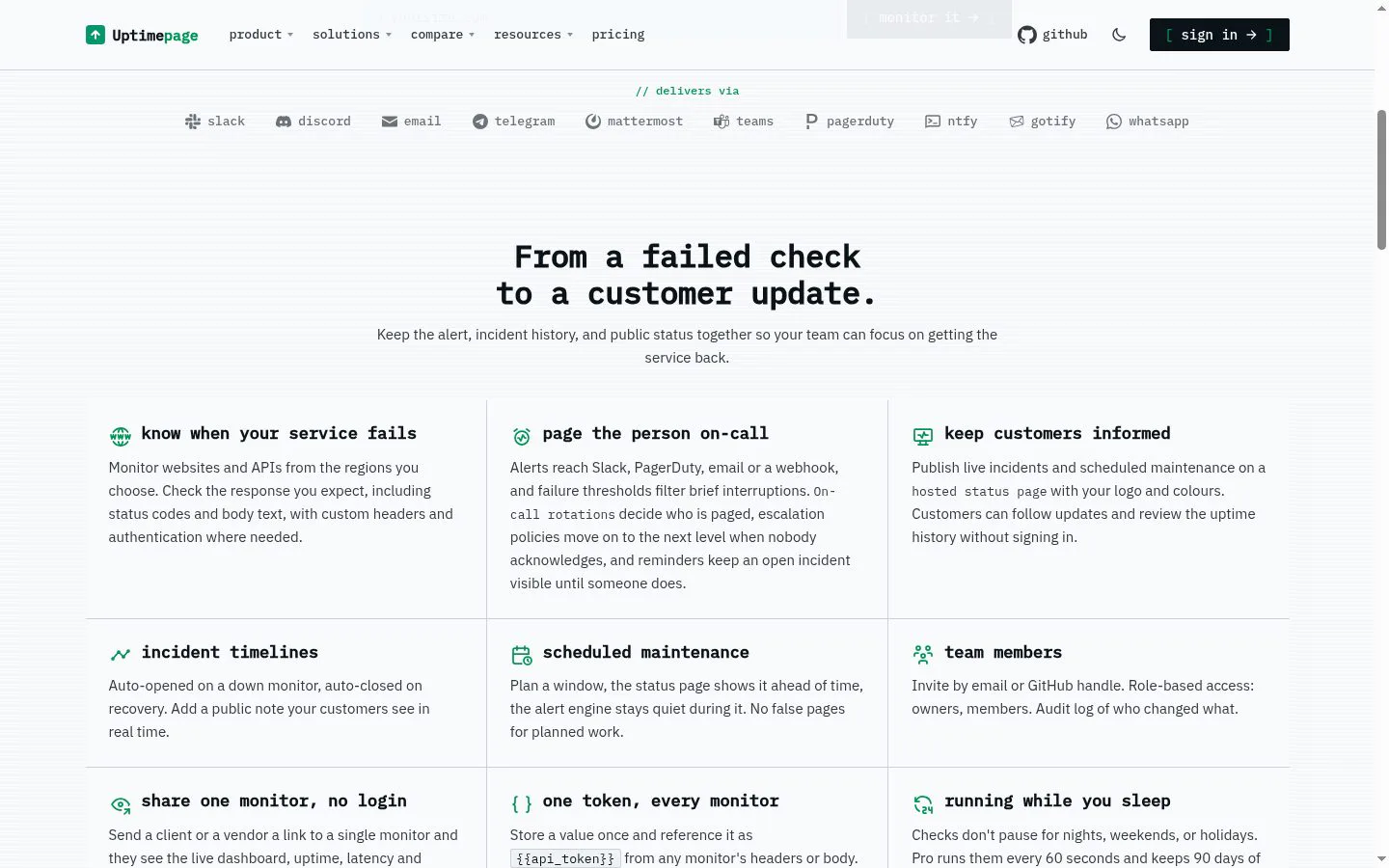
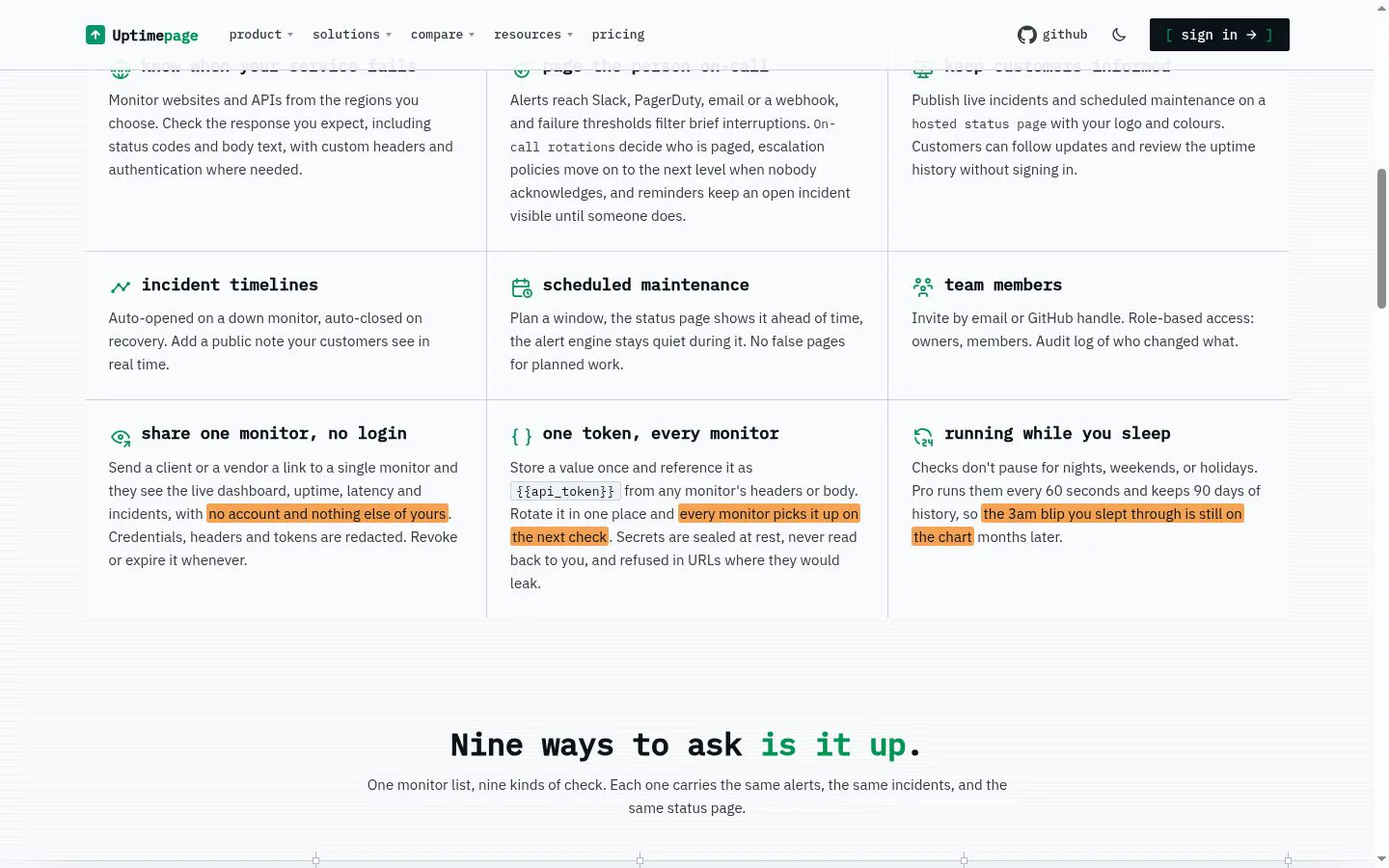
- Offers HTTP, TCP, DNS, ping, heartbeat, TLS certificate, domain expiry, browser-flow, and manual monitors, with configurable expectations and multi-region checks.
- Result
- Teams can detect a broader range of outages and quiet failures.
- Why
- Different services and failure modes need checks that test the relevant behavior, not just whether a homepage responds.
- Problem
- Transient failures or a single-region problem can cause unnecessary alerts.
- How it works
- Applies failure thresholds and regional confirmation rules before incidents and alerts are triggered.
- Result
- Responders receive more actionable outage alerts.
- Why
- Confirmation helps filter brief interruptions and unreliable probe results.
- Problem
- An alert may reach the wrong person or go unanswered.
- How it works
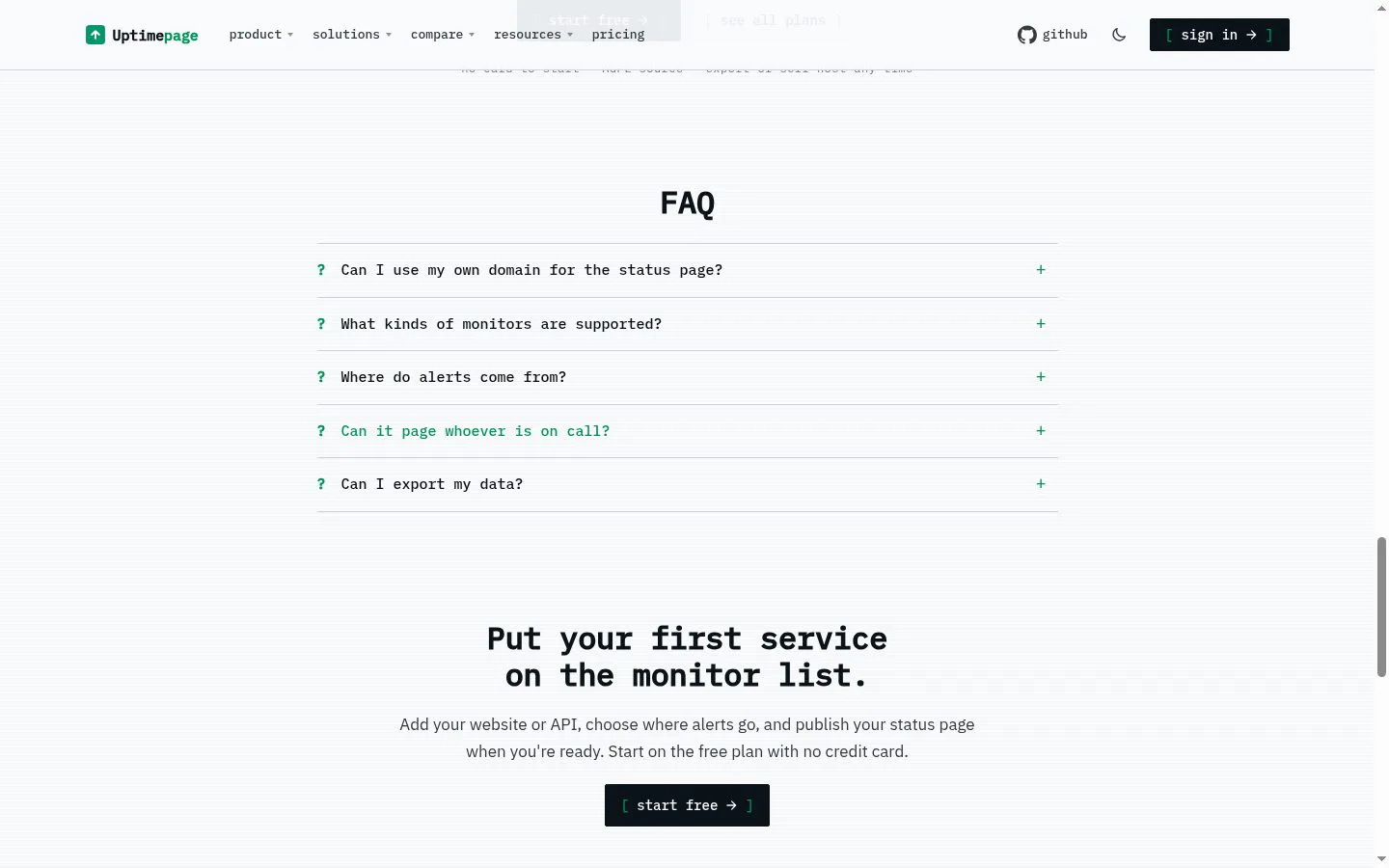
- Routes alerts through channels including Slack, PagerDuty, email, and webhooks; on-call rotations and escalation policies can direct unacknowledged incidents to the next level.
- Result
- Teams have a defined path from detection to response.
- Why
- Routing based on schedules and escalation steps helps get incidents in front of an available responder.
- Problem
- Customers lack visibility into incidents and planned work.
- How it works
- Publishes live incidents, maintenance windows, updates, and uptime history on branded hosted status pages.
- Result
- Customers can follow service status without signing in.
- Why
- A customer-facing source of updates reduces uncertainty while teams work on recovery.
- Problem
- Agencies and vendors need to share service health without exposing an entire account.
- How it works
- Creates revocable or expiring links to a single monitor, showing its live dashboard, uptime, latency, and incidents while redacting credentials.
- Result
- Clients or vendors can inspect the relevant monitor without an account.
- Why
- Limited-access sharing makes external collaboration safer and simpler.
- Problem
- Monitoring configuration and incident records can be difficult to move between systems.
- How it works
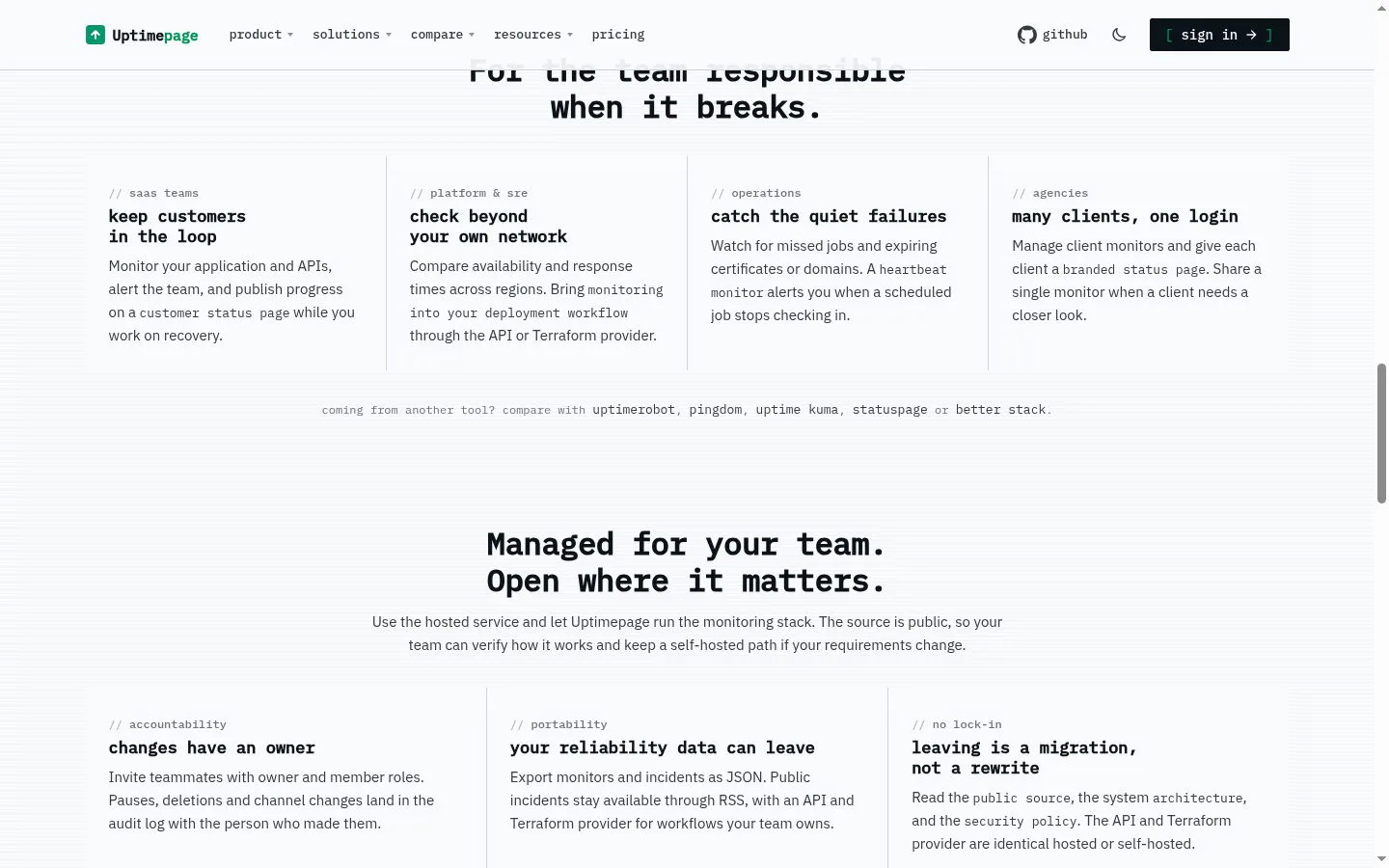
- Supports JSON exports, public incident RSS, an API, a Terraform provider, and self-hosting from its AGPL source.
- Result
- Teams can integrate monitoring into their workflows or operate the product themselves.
- Why
- Portable data and deployment options reduce dependence on the hosted service.
Product questions
What does Uptimepage do?
Uptimepage monitors websites, APIs, infrastructure endpoints, scheduled jobs, and browser login flows from multiple regions. It routes confirmed failures to teams or on-call responders and publishes incidents and uptime history on hosted status pages.
Who is Uptimepage for?
SaaS teams, platform and SRE engineers, operations teams, and agencies managing client services.
Screenshots