Marketing tools
MailKite
Receive any message as a webhook, send with one API — across unlimited domains and mailboxes, free. No mail server, no MX/SPF/DKIM/DMARC to rebuild for every launch. The email platform for developers, teams, and the agents they build.
- Category
- Marketing tools
- Stage
- Beta
- For
- Developers
About
Receive any message as a webhook, send with one API — across unlimited domains and mailboxes, free. No mail server, no MX/SPF/DKIM/DMARC to rebuild for every launch. The email platform for developers, teams, and the agents they build.
Features
- Problem
- Inbound email requires polling, MIME parsing, and mail-server maintenance.
- How it works
- Parses every inbound message and POSTs clean JSON—including decoded bodies, headers, attachments, thread IDs, and authentication results—to a webhook.
- Result
- Developers can build inbound-email workflows from a signed, structured webhook payload.
- Why
- Applications can react to messages directly without operating an inbox polling pipeline.
- Problem
- Sending transactional mail across different stacks creates integration overhead.
- How it works
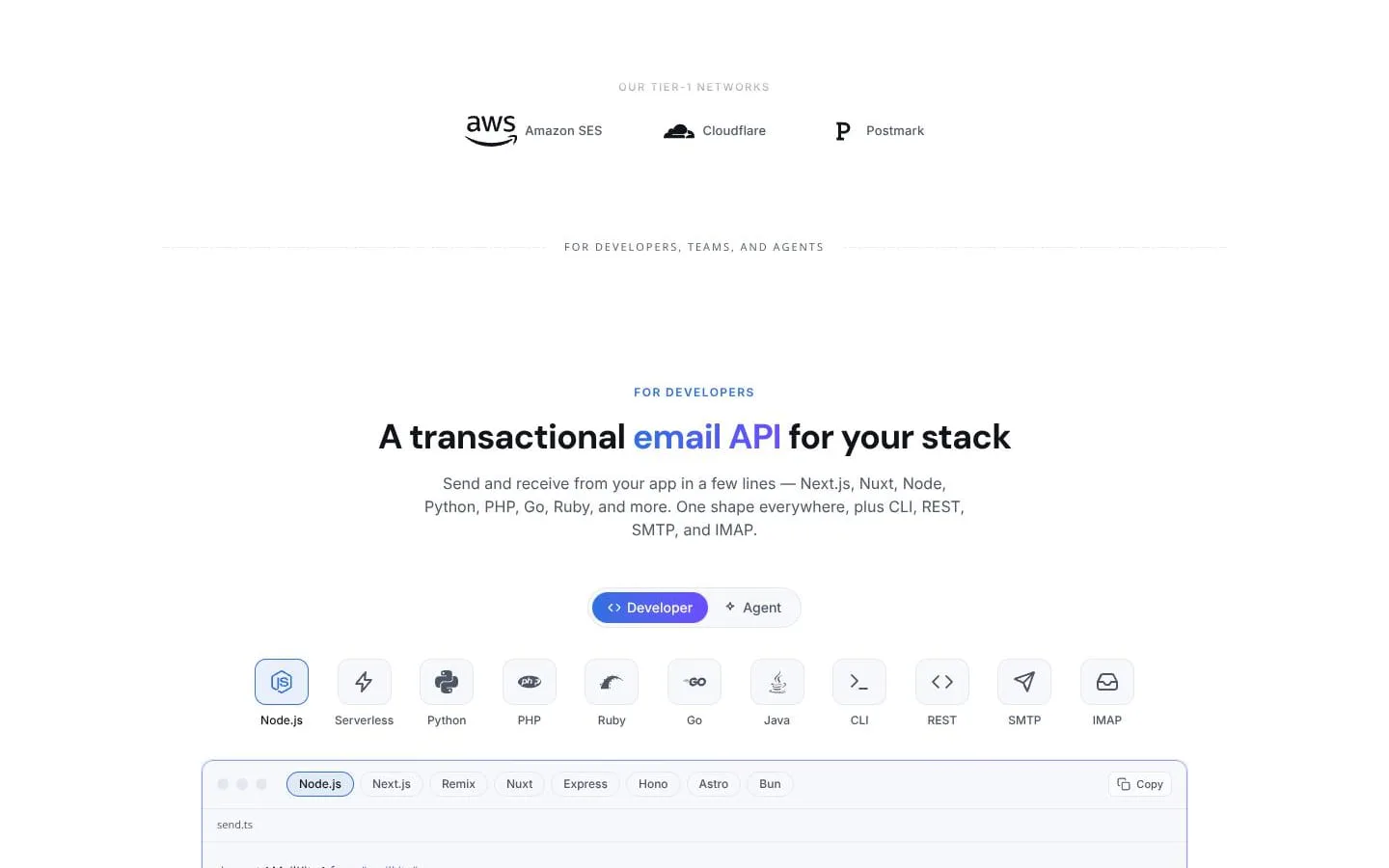
- Offers a REST send endpoint, official language SDKs, CLI, SMTP relay, and reply threading via inReplyTo.
- Result
- Teams can send transactional mail, replies, and broadcasts using the integration that fits their stack.
- Why
- A consistent sending interface works across modern applications and SMTP-only systems.
- Problem
- Each new product domain can create new mailbox and infrastructure work.
- How it works
- Supports unlimited domains and mailboxes, catch-all routing, and per-address routing to webhooks, forwarding, storage, or agents.
- Result
- Teams can create addresses for products, customers, tasks, and agents from one account.
- Why
- Domains and addresses can be provisioned as product, tenant, or agent boundaries without per-inbox setup.
- Problem
- Support, marketing, and engineering often work in disconnected email tools.
- How it works
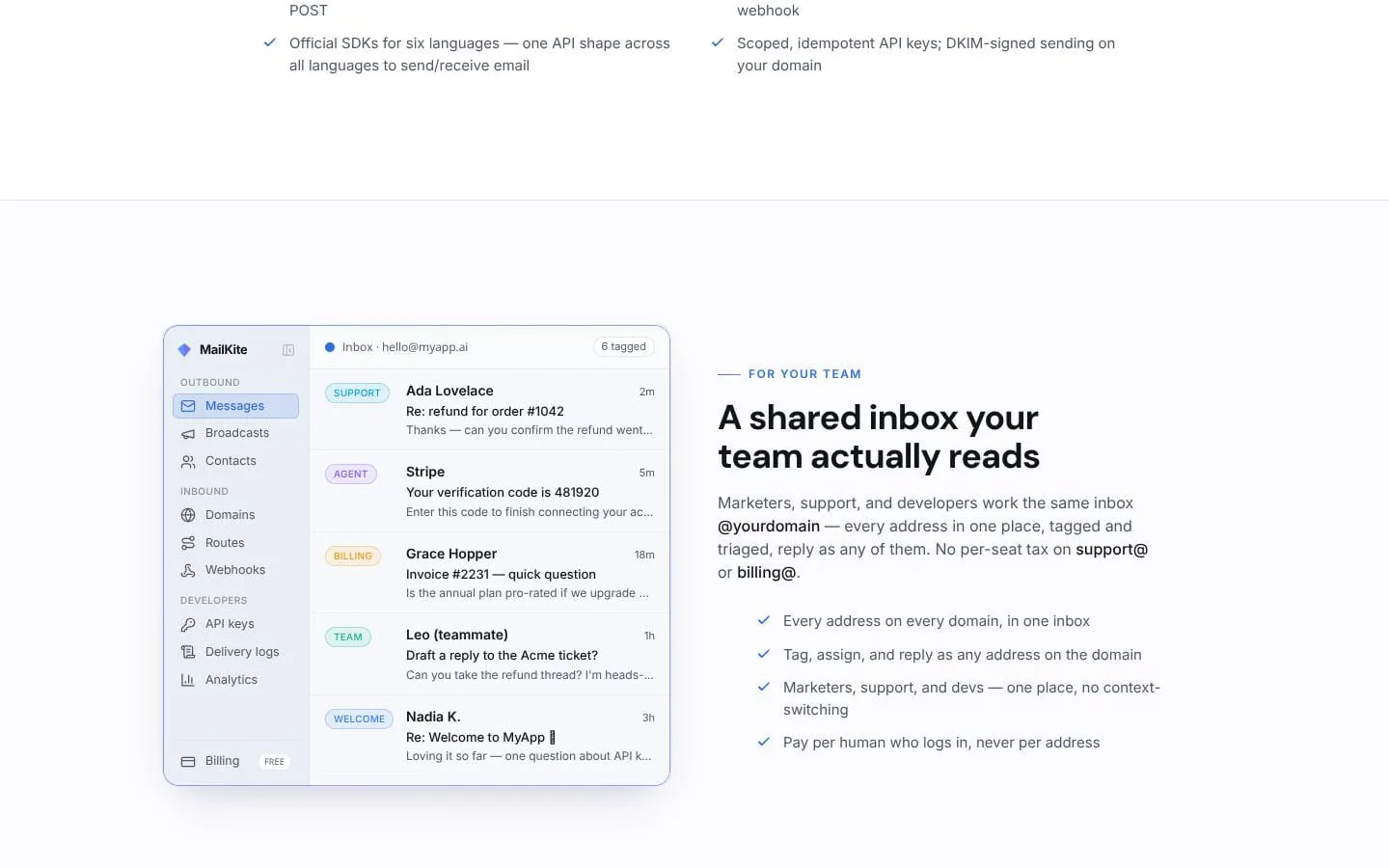
- Provides a shared inbox where users can tag, assign, triage, and reply as addresses on a domain.
- Result
- Teams can manage domain email together without paying per address.
- Why
- A common inbox keeps operational email visible to the people who need to act on it.
- Problem
- AI agents need an email identity and a way to act on email safely.
- How it works
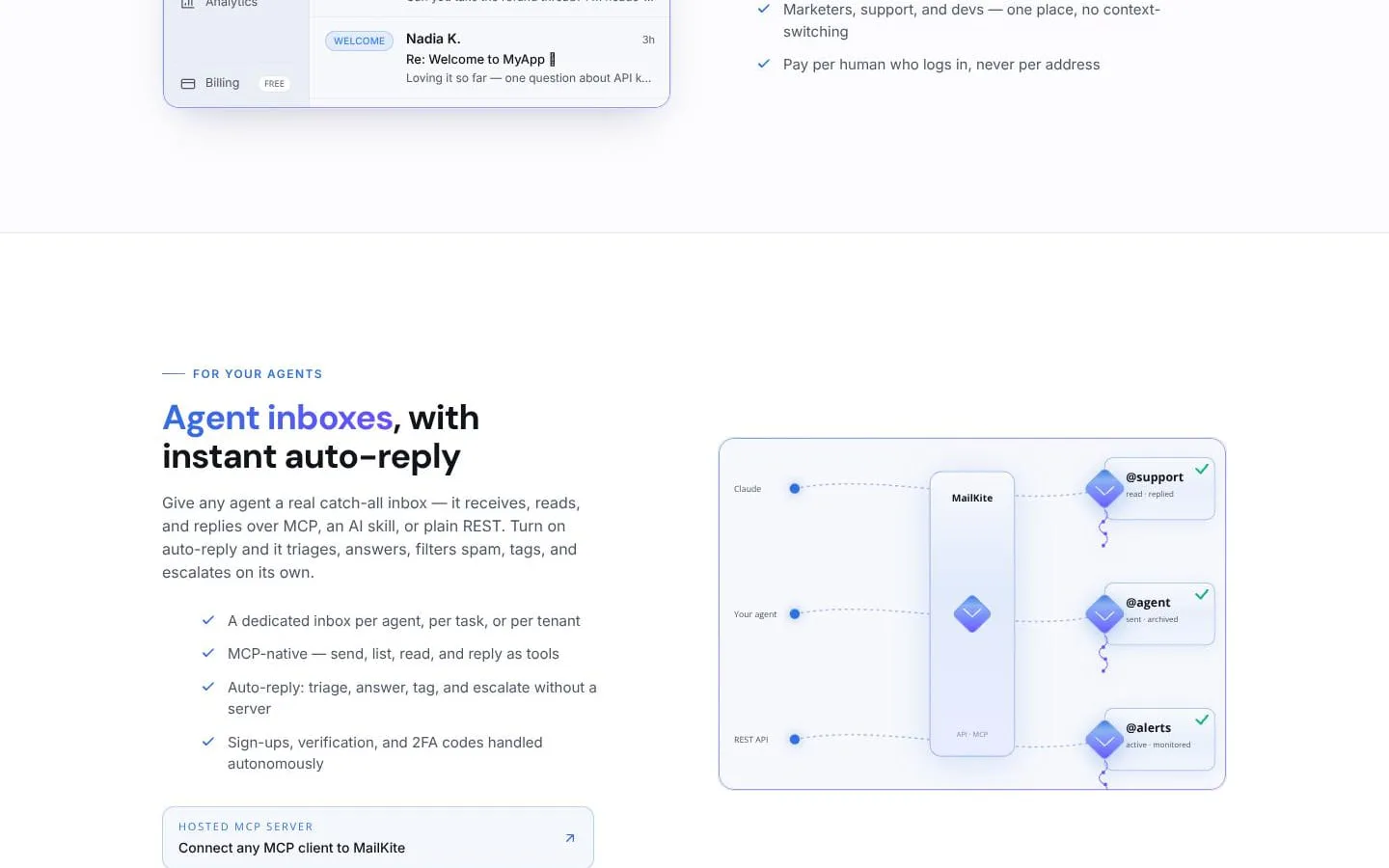
- Provides dedicated agent inboxes, a hosted MCP server, AI skills, scoped credentials, and optional auto-reply workflows for triage, tagging, escalation, and responses.
- Result
- Agents can autonomously handle workflows such as sign-ups, verification codes, and inbox responses.
- Why
- Agents can read, send, and reply to email through the same platform without custom email glue.
- Problem
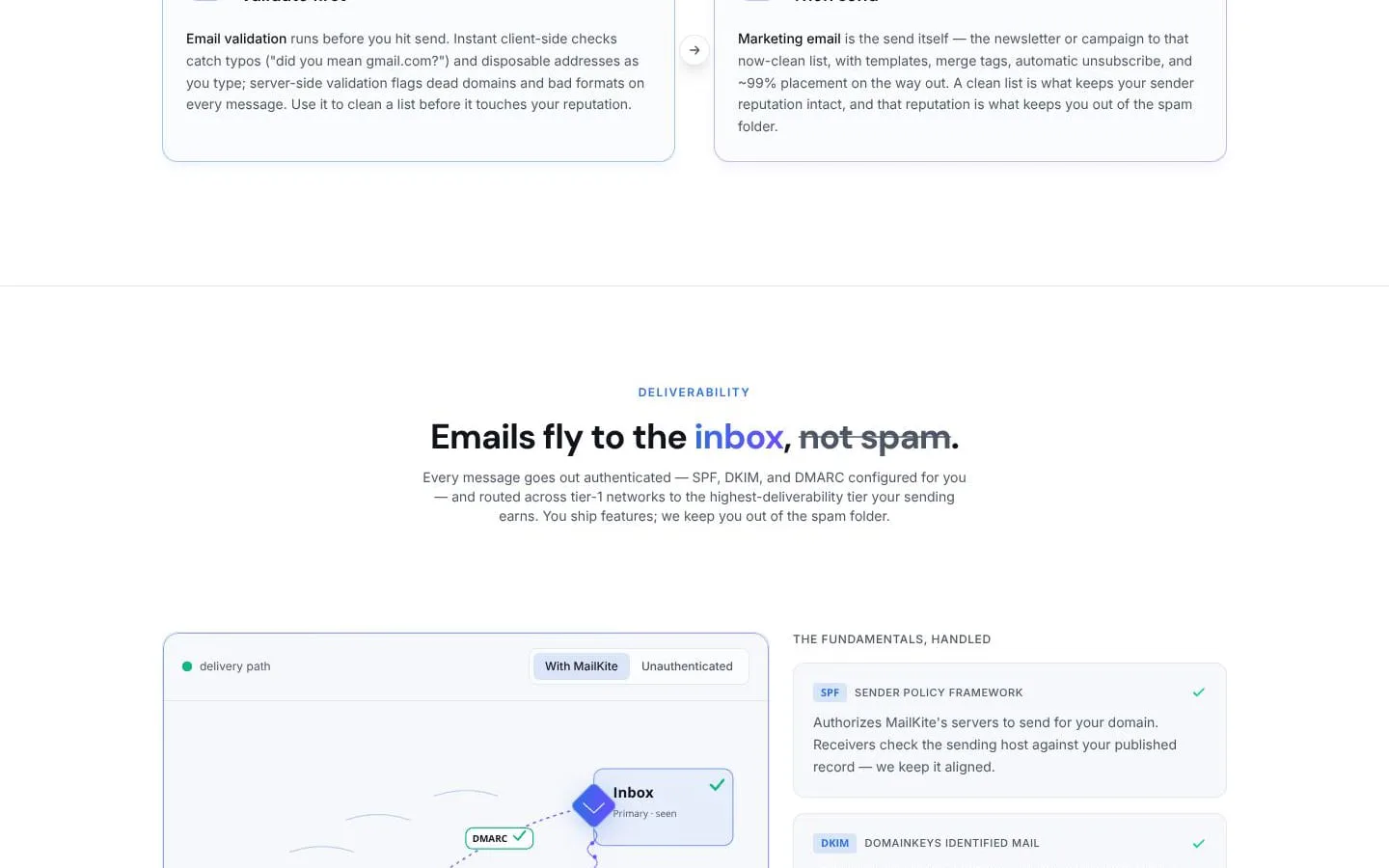
- Campaigns can harm sender reputation through invalid recipients and missing compliance controls.
- How it works
- Offers templates, merge tags, lists and segments, pre-send validation, automatic unsubscribe handling, and suppression management.
- Result
- Marketers can send newsletters and campaigns to cleaner audiences with fewer avoidable bounces.
- Why
- List hygiene and compliance are built into the campaign workflow.
- Problem
- Email delivery authentication and routing are difficult to operate per domain.
- How it works
- Manages SPF, DKIM, and DMARC; uses warmed pools; and routes mail across Cloudflare, Amazon SES, Postmark, and other tier-1 networks.
- Result
- Customers can send authenticated mail from their domains without managing mail servers or IP warm-up.
- Why
- Authentication, reputation, and delivery-path management are handled as platform infrastructure.
Product questions
What does MailKite do?
MailKite is a developer email platform for sending email through one API and receiving inbound mail as webhook JSON across unlimited domains and mailboxes.
Who is MailKite for?
Developers
Screenshots