Other
Hold the Hour — The internet has a clock
24 UTC hours. Own one hour of the public clock for $7 until someone takes it.
- Category
- Other
- Stage
- Beta
- For
- People looking to market thier products
About
24 UTC hours. Own one hour of the public clock for $7 until someone takes it.
Features
- Problem
- A brand needs visible placement on the clock.
- How it works
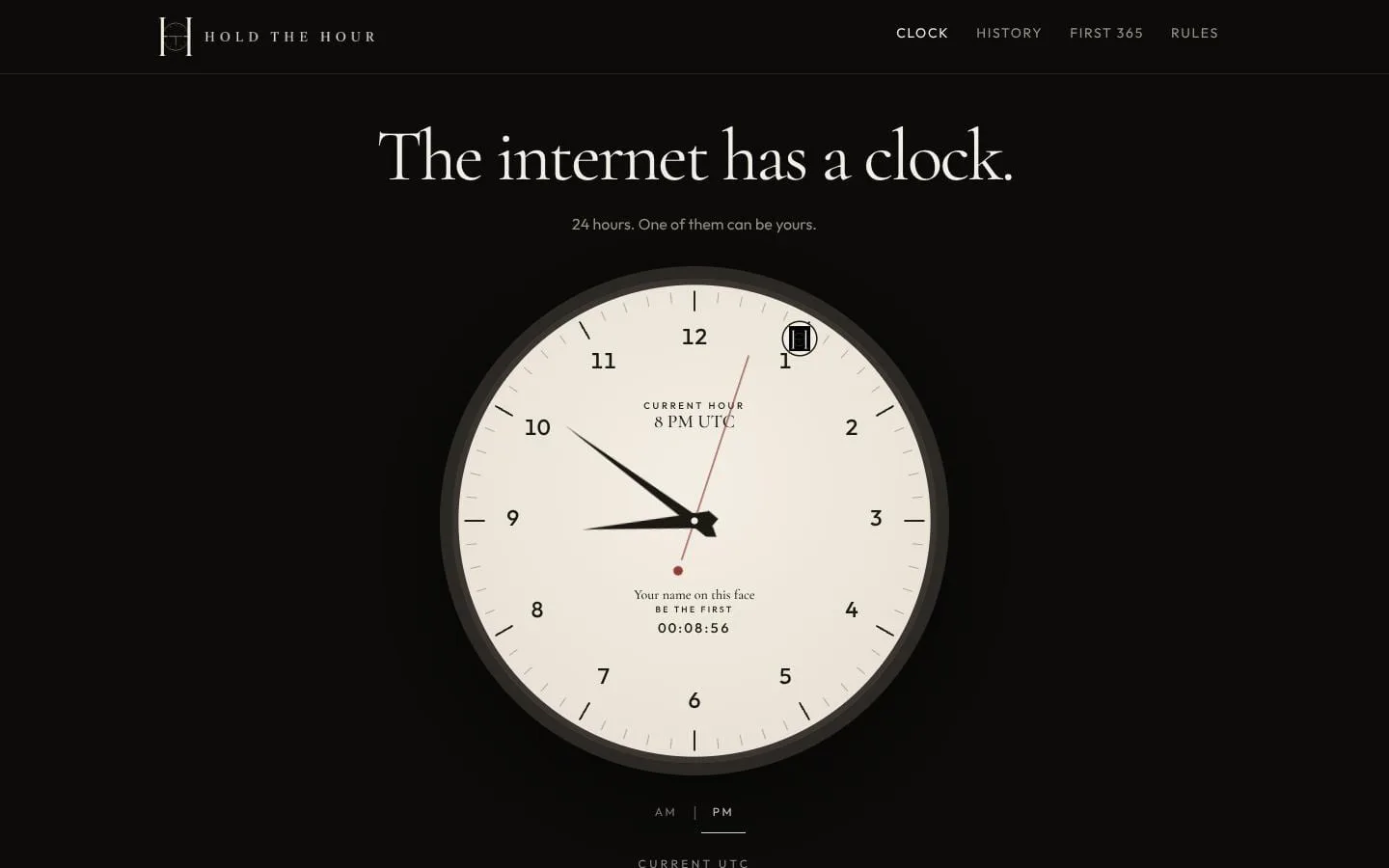
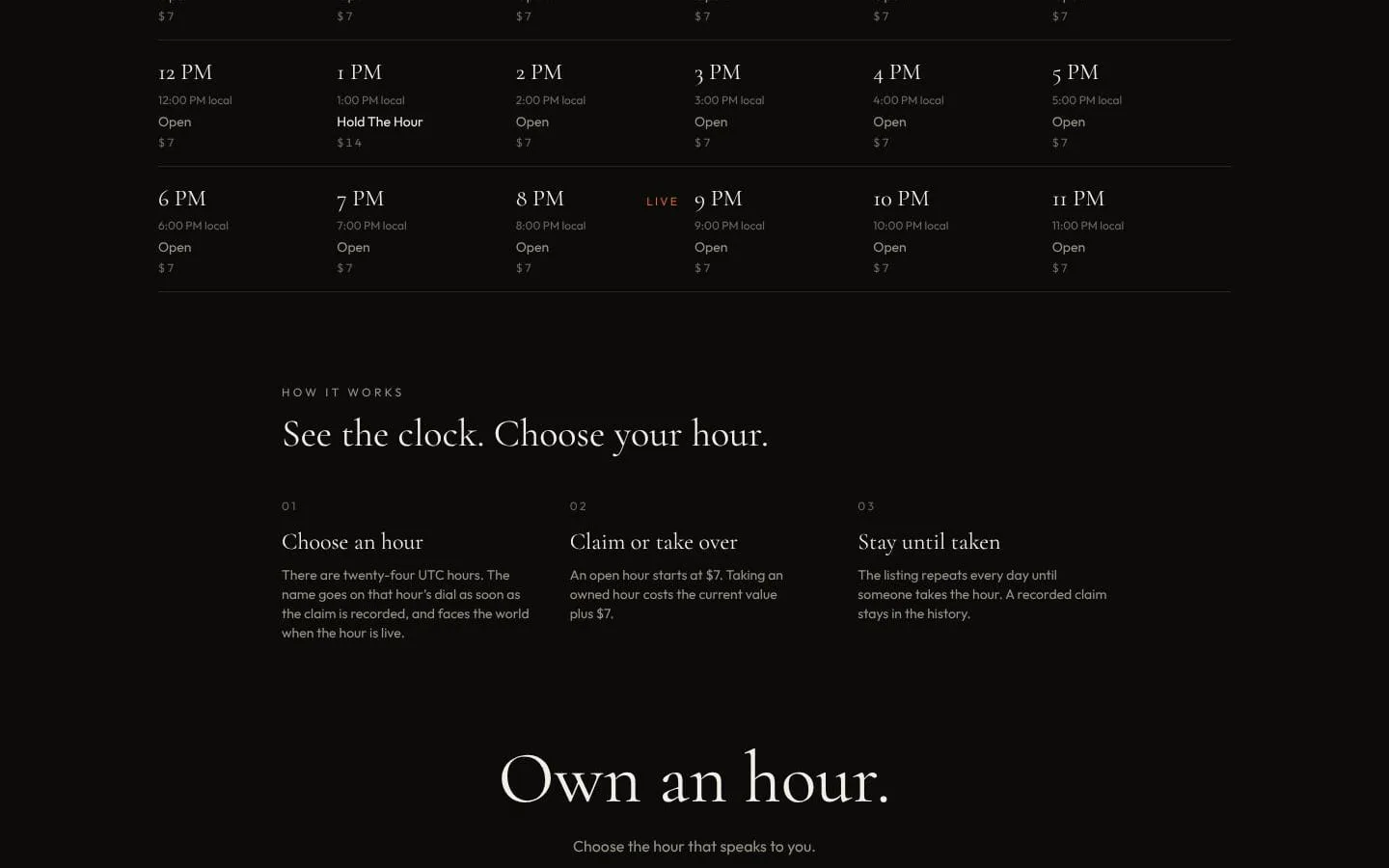
- Users choose and claim one of 24 UTC hours; an approved name, logo, and link appear on that hour’s dial.
- Result
- A brand receives recurring daily visibility tied to its chosen hour.
- Why
- Each UTC hour is a distinct public position that becomes the live face of the clock once per day.
- Problem
- An initial claim needs a clear ownership and pricing model.
- How it works
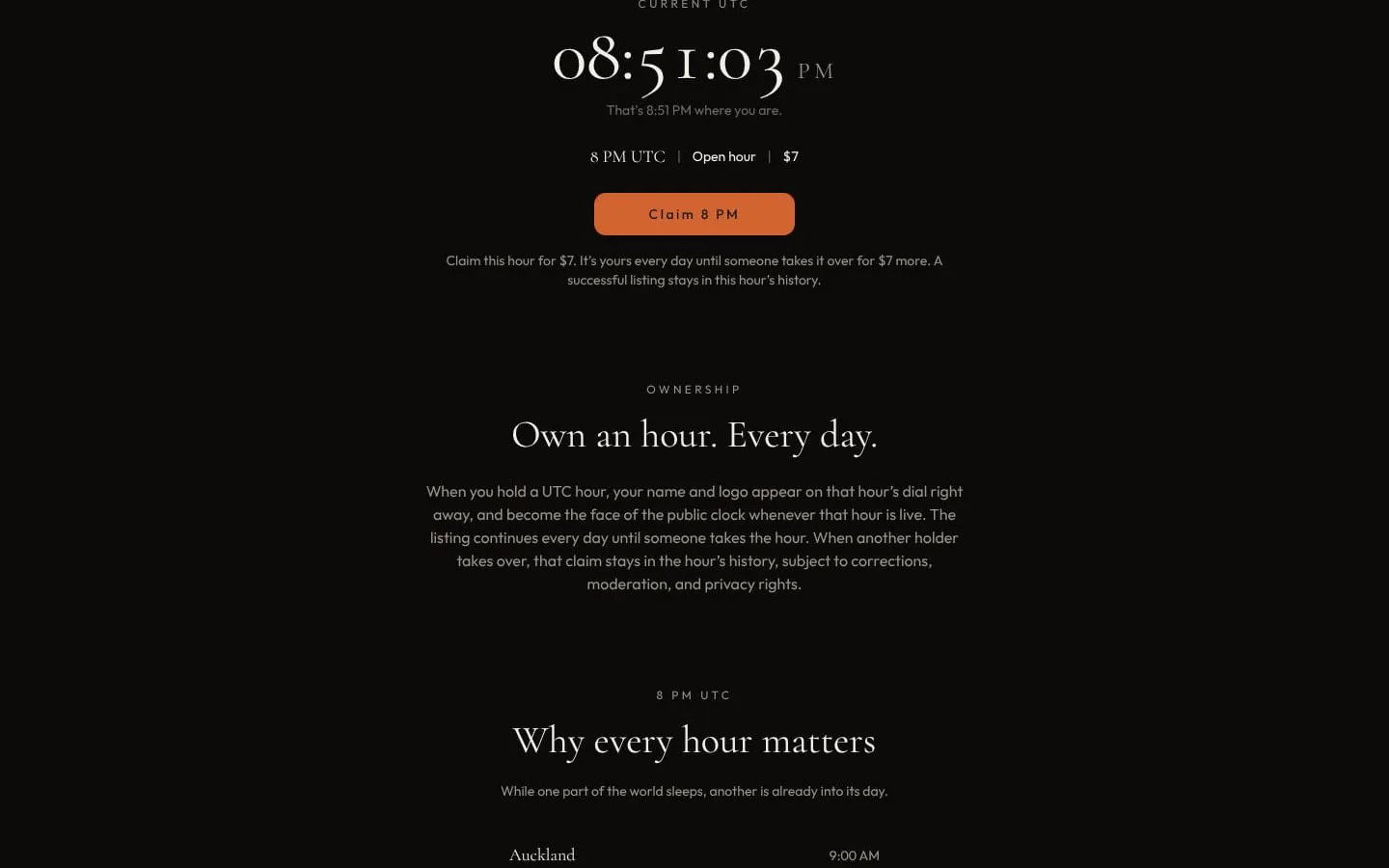
- Open hours cost $7; taking an owned hour costs the current claim value plus $7.
- Result
- Buyers can claim open inventory or take over an existing hour at a defined price.
- Why
- The next recorded claim becomes the holder while preserving the prior claim in history.
- Problem
- Brands may want a durable record beyond the active listing.
- How it works
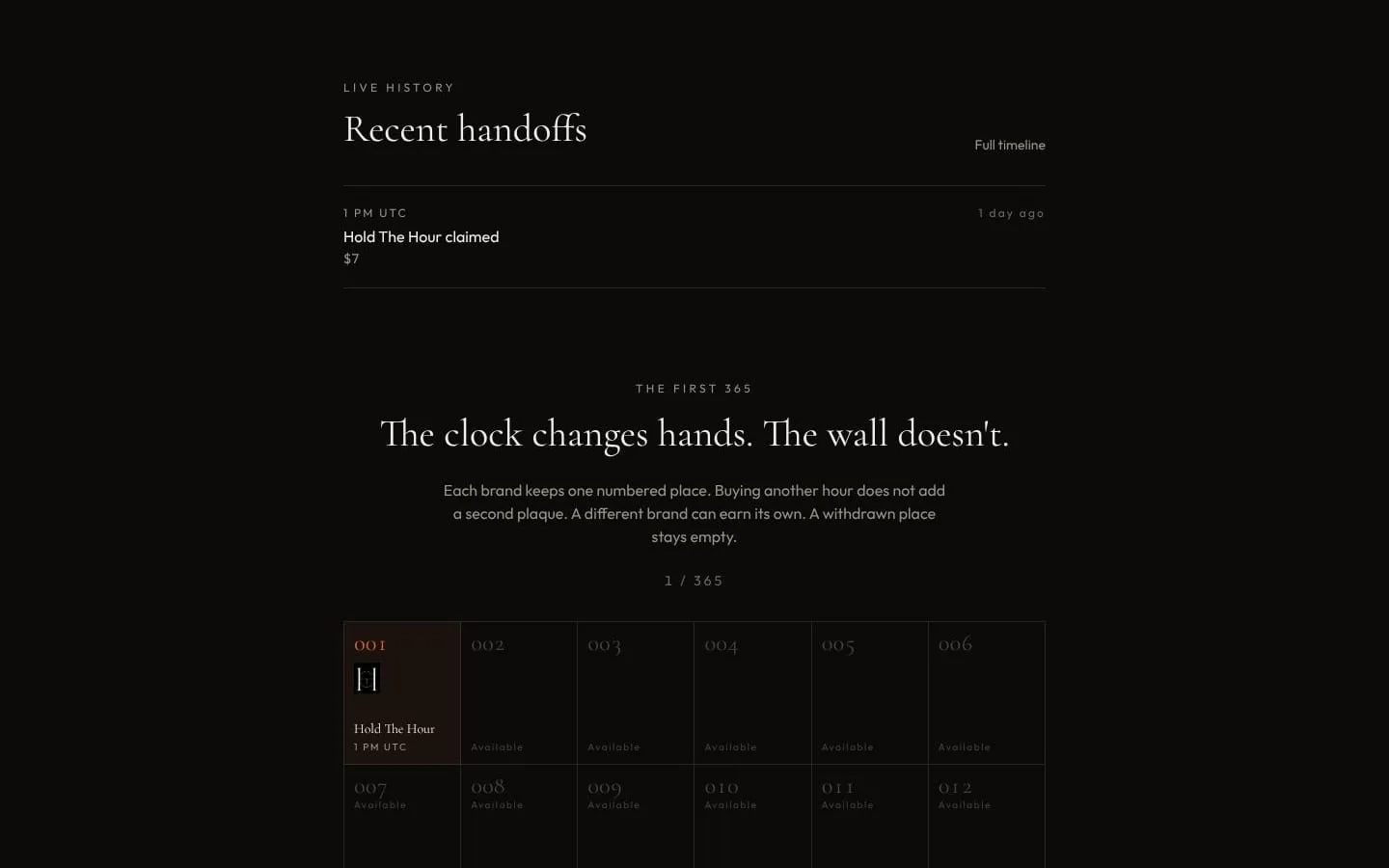
- Successful claims are recorded in each hour’s history, and early brands can receive one numbered First 365 place per brand.
- Result
- Eligible brands gain a persistent public record alongside their clock placement.
- Why
- A brand’s original numbered place remains even if it later claims another hour; withdrawn places remain empty.
- Problem
- Users need to understand worldwide relevance for every hour.
- How it works
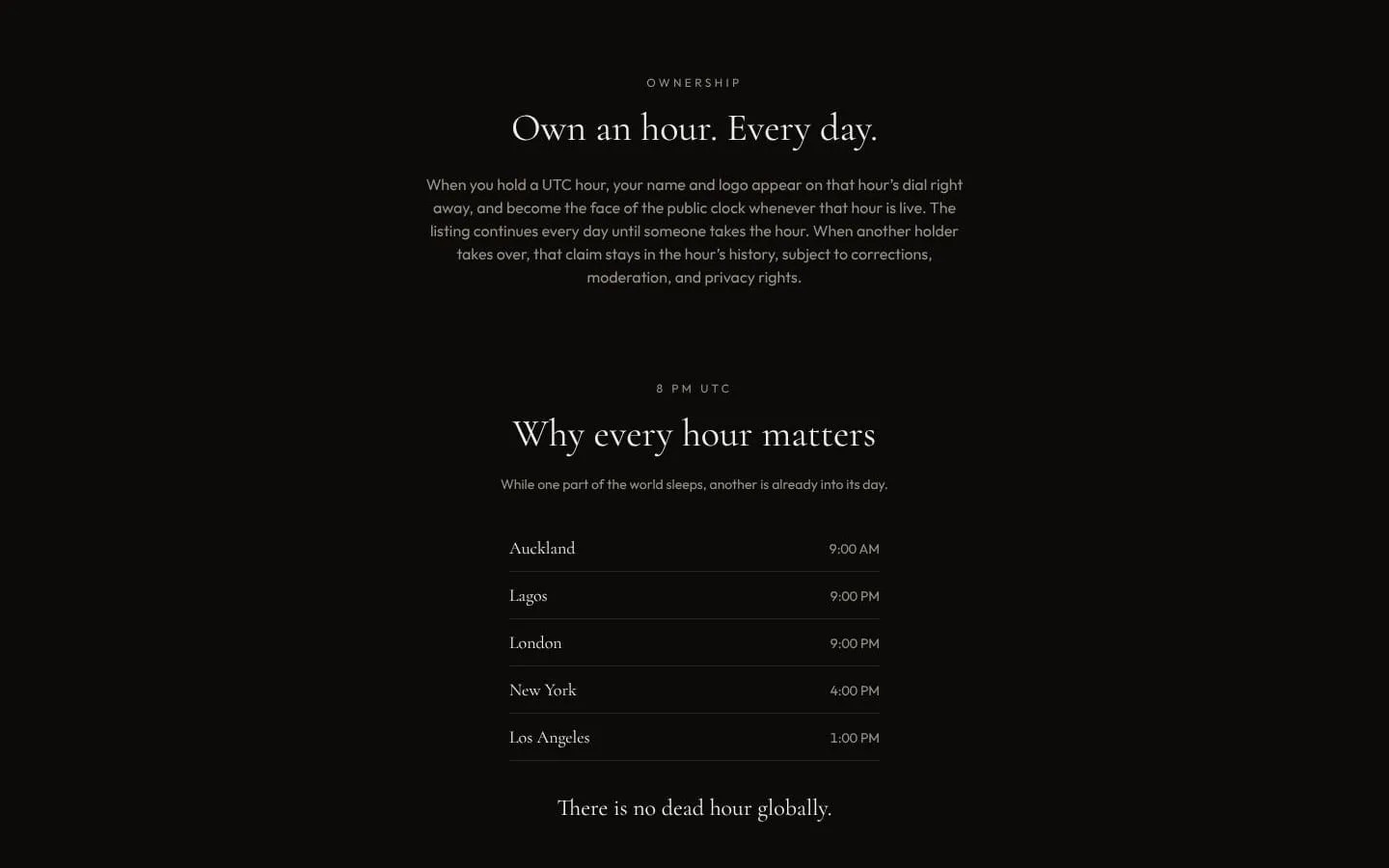
- The landing page shows current UTC time and example local times across cities.
- Result
- Brands can see that no UTC hour is globally inactive.
- Why
- Different regions are active at different times.
Screenshots