Fintech
Duely
Collect what you're owed, keep the relationship
- Category
- Fintech
- Stage
- Growth
- For
- Accounting firms
About
Track outstanding invoices, payment promises, partial payments, and follow-ups. Collections management built for freelancers and agencies.
Features
- Problem
- Teams lack a clear view of which overdue accounts require attention first.
- How it works
- Action Center scores clients by invoice aging, financial risk, and broken promises, then creates a prioritized daily queue.
- Result
- Staff know who to contact and why each day.
- Why
- Focus follow-up effort on the accounts with the most urgent collection risk instead of relying on spreadsheets or intuition.
- Problem
- Manual reminder schedules consume time and can conflict with recent outreach.
- How it works
- Users configure recurring or multi-step email sequences; automation pauses when a manual call or message is logged.
- Result
- More consistent collections with less manual work and fewer duplicate touches.
- Why
- Routine follow-up can continue automatically without sending an out-of-touch message after personal outreach.
- Problem
- Automated collections emails can feel impersonal or harm client relationships.
- How it works
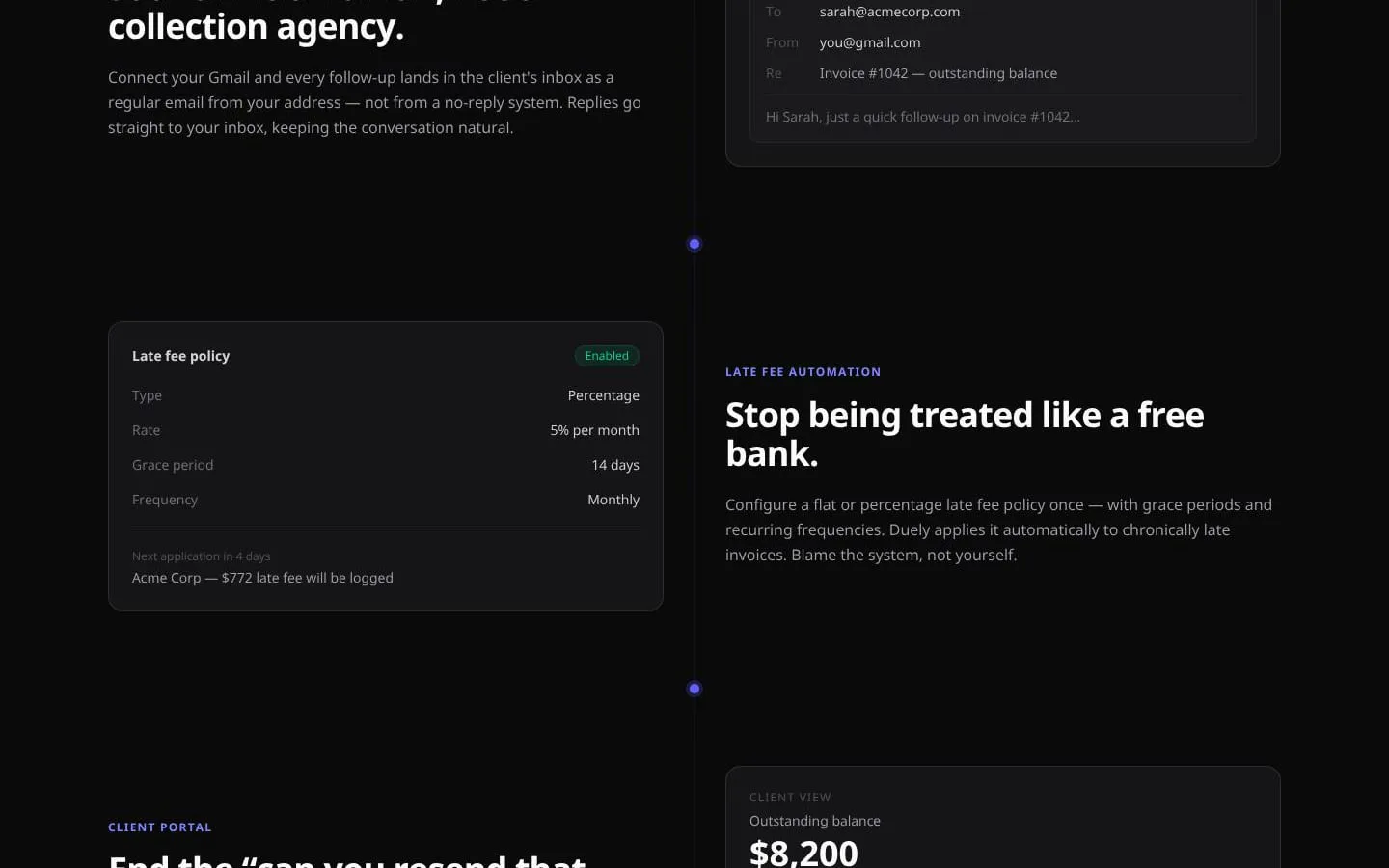
- Duely connects to Gmail to send follow-ups from the user's address, with replies delivered to their inbox.
- Result
- Firms can pursue payment while maintaining a professional, personal tone.
- Why
- Payment discussions remain in a familiar, direct email conversation rather than a no-reply billing channel.
- Problem
- Chronically late invoices may require a consistent late-fee process.
- How it works
- Users set flat or percentage late-fee policies with grace periods and recurring frequencies; Duely applies them automatically to eligible invoices.
- Result
- Late fees can be applied consistently with less administrative effort.
- Why
- A predefined policy makes escalation systematic rather than personal.
- Problem
- Clients repeatedly ask for invoices or payment details.
- How it works
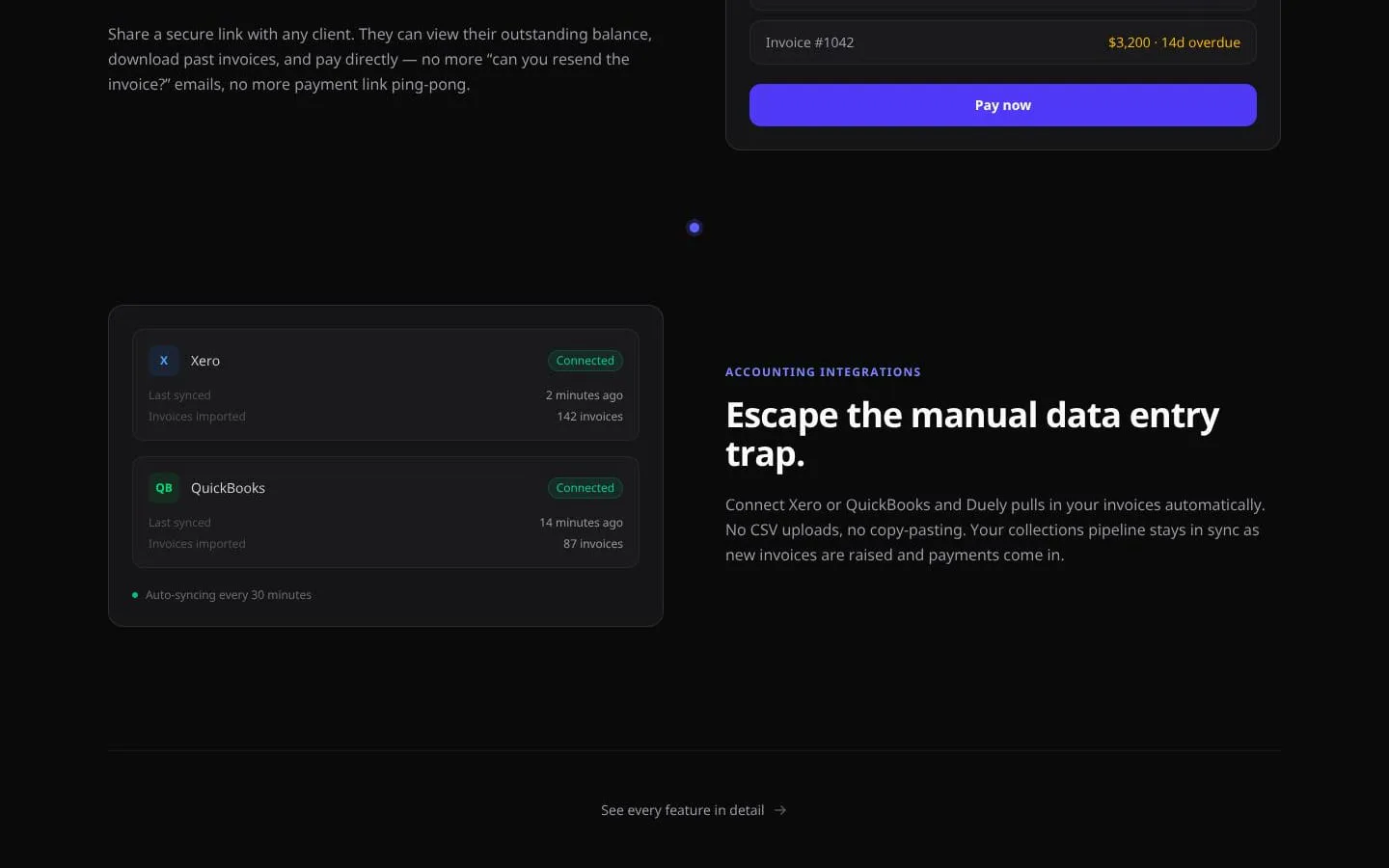
- A secure client link lets clients view outstanding balances, download past invoices, and pay directly.
- Result
- Less invoice-resend and payment-link back-and-forth.
- Why
- Clients can self-serve payment information instead of relying on email exchanges.
- Problem
- Invoice data must otherwise be entered or maintained separately for collections.
- How it works
- Duely connects to Xero and QuickBooks, automatically imports invoices, and syncs as invoices and payments change.
- Result
- A more current AR workflow with reduced manual data entry.
- Why
- The collections pipeline is based on current accounting data without CSV uploads or copy-pasting.
- Problem
- Payment status and commitments can be lost across conversations.
- How it works
- Duely supports logging partial payments, payment promises, notes, and follow-up history; customer-confirmed payments stop active reminders.
- Result
- A clearer account history and fewer missed follow-ups.
- Why
- Collections teams need a record of what was paid, promised, and communicated.
Screenshots