Marketing tools
GeoGen
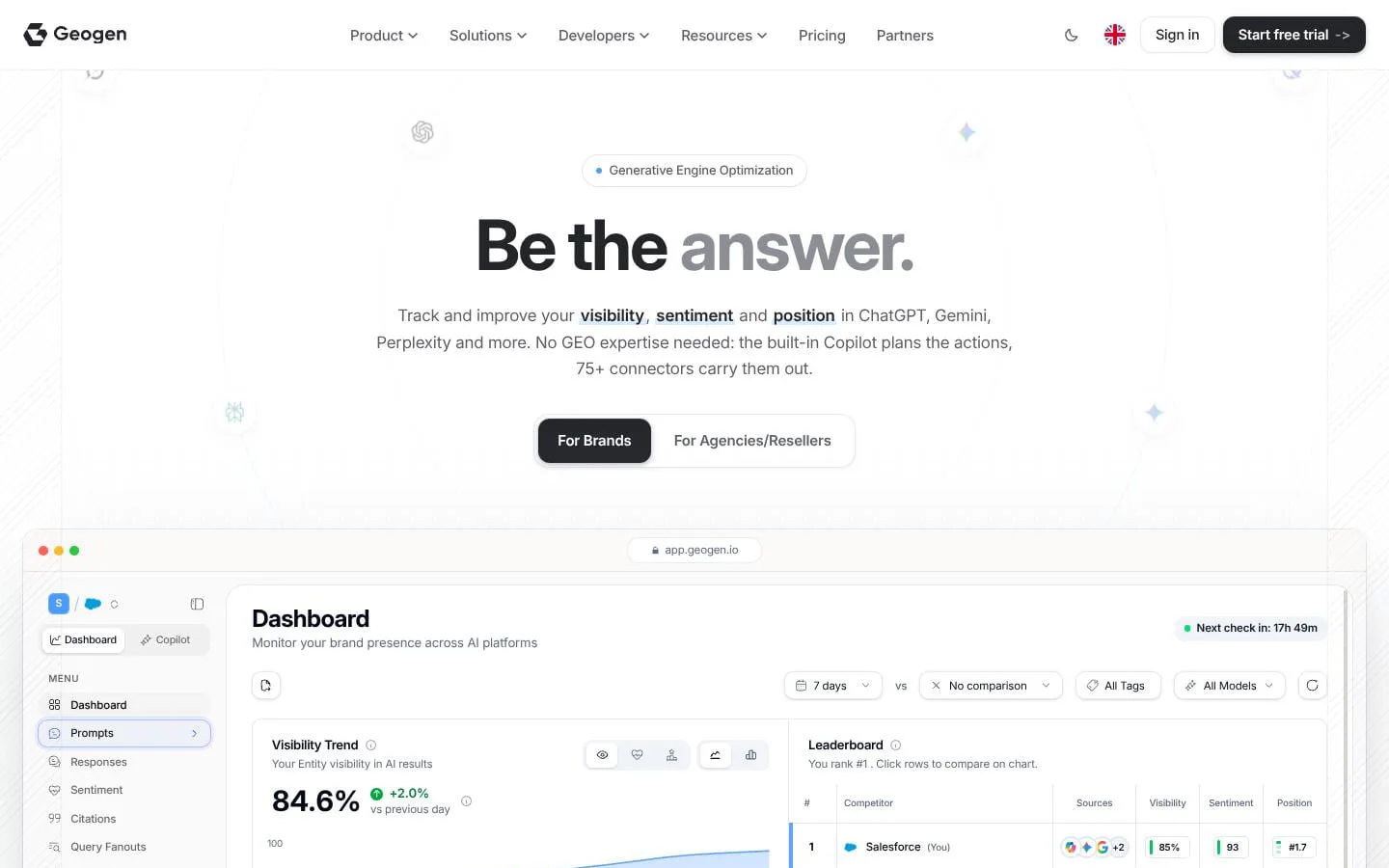
A brand's prompts run on the engines its plan includes, every day, in 30+ languages and any country, and the results land in one dashboard: visibility, position, sentiment and cited pages. Agencies resell that view with their own logo, and platforms can read it from the REST API.
- Category
- Marketing tools
- Stage
- Growth
- For
- Brands and in-house marketing teams, agencies and resellers, and platforms integrating AI visibility data.
About
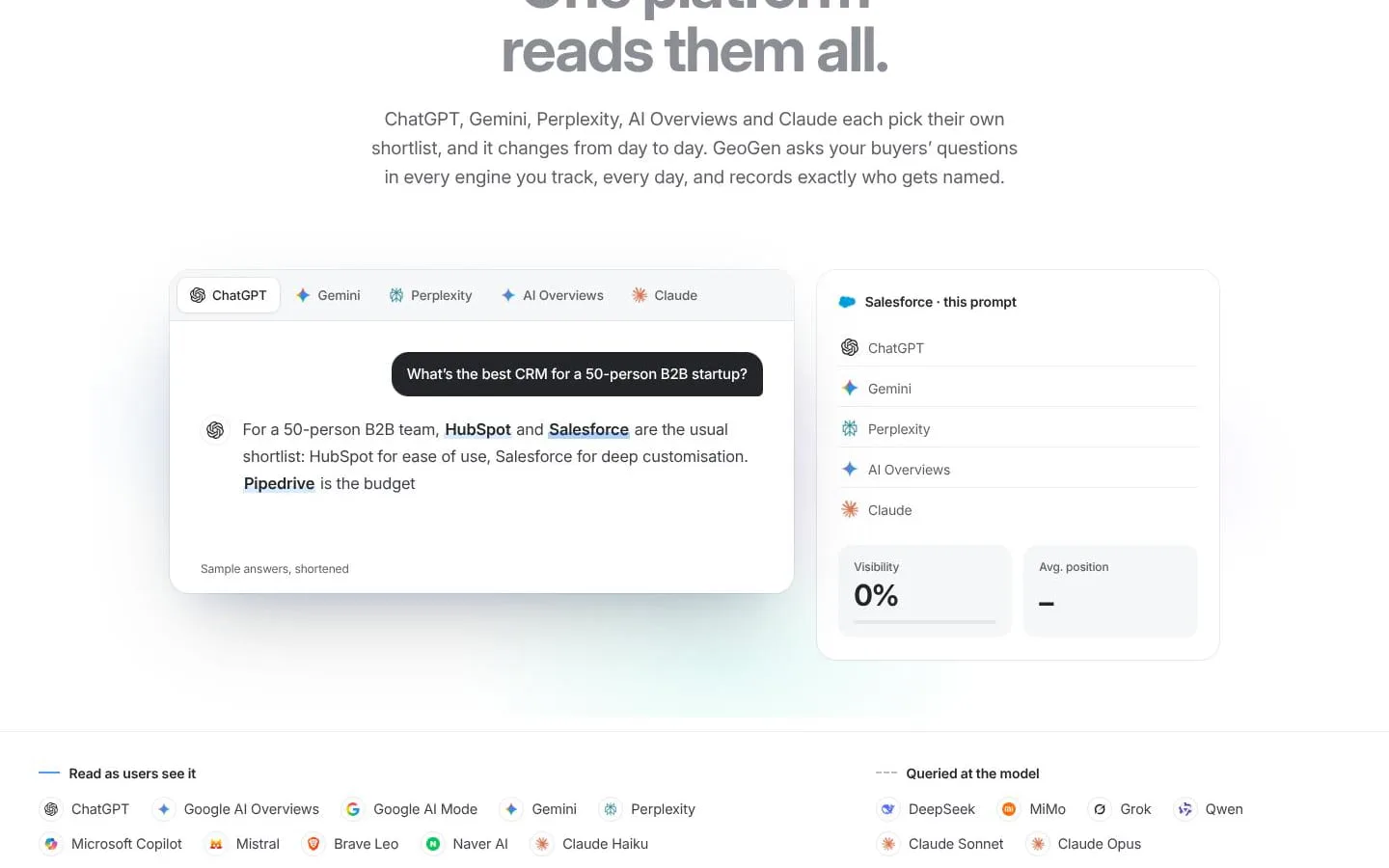
One customer, one workspace, one set of keys: that is how a software platform can organise what it builds on GeoGen. Keys belong to workspaces, and every workspace has its own plan, limits, credits and members, so the platform can keep each of its customers apart in the data it pulls from the API. The REST API has 30+ endpoints and an OpenAPI 3 spec, and returns visibility, sentiment, citations, competitors, responses, query fan-outs and actions as JSON. Behind it, GeoGen runs every tracked prompt every day on every engine in the plan, across 16 AI engines, and keeps the results by prompt, engine, country and language. Software platforms, hosting providers and SEO tool vendors put this data inside their own product under a partner agreement. Those who prefer a finished interface can offer the white-label dashboard through agencies, with the agency's logo on every screen, or license GeoGen as resellers and set the end price. Prompts are tracked in 30+ languages and any country, so a platform serving customers in several markets can show each one its own results. Viewer, Editor and Admin roles control who in each customer's team can see or change what. The geogen CLI and the MCP server serve the same data to terminals, CI jobs and agents in Claude, Cursor, Windsurf, GitHub Copilot and OpenAI tools. Brands use GeoGen directly from €20 a month billed yearly.
Features
- Problem
- Brands lack a consistent way to measure mentions across changing AI answers.
- How it works
- Runs prompts every day on the engines included in a plan and records each answer.
- Result
- Teams can track visibility, position, and sentiment over time.
- Why
- AI answers can differ between engines and from day to day.
- Problem
- A visibility score alone does not explain why a brand was or was not recommended.
- How it works
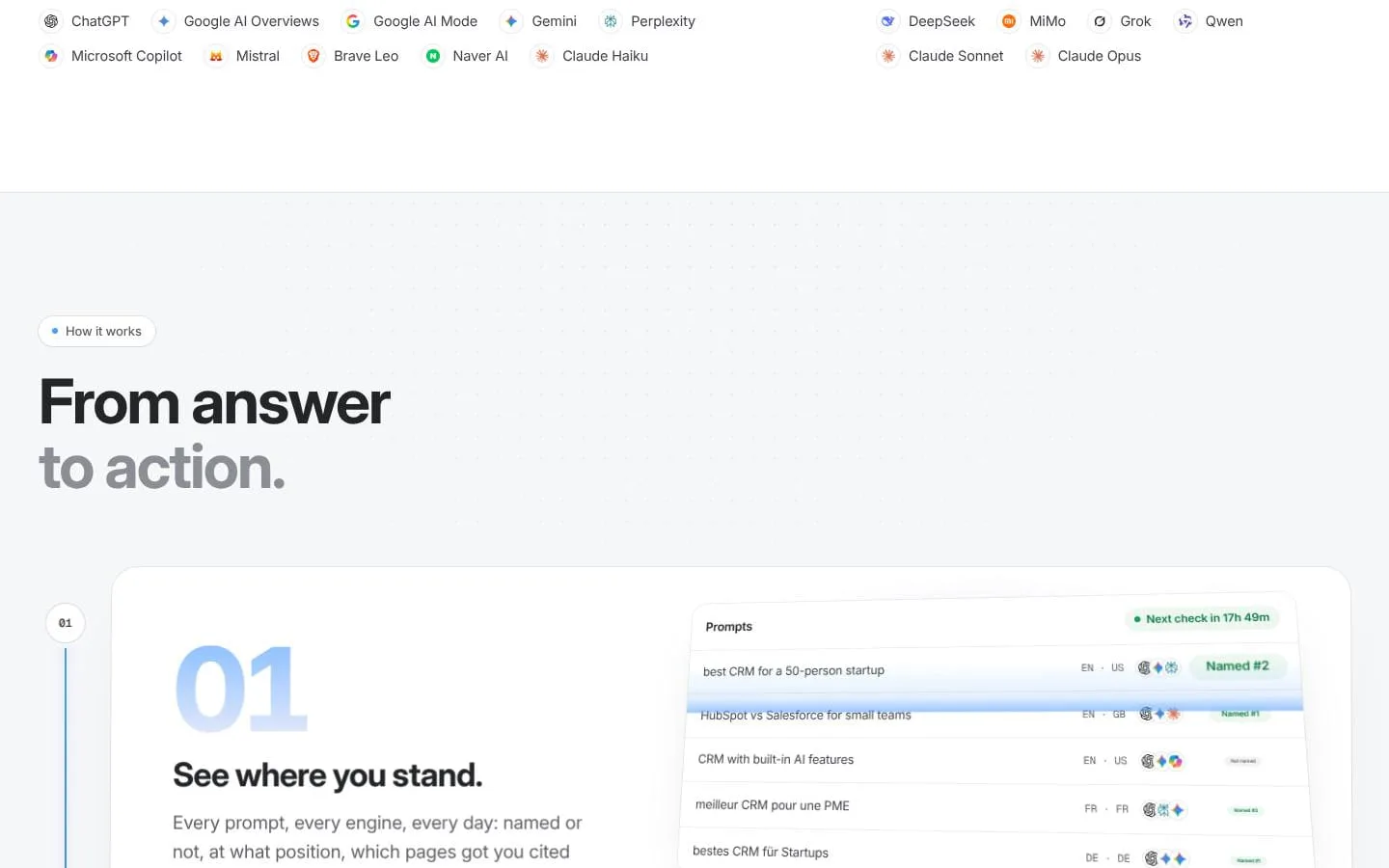
- Shows responses, citations, competitors, and query fan-outs where available.
- Result
- Teams can investigate specific gaps and sources to pursue.
- Why
- The underlying answers and sources help identify what may be affecting visibility.
- Problem
- Measurement is not useful unless teams know what work to do next.
- How it works
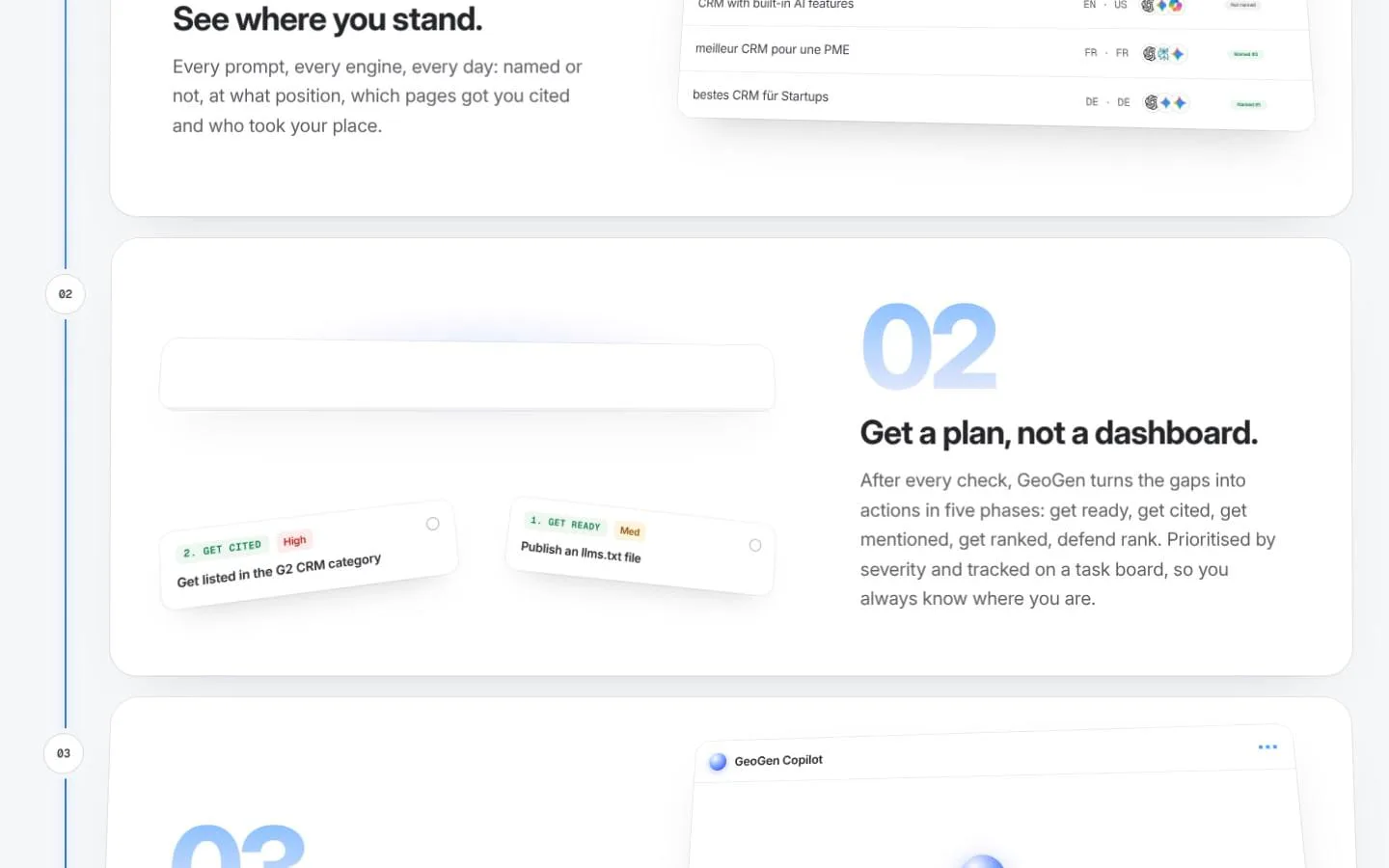
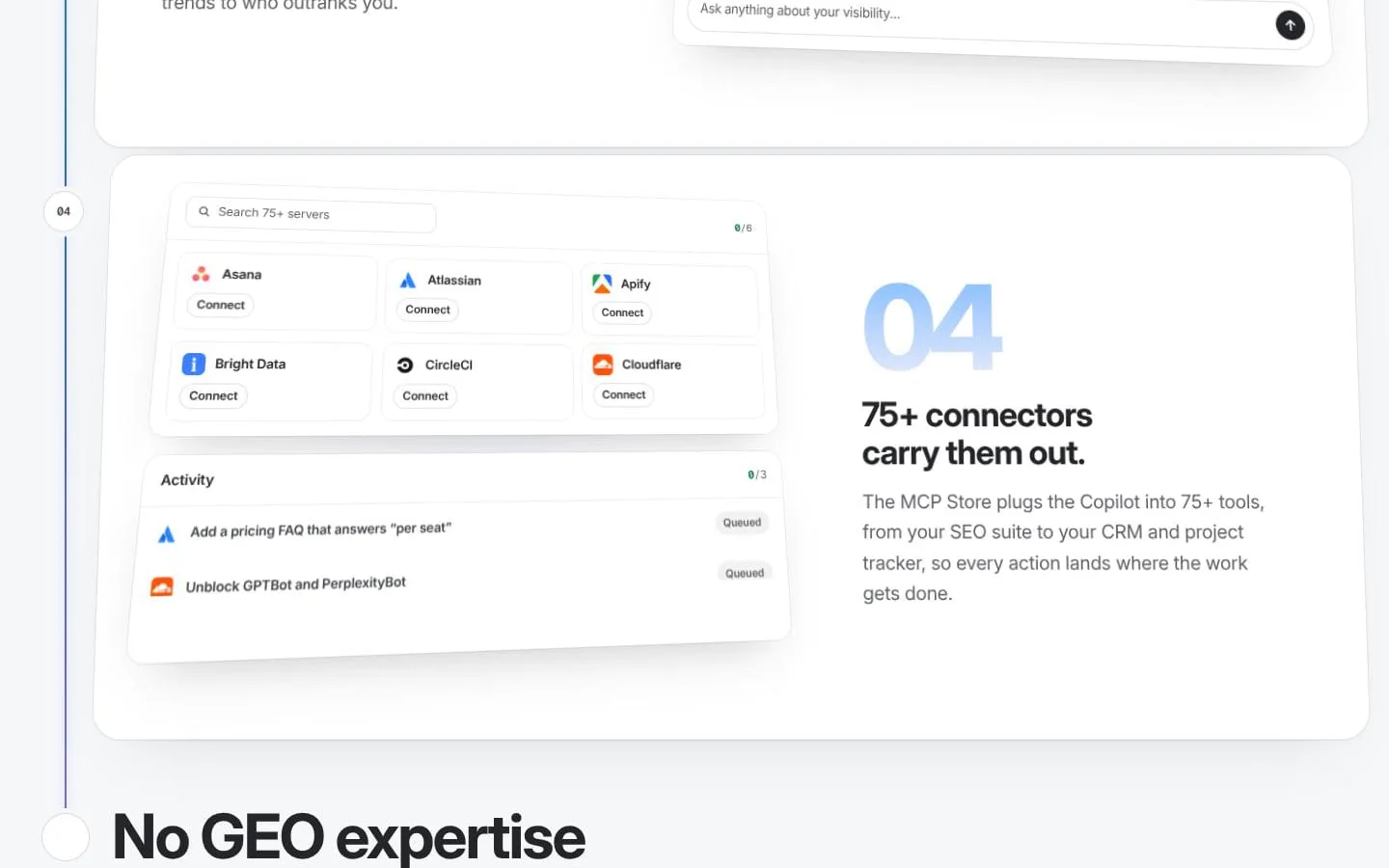
- Generates prioritized recommendations across five phases and tracks them on a task board; the in-app Copilot can answer questions and plan actions from account data.
- Result
- Teams get an organized, data-based action list.
- Why
- Connecting findings to tasks helps teams move from monitoring to execution.
- Problem
- Agencies need to manage multiple clients while keeping their work separate.
- How it works
- Provides client workspaces with separate plans, credits, and members, plus dashboard logo customization.
- Result
- Agencies can present AI visibility reporting under their own logo.
- Why
- Client separation supports agency delivery and collaboration.
- Problem
- Platforms and internal tools need programmatic access to visibility data.
- How it works
- Offers a REST API with 30+ endpoints, a CLI, and an MCP server.
- Result
- Platforms can integrate GeoGen data into their products and workflows.
- Why
- The same data can be used outside the GeoGen app.
- Problem
- Brands operating across markets need to compare visibility by location and language.
- How it works
- Supports prompts in 30+ languages and any country.
- Result
- Teams can monitor AI visibility across their target markets.
- Why
- AI answers can vary between markets.
Product questions
What does GeoGen do?
GeoGen measures how a brand appears in AI-generated answers. It reruns prompts daily across selected AI engines and reports visibility, position, sentiment, citations, and competitors, with recommended actions to improve results.
Who is GeoGen for?
Brands and in-house marketing teams, agencies and resellers, and platforms integrating AI visibility data.
Screenshots