Productivity
Yorus
Automatic Research Trails & Memory
- Category
- Productivity
- Stage
- Growth
- For
- Researchers and engineers who want to organize and revisit information gathered while browsing.
About
Turn messy browser sessions into clean chapters and searchable memory without screen recording.
Features
- Problem
- Research activity is spread across tabs and easy to lose.
- How it works
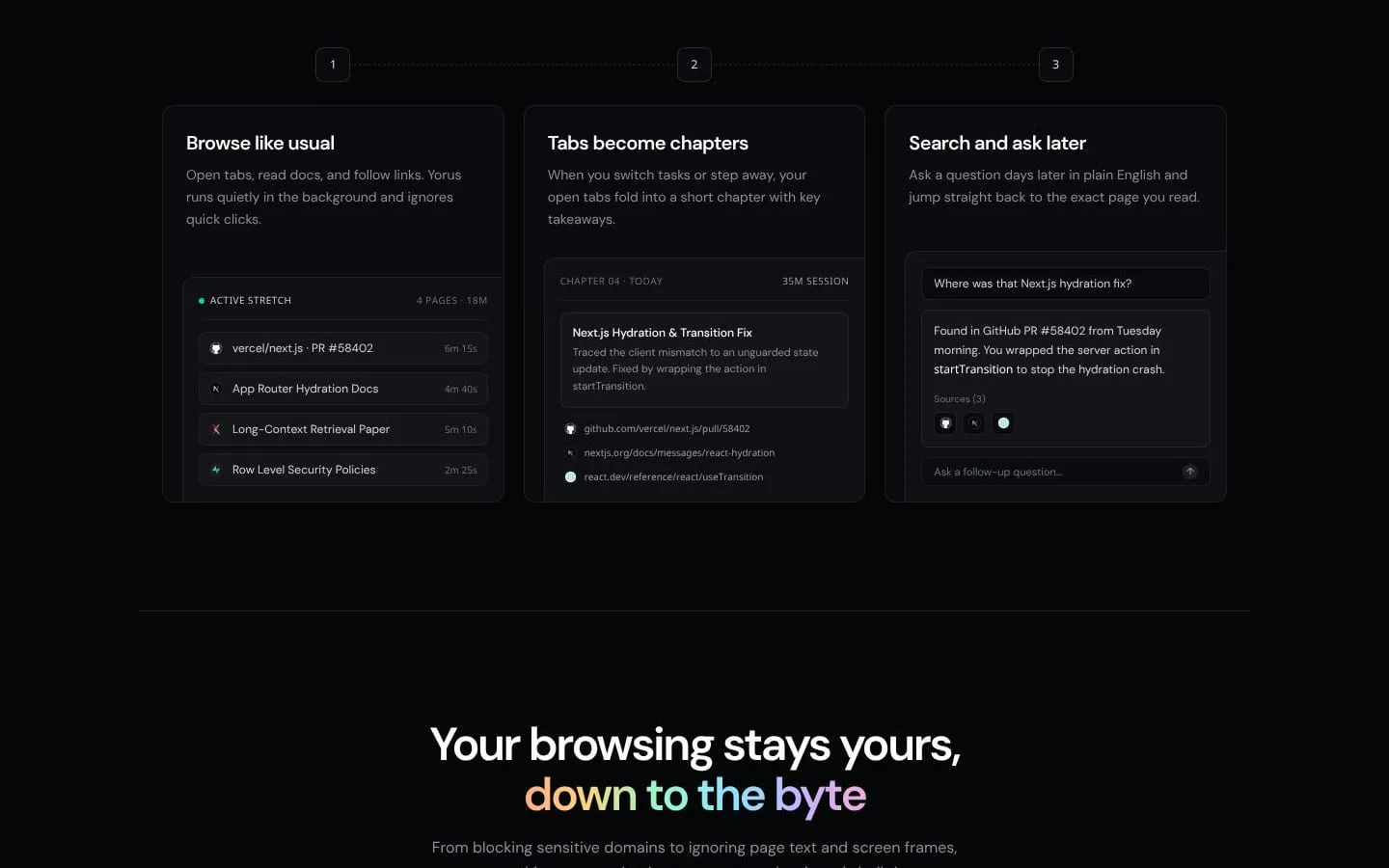
- The browser extension tracks lightweight metadata such as page titles, URLs, and dwell time while users browse.
- Result
- Visited pages appear in a live activity feed and can be grouped into research stretches.
- Why
- Passive capture preserves research trails without requiring manual bookmarking.
- Problem
- A list of visited URLs does not explain what a research session was about.
- How it works
- Yorus turns browsing stretches into chapters with concise AI summaries, topics, and source links.
- Result
- Users get structured summaries of their research activity.
- Why
- Grouping related visits makes a session easier to understand and revisit.
- Problem
- Older research is difficult to recall from browser history.
- How it works
- Users can search or ask questions in plain English about their browsing memory and receive answers with citations.
- Result
- Users can find relevant past reading and jump back to the original pages.
- Why
- Answers linked to source pages help users verify and continue their research.
- Problem
- Many research chapters can be difficult to review over time.
- How it works
- Yorus creates daily digests and, on eligible plans, weekly digests from chapters.
- Result
- Users can revisit research at a glance or ask about broader periods.
- Why
- Higher-level recaps make it easier to review activity across days and weeks.
- Problem
- Users may not want sensitive browsing activity recorded.
- How it works
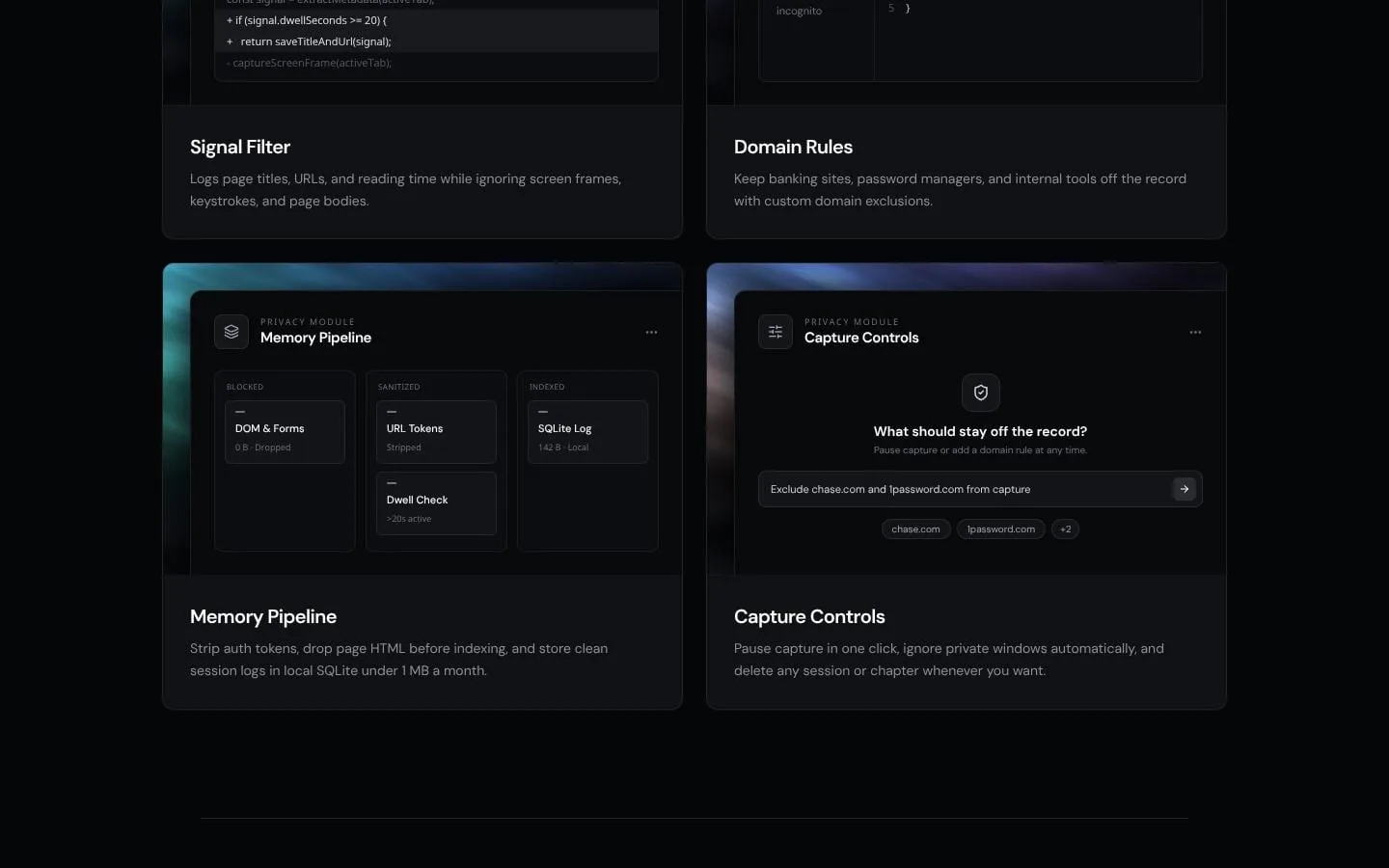
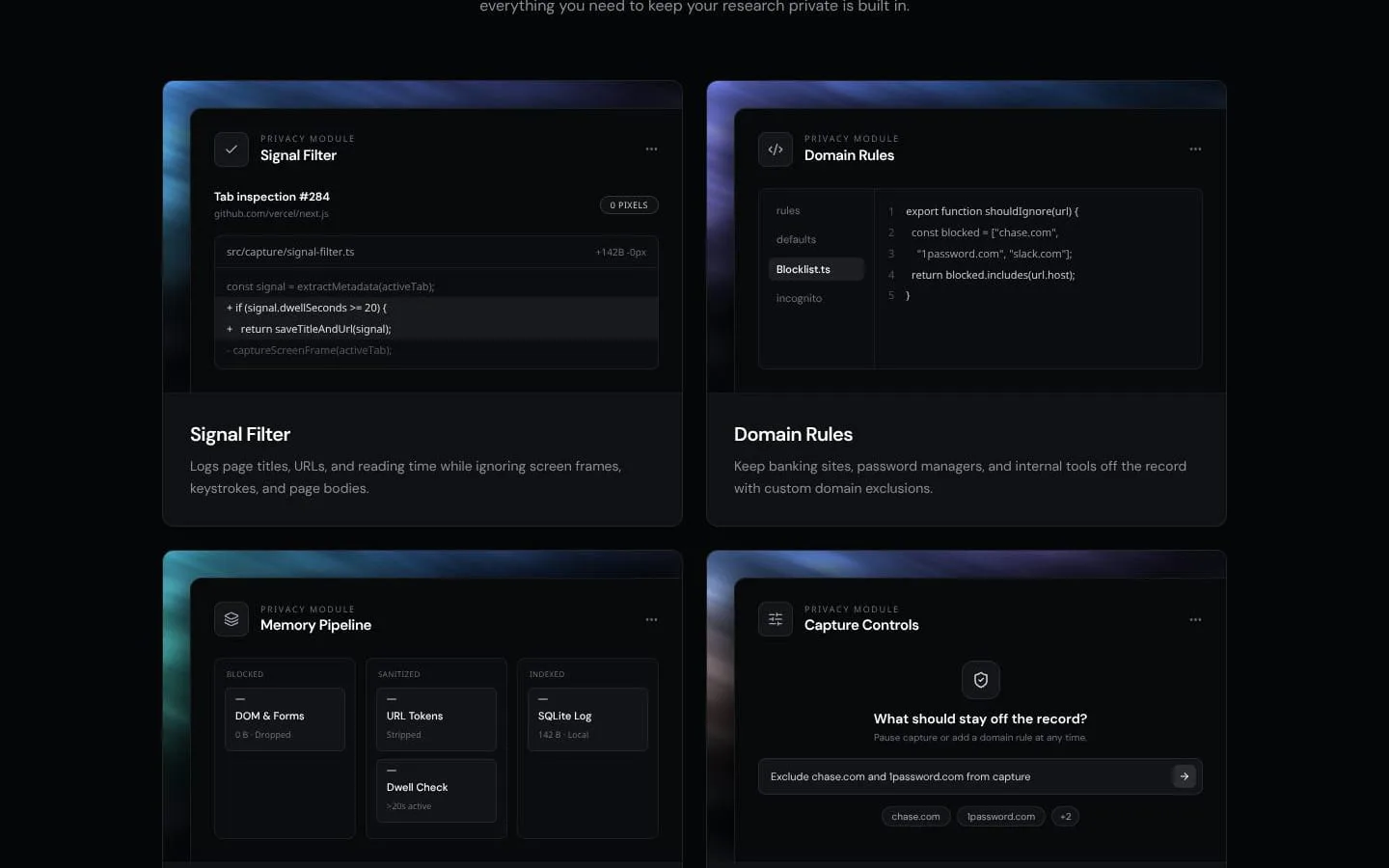
- Yorus avoids screenshots, keystrokes, and page-body capture, and provides pause controls, domain exclusions, and history deletion.
- Result
- Users can choose what is captured and manage or remove their research history.
- Why
- Limited capture and user controls help keep private browsing off the record.
Product questions
What does Yorus do?
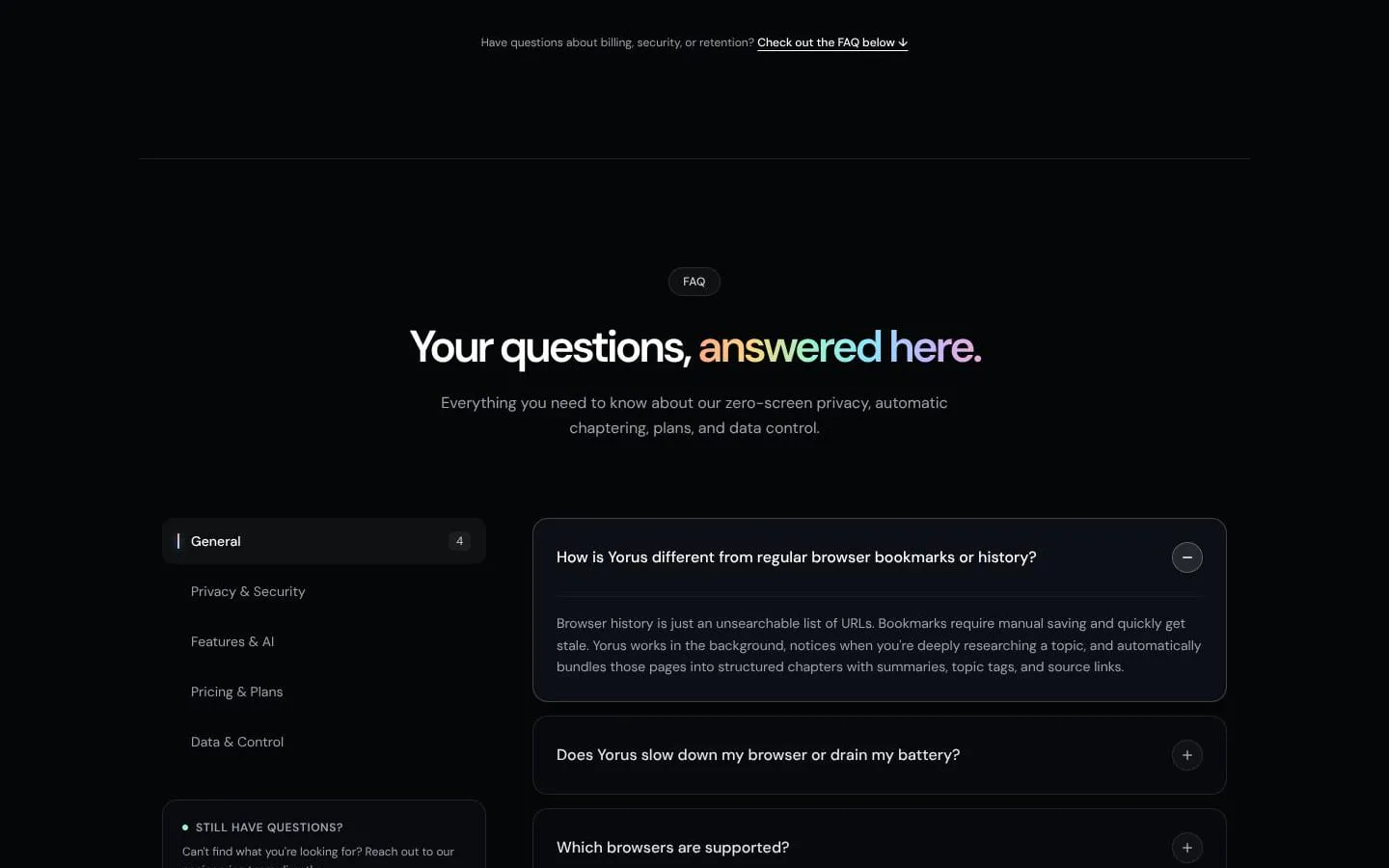
Yorus passively turns browser research into organized, searchable memory. It groups browsing into summarized chapters and digests, then lets users search or ask questions and return to cited source pages.
Who is Yorus for?
Researchers and engineers who want to organize and revisit information gathered while browsing.
Screenshots