Developer tools
Orbit
Build, launch, and improve full-stack AI-native apps on your own domain.
- Category
- Developer tools
- Stage
- Growth
- For
- People and teams building and launching web applications without managing the underlying stack.
About
Orbit is the AI application platform that builds full-stack, AI-native products from first idea to production scale.
Features
- Problem
- Ideas and notes are disconnected from the build process.
- How it works
- Scratchpad keeps ideas and notes in one place and lets users build directly from them.
- Result
- Users can move from an idea to an app build without recreating context.
- Why
- It connects early product thinking to implementation.
- Problem
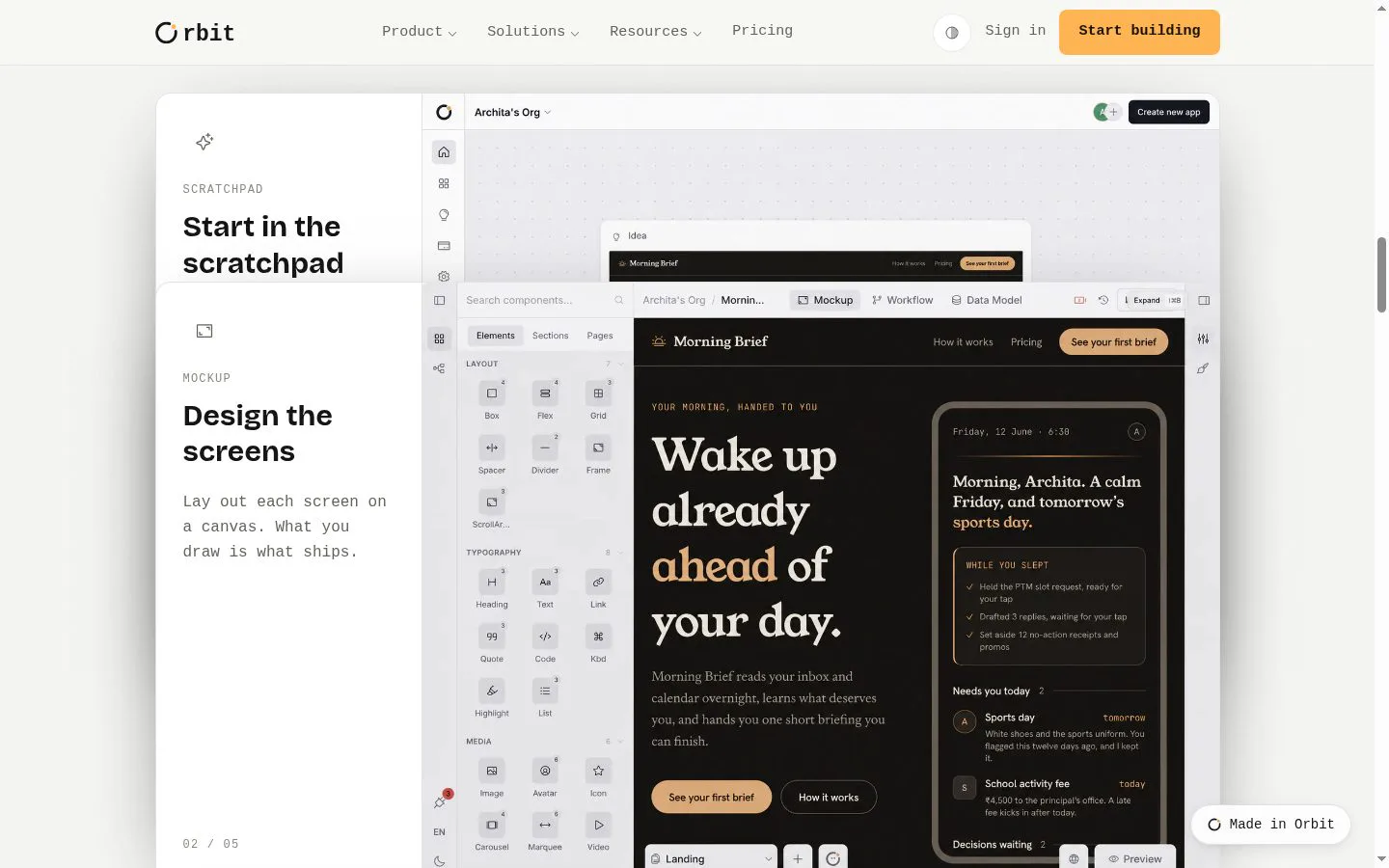
- Building interfaces often requires separate design and implementation work.
- How it works
- Users lay out screens on a canvas, with the stated promise that what they draw is what ships.
- Result
- Users can design and revise application screens visually.
- Why
- The screen-design surface is directly tied to the working app.
- Problem
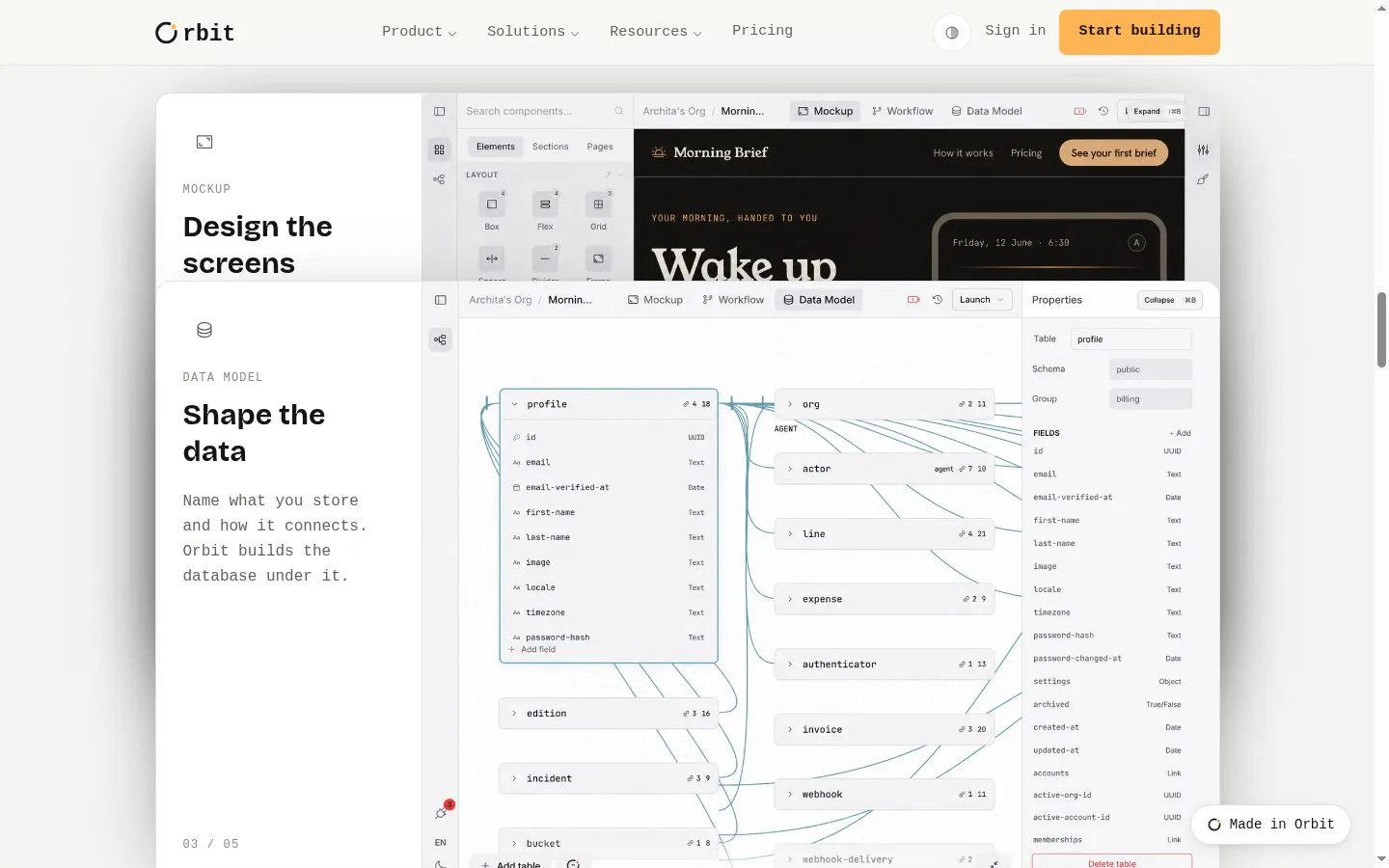
- Apps need structured, connected data without manual database setup.
- How it works
- Users name what they store and how records connect; Orbit builds the database beneath the model.
- Result
- Each app gets a data foundation that users can inspect, read, and query.
- Why
- Data modeling is part of the same app-building workflow.
- Problem
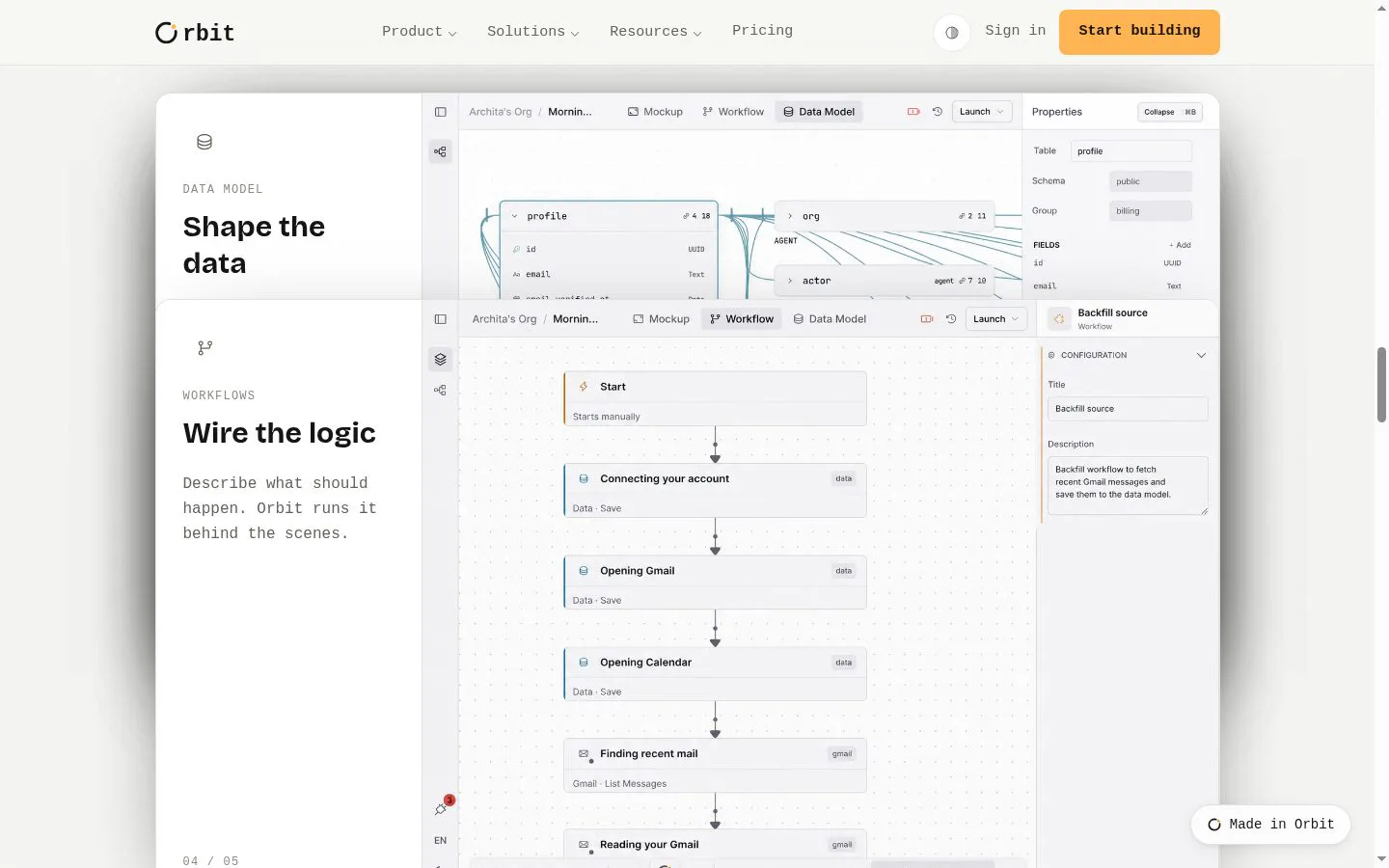
- Application behavior requires backend logic.
- How it works
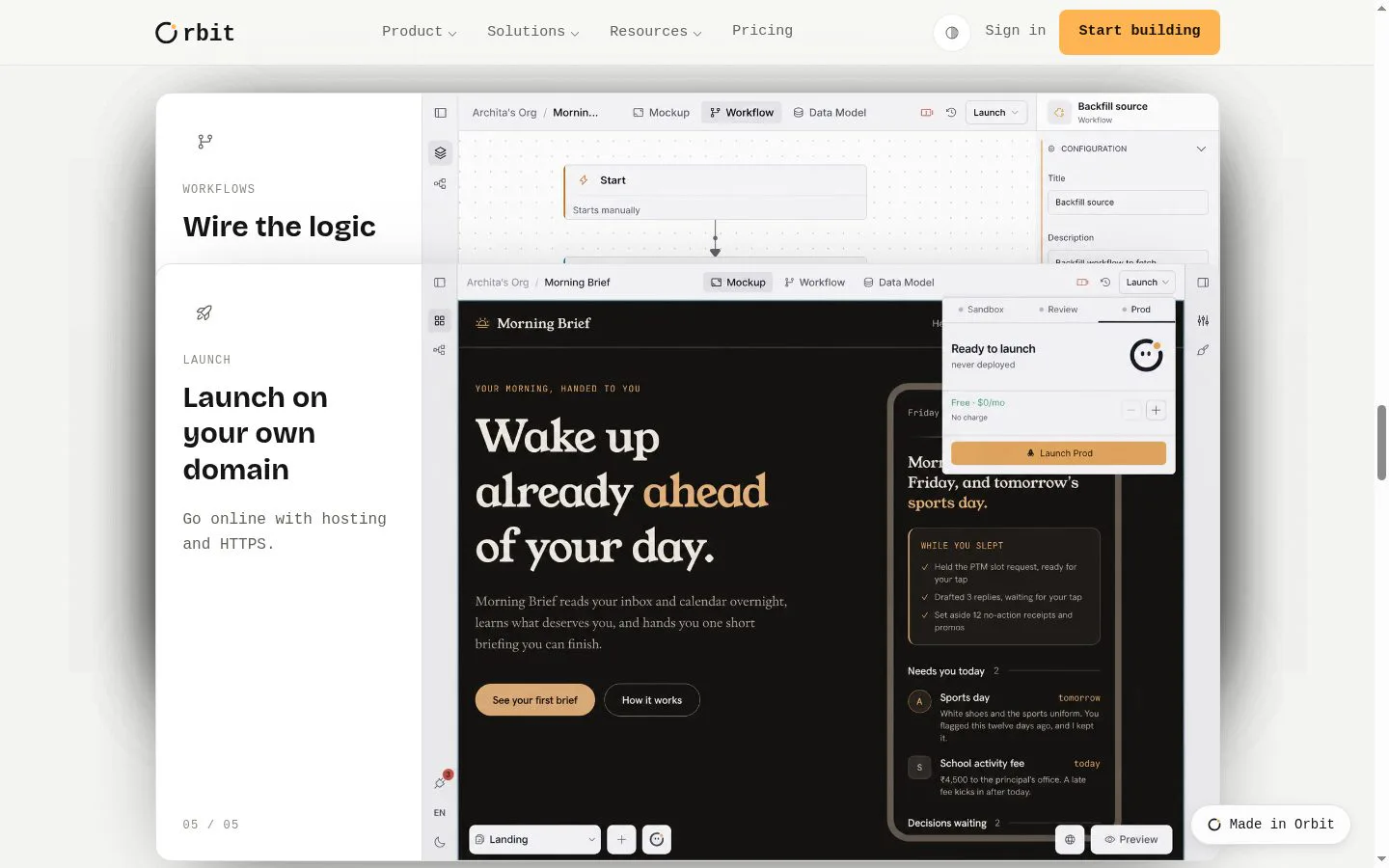
- Users describe what should happen, and Orbit runs workflows behind the scenes.
- Result
- Builders can add and change app behavior from the shared app surface.
- Why
- Logic is built alongside screens and data rather than as a separate system.
- Problem
- Launching an app requires deployment infrastructure and security configuration.
- How it works
- Orbit publishes apps on a customer-owned domain with managed hosting and HTTPS; it also states that apps include sign-in after launch.
- Result
- Users can put an app live and relaunch later changes without managing the stack.
- Why
- Deployment is included in the product lifecycle.
- Problem
- Teams may want to build from agents, chat, or a browser without fragmenting the project.
- How it works
- Claude or other MCP agents, Codex, WhatsApp, and the browser studio read and write the same app; Orbit also exposes a REST app-builder API.
- Result
- Builders can start from their preferred surface and continue working on the same project elsewhere.
- Why
- All entry points operate on one app model rather than exports or copies.
Screenshots