Photo editor
Rawnd
Open, cull and develop RAW photos in your browser
- Category
- Photo editor
- Stage
- Beta
- For
- Photographers who cull and develop RAW image files
- Platforms
- Web
- Pricing
- Free plan available, pro start at 6USD/month
About
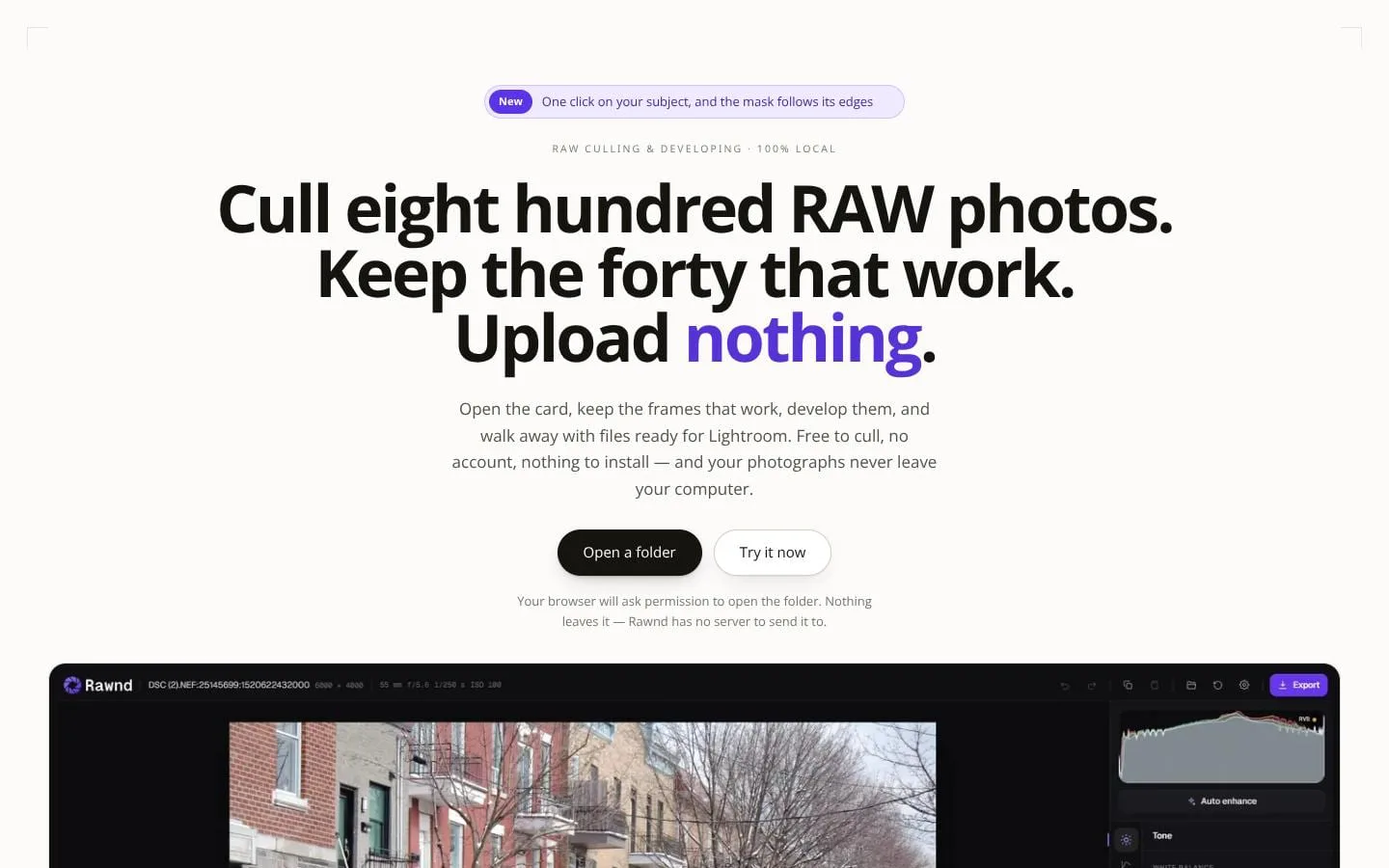
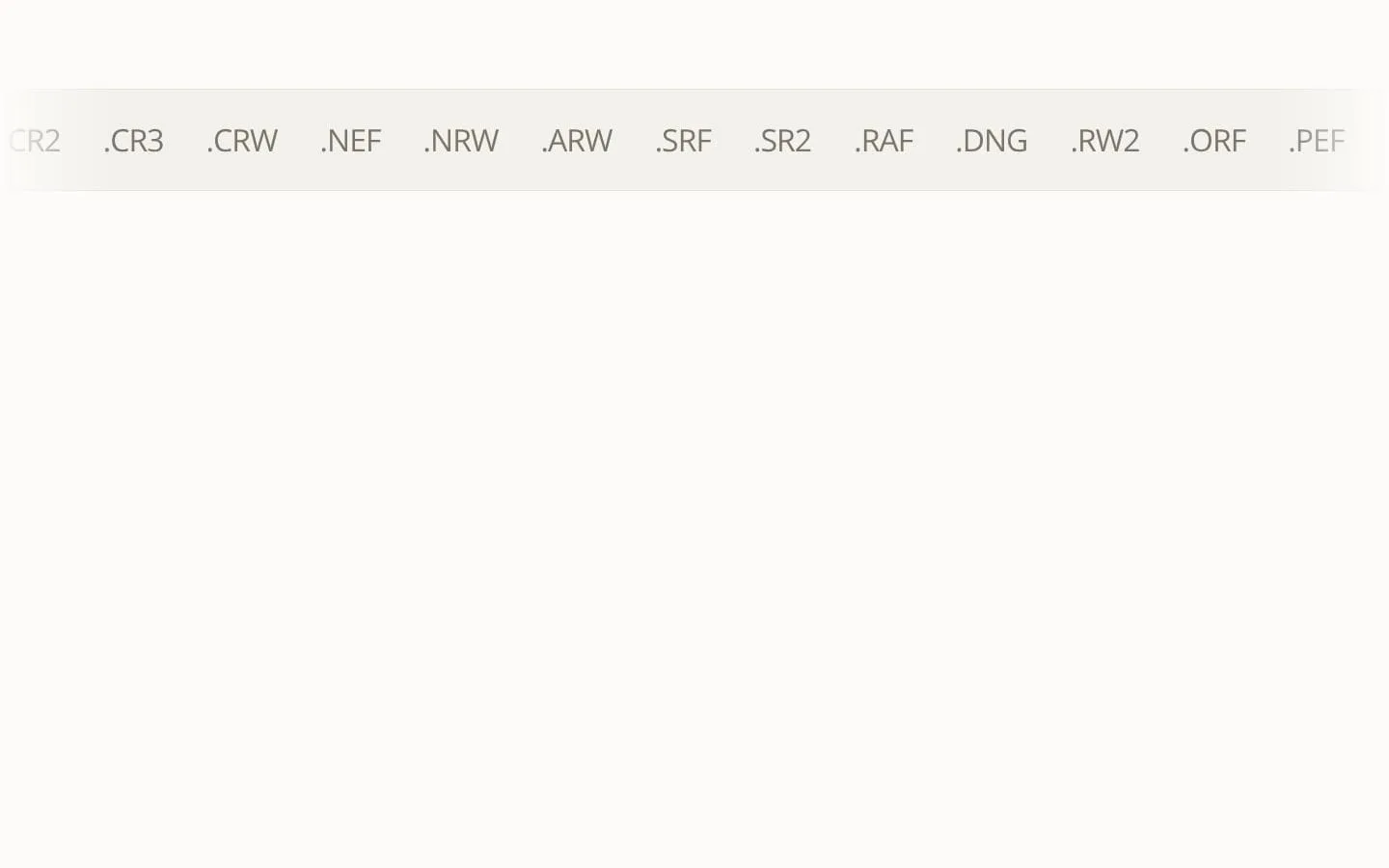
Open, rate and develop CR3, NEF, ARW and twelve other RAW formats in your browser. Everything happens on your own computer - your photos never go anywhere.
Features
- Problem
- Opening a shoot can require installation, import, and upload time.
- How it works
- Opens a local RAW folder in a desktop browser and decodes the first image in about a second.
- Result
- Photographers can start reviewing a card or folder without an install, catalogue, or upload queue.
- Why
- Rawnd reads originals in place on the photographer’s machine rather than sending them to a server.
- Problem
- Making keep/reject decisions across hundreds of frames is slow and repetitive.
- How it works
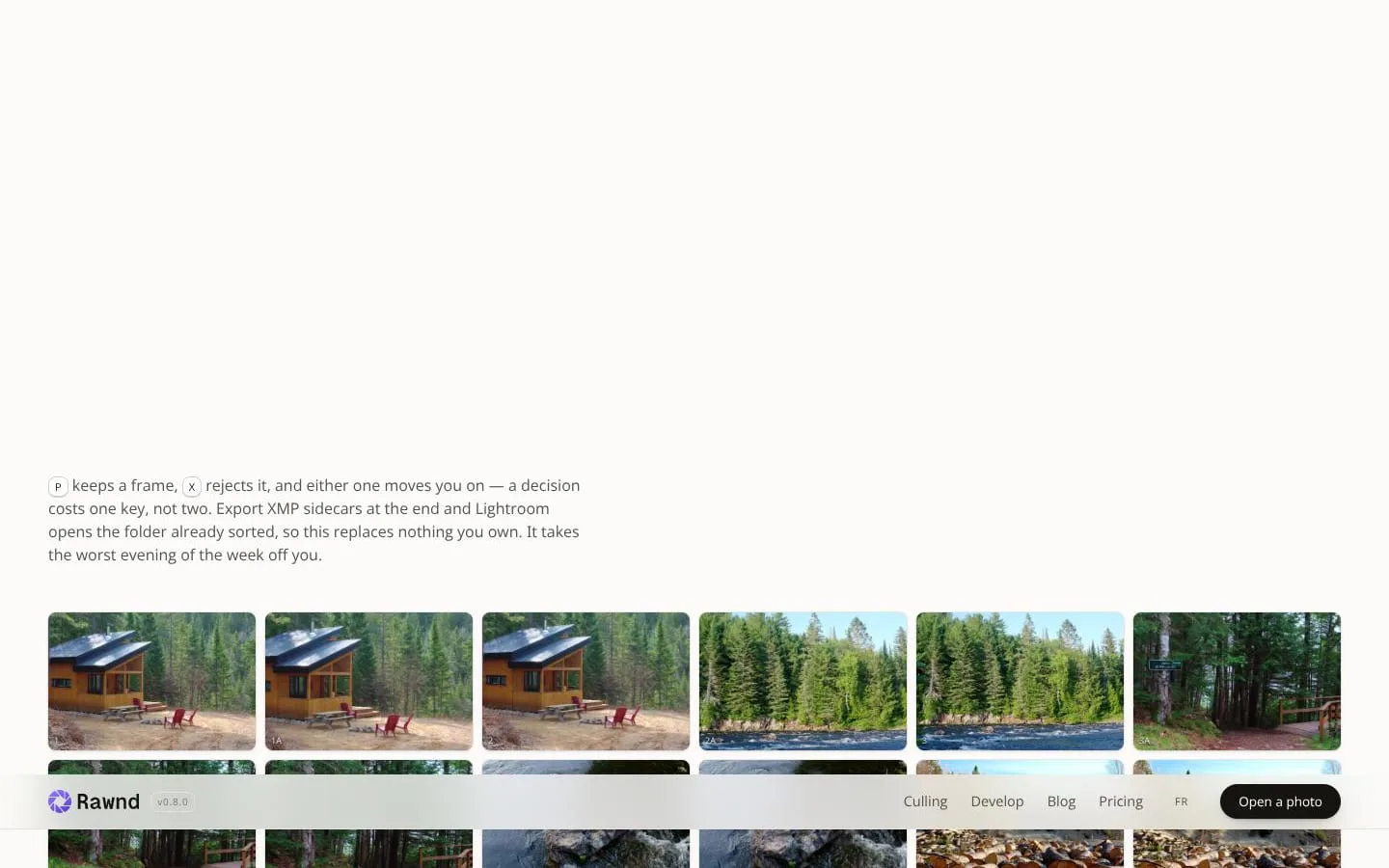
- Uses P to keep and X to reject; either action advances to the next frame. It also supports star ratings and side-by-side comparison.
- Result
- A large shoot can be narrowed to keepers quickly, with decisions retained after closing the tab.
- Why
- One-key decisions preserve the review rhythm and store decisions in the browser as work progresses.
- Problem
- Burst sequences and technically weak photos take time to inspect manually.
- How it works
- Pro assisted culling groups frames by capture time, identifies a strongest frame in each group, and filters soft, blown, too-dark, and closed-eye frames.
- Result
- Photographers get a faster review starting point while retaining final editorial control.
- Why
- The analysis runs locally and only shortlists candidates; it does not automatically reject photos.
- Problem
- Culled selections often need to be recreated in another editor.
- How it works
- Exports XMP sidecars beside original RAW files, including ratings, rejects, crop, straightening, and supported basic development settings.
- Result
- Users can continue their workflow in existing Adobe tools with key sorting decisions already present.
- Why
- Lightroom, Camera Raw, and Bridge can read these sidecars on import.
- Problem
- A RAW viewer alone does not finish the selected images.
- How it works
- Develops decoded sensor data with tone, curve, colour, HSL, masks, detail, effects, and crop controls; exports JPEG, WebP, PNG, or XMP.
- Result
- Keepers can receive a first development pass or be rendered as finished image files without leaving the browser.
- Why
- Edits are non-destructive and processed locally; tonal work operates on linear sensor data.
- Problem
- Applying consistent edits across a shoot is laborious.
- How it works
- Pro supports pasted settings, user presets, series evening for exposure and white balance, and batch export for selections.
- Result
- Photographers can carry a look or exposure balance across related images with fewer repeated adjustments.
- Why
- The paid tier is focused on operations that affect multiple photographs at once.
- Problem
- Cloud photo tools can be unsuitable on location or for privacy-sensitive work.
- How it works
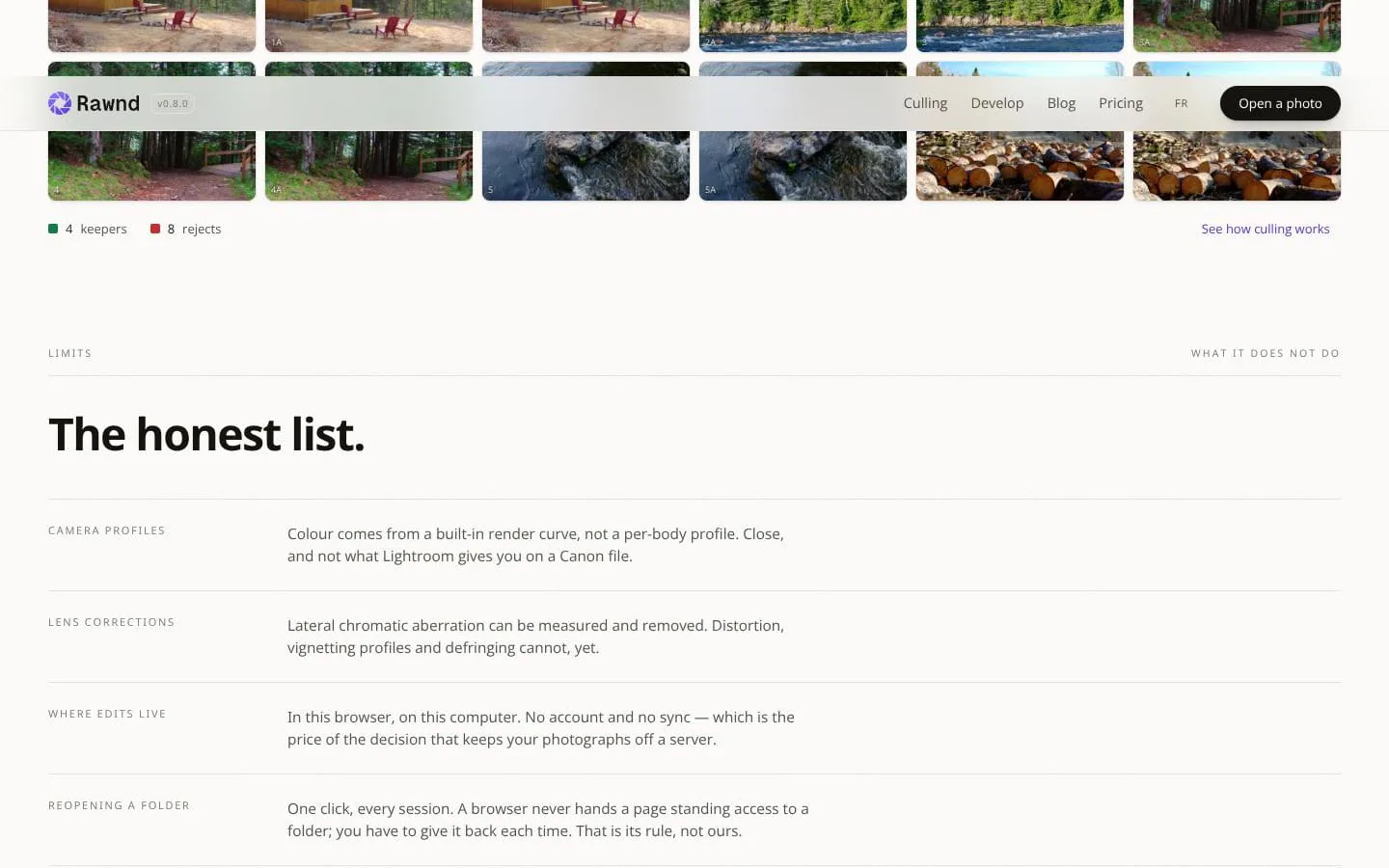
- Runs offline after the first visit and keeps photos and edits on the local computer, with no account or server-based sync.
- Result
- Photographers can work without connectivity while keeping images on their own device.
- Why
- The product is designed so files are read and processed locally.
Screenshots