AI
NoteFusion
Turn every melody into notation
- Category
- AI
- Stage
- Growth
- For
- Choir directors, vocalists, music teachers, accompanists, and musicians who need melody transcription in Tonic Solfa and staff notation.
About
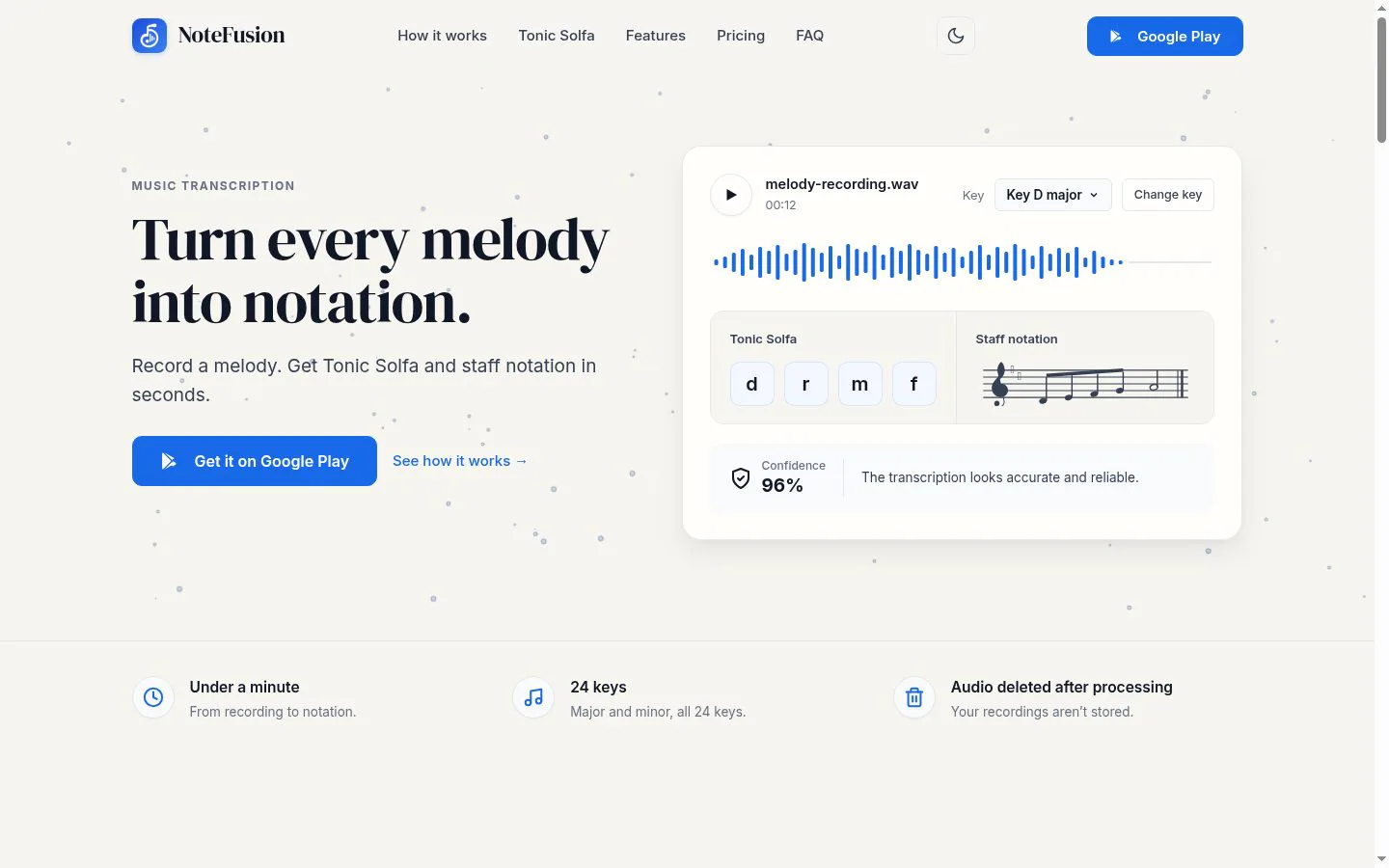
NoteFusion turns recorded or imported melodies into movable-do Tonic Solfa and staff notation in seconds.
Features
- Problem
- Melodies captured as audio are not immediately usable as teaching or rehearsal notation.
- How it works
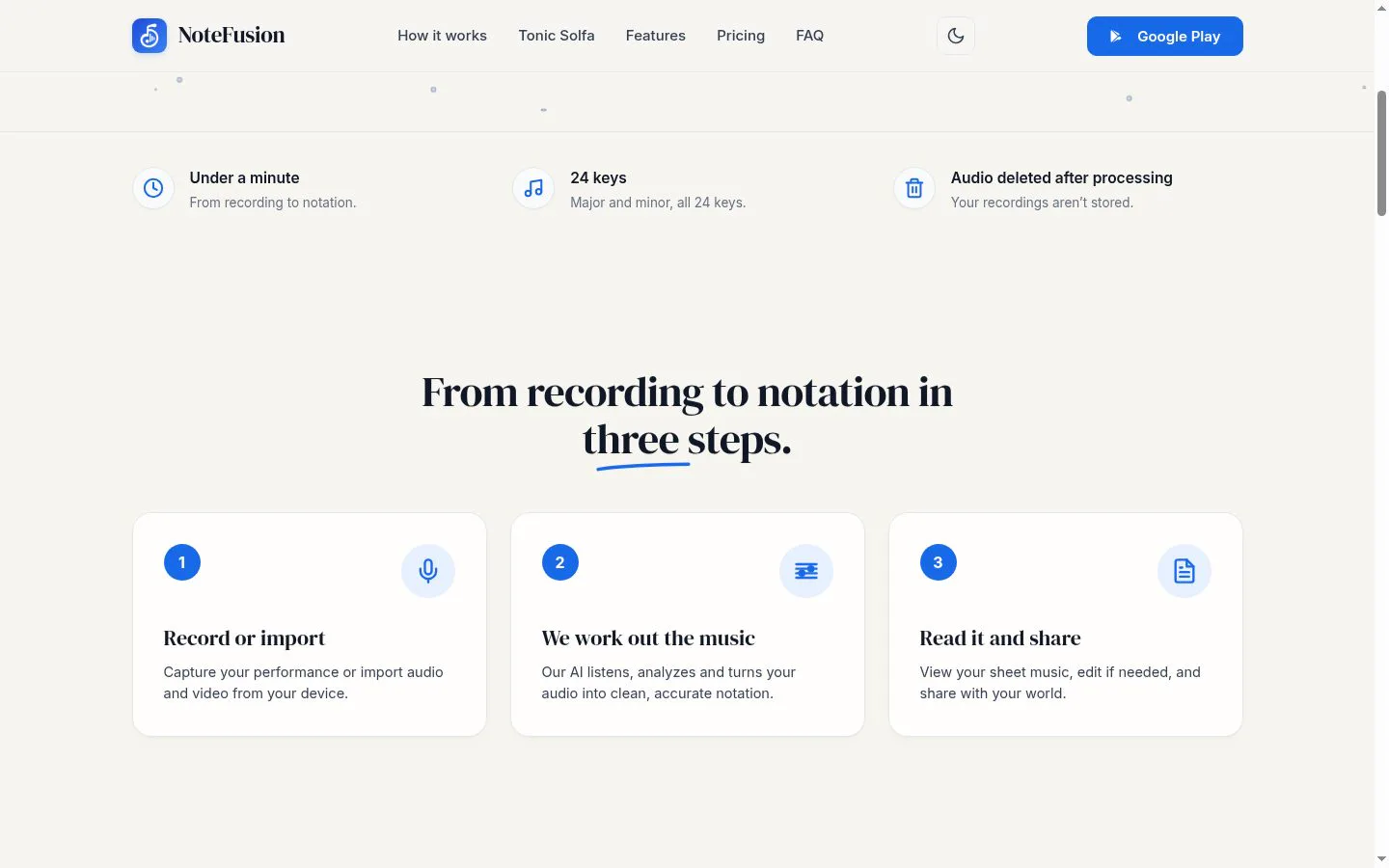
- Users record a performance or import audio and video; the AI analyzes it and creates clean notation.
- Result
- A recording becomes Tonic Solfa and staff notation in seconds.
- Why
- This removes the manual transcription step between a melody and readable music.
- Problem
- Fixed-note labels are less practical for singers using movable-do.
- How it works
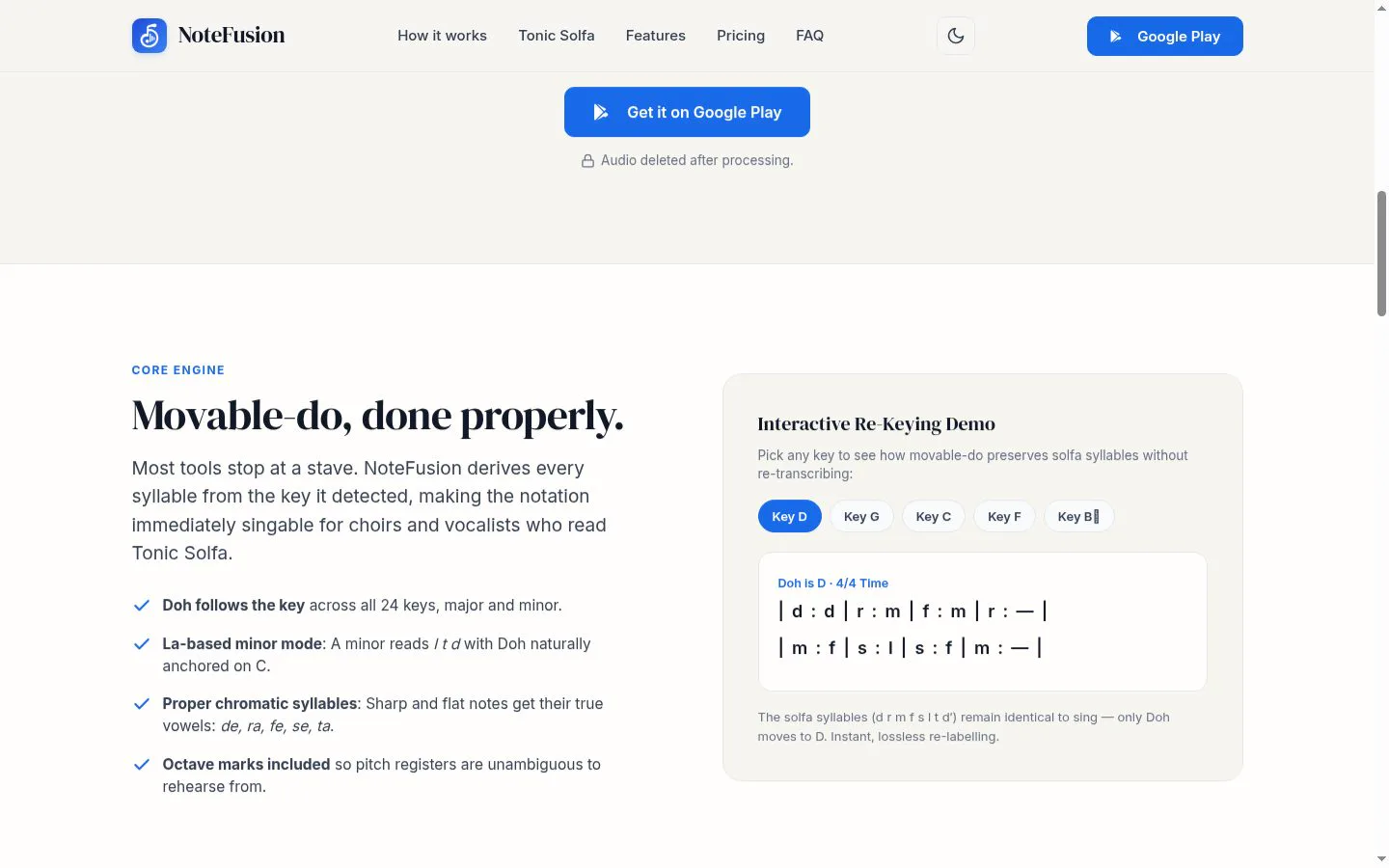
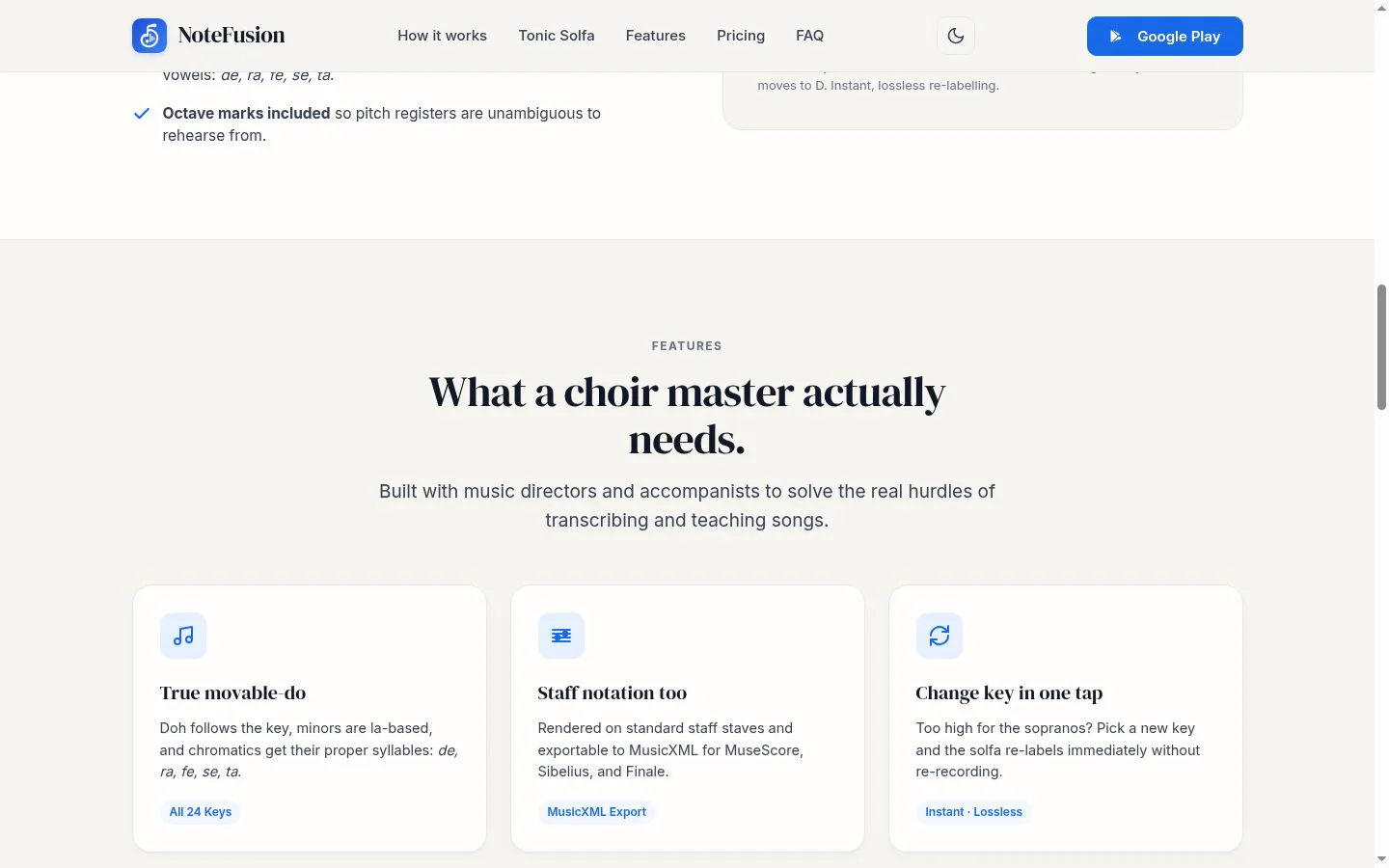
- NoteFusion derives solfa from the detected key, supports la-based minor, chromatic syllables, and octave marks.
- Result
- Choirs and vocalists get clear, rehearsal-ready movable-do notation.
- Why
- The notation remains immediately singable across major and minor keys.
- Problem
- A song may need to be moved into a more comfortable vocal range.
- How it works
- Users can select a new key and instantly re-label the solfa without re-recording or re-transcribing.
- Result
- Users can adapt a transcription to a new key in one tap.
- Why
- Re-keying is presented as a lossless musical relabelling.
- Problem
- Users need a way to judge whether a transcription needs review.
- How it works
- Each result includes an objective confidence rating.
- Result
- Musicians can focus review effort on uncertain passages.
- Why
- The score indicates whether a passage is rock-solid or should be checked.
- Problem
- Notation needs to move into established score-editing workflows.
- How it works
- The app renders staff notation and exports MusicXML for MuseScore, Sibelius, and Finale.
- Result
- Users can continue editing or arranging their sheet music elsewhere.
- Why
- MusicXML supports use beyond the NoteFusion library.
- Problem
- Users may be concerned about retaining voice recordings.
- How it works
- Audio is deleted after transcription processing, while clean notation remains in the library.
- Result
- Users retain notation without keeping submitted audio on the service.
- Why
- The product states that recordings are not stored or used to train third-party models.
Screenshots