Developer tools
PickOpenSource
Choose open-source tools by tradeoffs
- Category
- Developer tools
- Stage
- Growth
- For
- Developers and technical teams evaluating open-source software
- Platforms
- Web
About
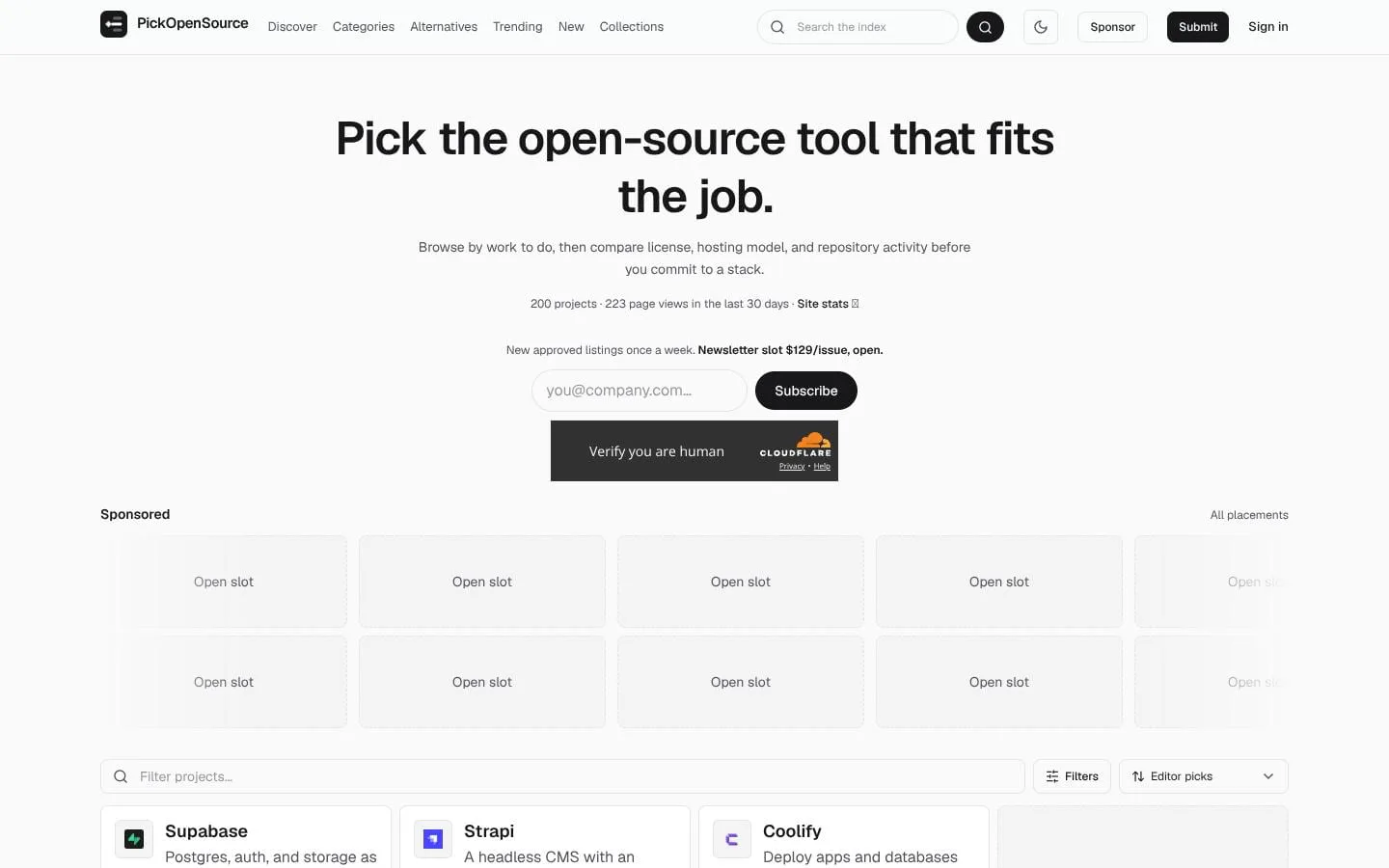
Pick open-source tools with license, hosting, and maintenance facts in one place.
Features
- Problem
- Broad software directories make it hard to begin with a concrete need.
- How it works
- Groups projects into work-oriented categories such as AI, authentication, databases, monitoring, and developer tools.
- Result
- Teams can identify a practical shortlist faster.
- Why
- Starting from the job narrows evaluation to relevant options.
- Problem
- An open-source license or self-hosting requirement can materially change a tool choice.
- How it works
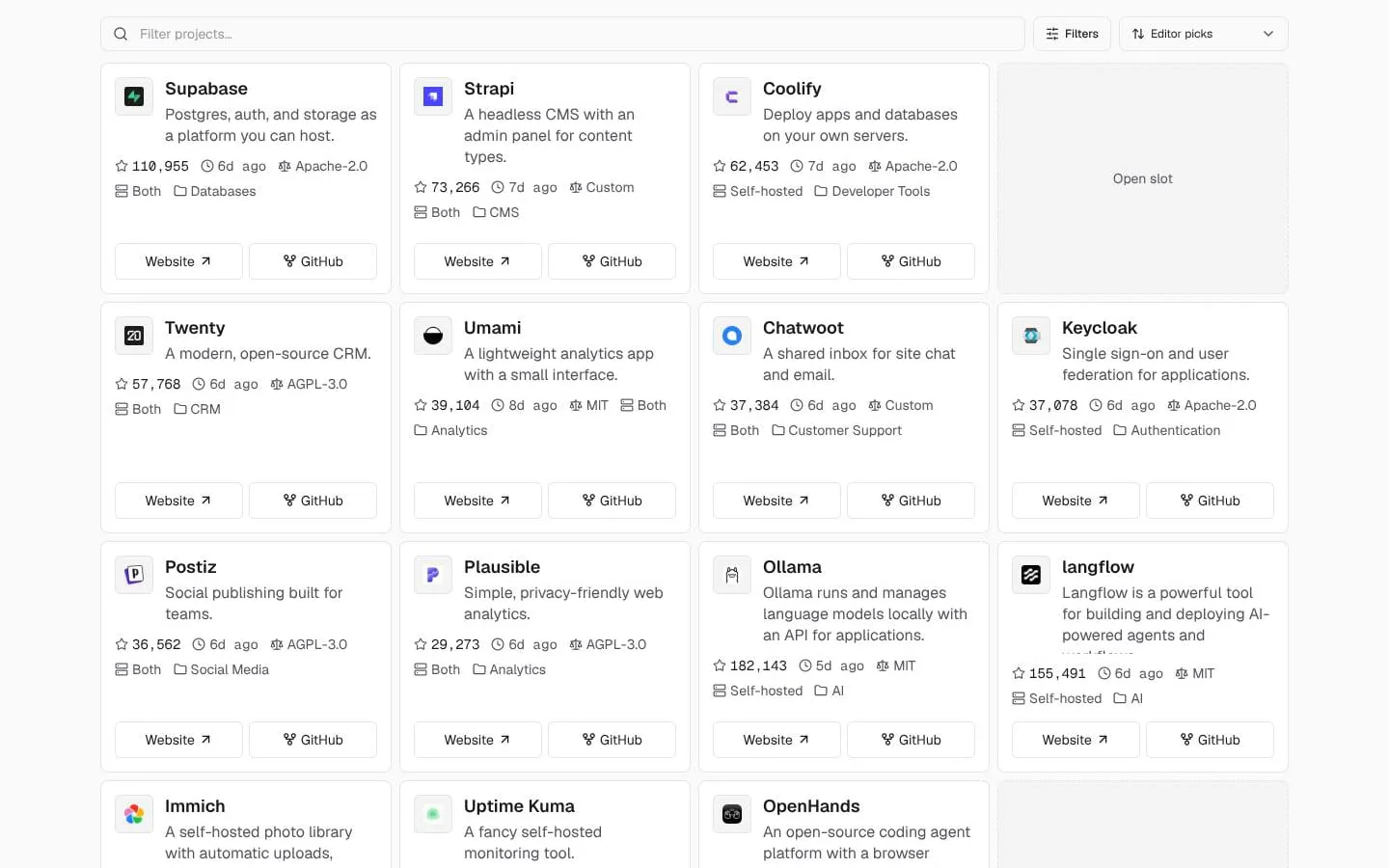
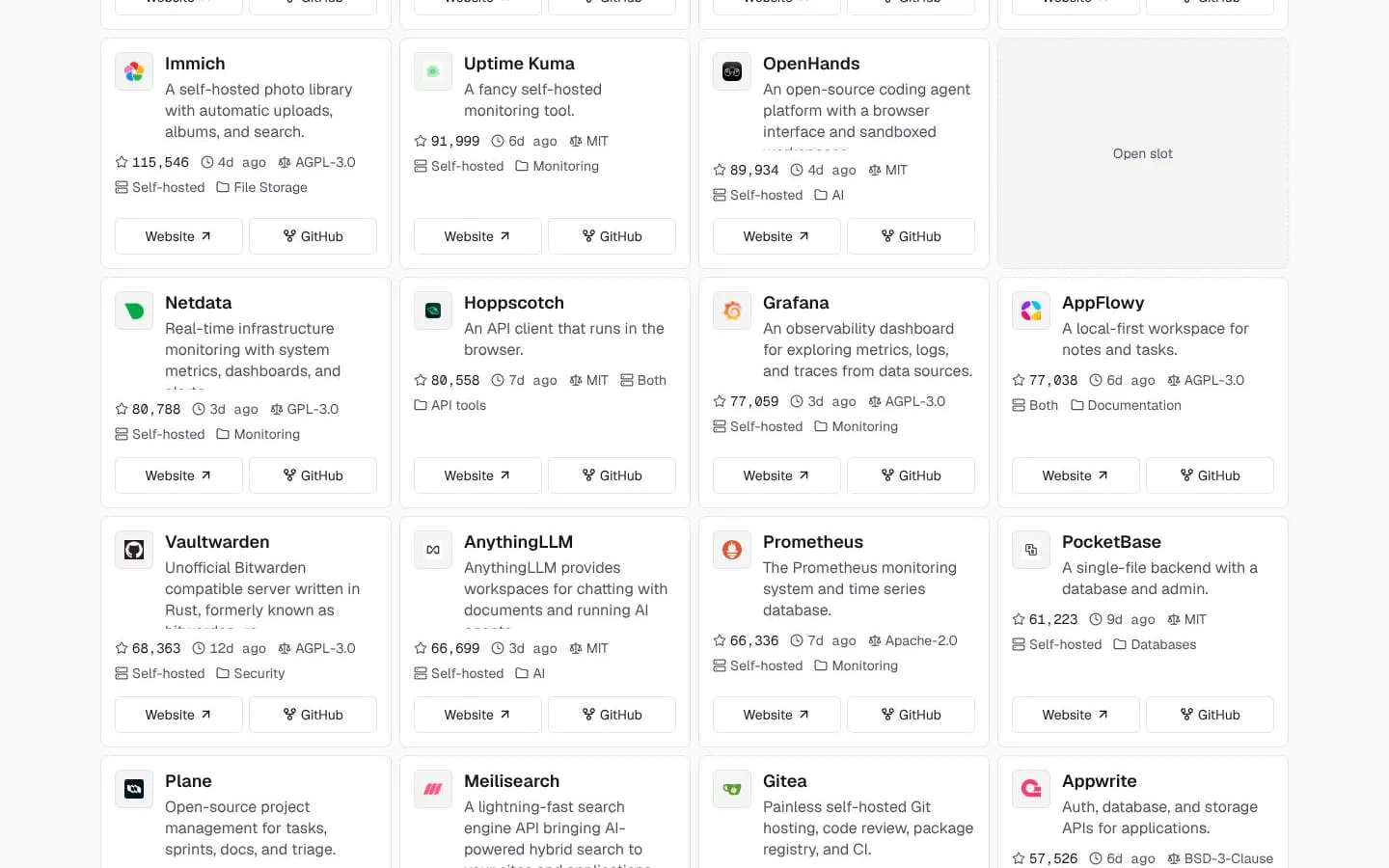
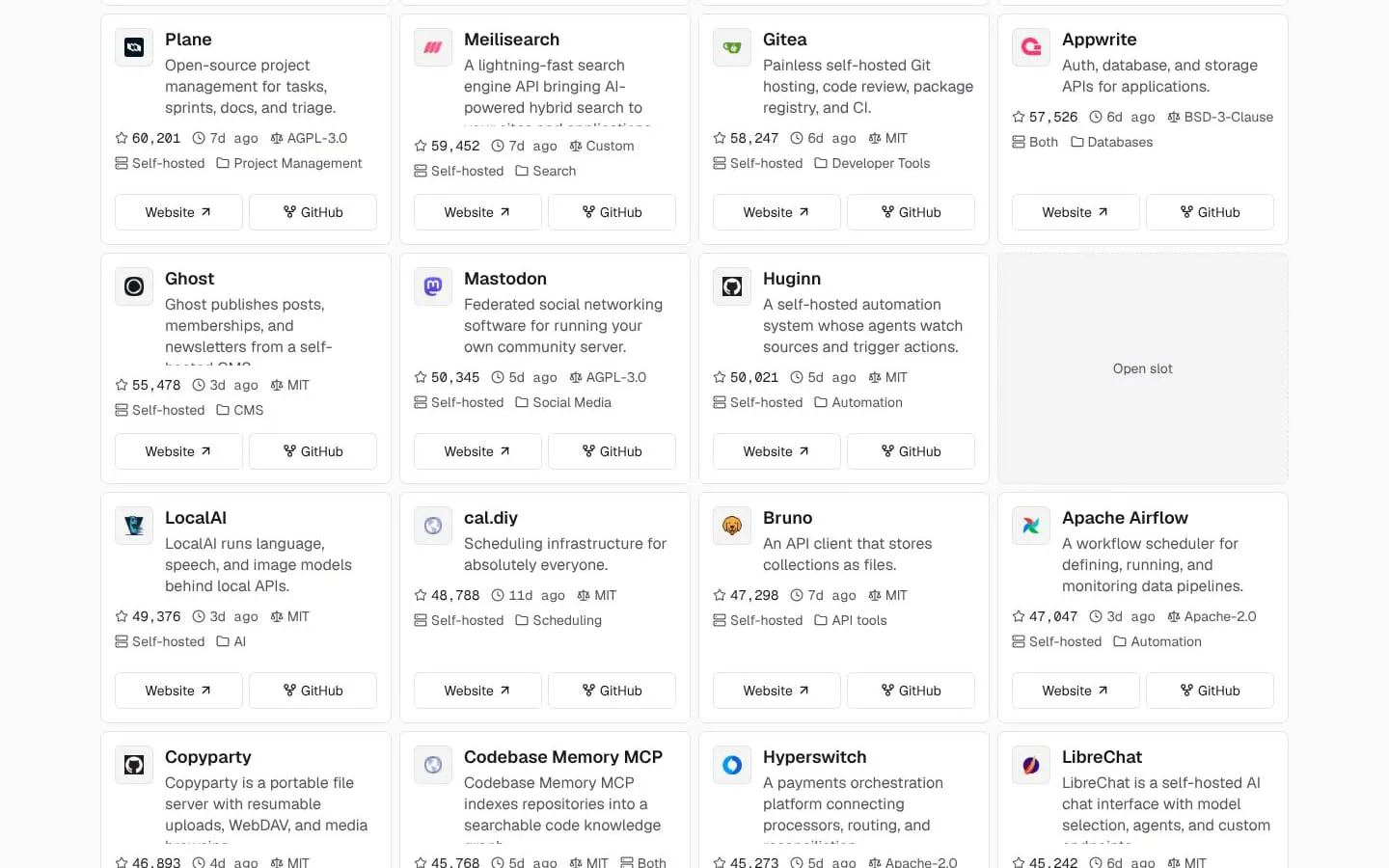
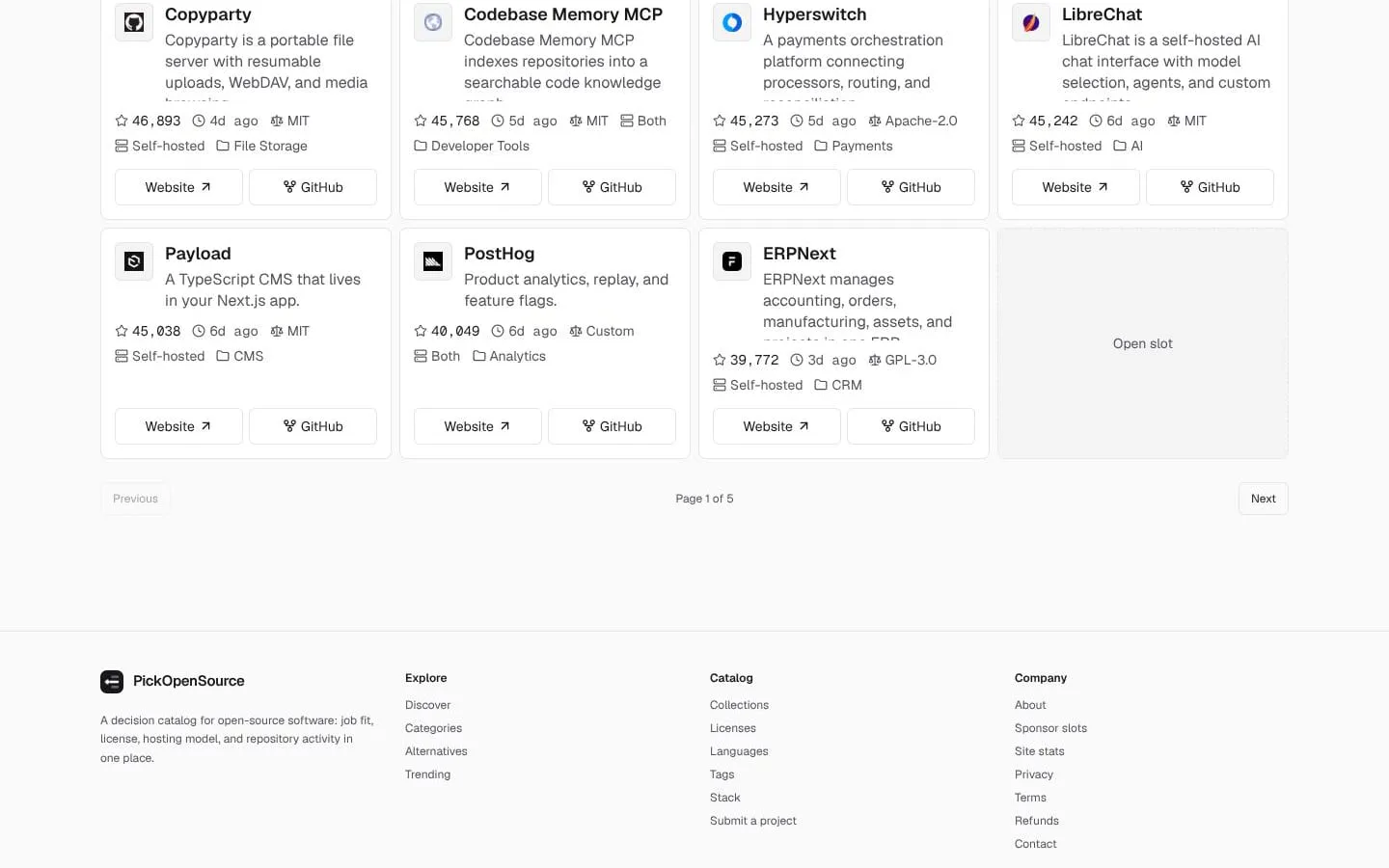
- Shows each listing’s license and hosting model alongside the project summary.
- Result
- Evaluators can screen for compatible adoption constraints.
- Why
- Deployment and licensing tradeoffs should be visible before deeper evaluation.
- Problem
- Repository popularity alone does not establish current maintenance.
- How it works
- Displays stars and update timing, and provides sorting for recently updated, most stars, latest release, directory activity, and trending score.
- Result
- Users can weigh momentum and maintenance alongside functional fit.
- Why
- Teams need multiple signals when assessing project activity.
- Problem
- Replacing a familiar SaaS product requires migration-aware alternatives.
- How it works
- Offers alternative pages for products such as Firebase, Notion, Salesforce, Zapier, Intercom, and Auth0, with comparison guidance.
- Result
- Teams can discover open-source options in the context of the product they want to leave.
- Why
- A commercial product is often the most concrete starting point for a replacement search.
- Problem
- Long tool lists can make stack planning overwhelming.
- How it works
- Publishes short editorial collections for jobs such as a startup stack, self-hosted essentials, AI tools, and privacy-minded analytics.
- Result
- Teams can assemble an initial stack with fewer decisions.
- Why
- Curated sets provide a focused starting point while retaining links to underlying tradeoff data.
Screenshots