Developer tools
R2Upload
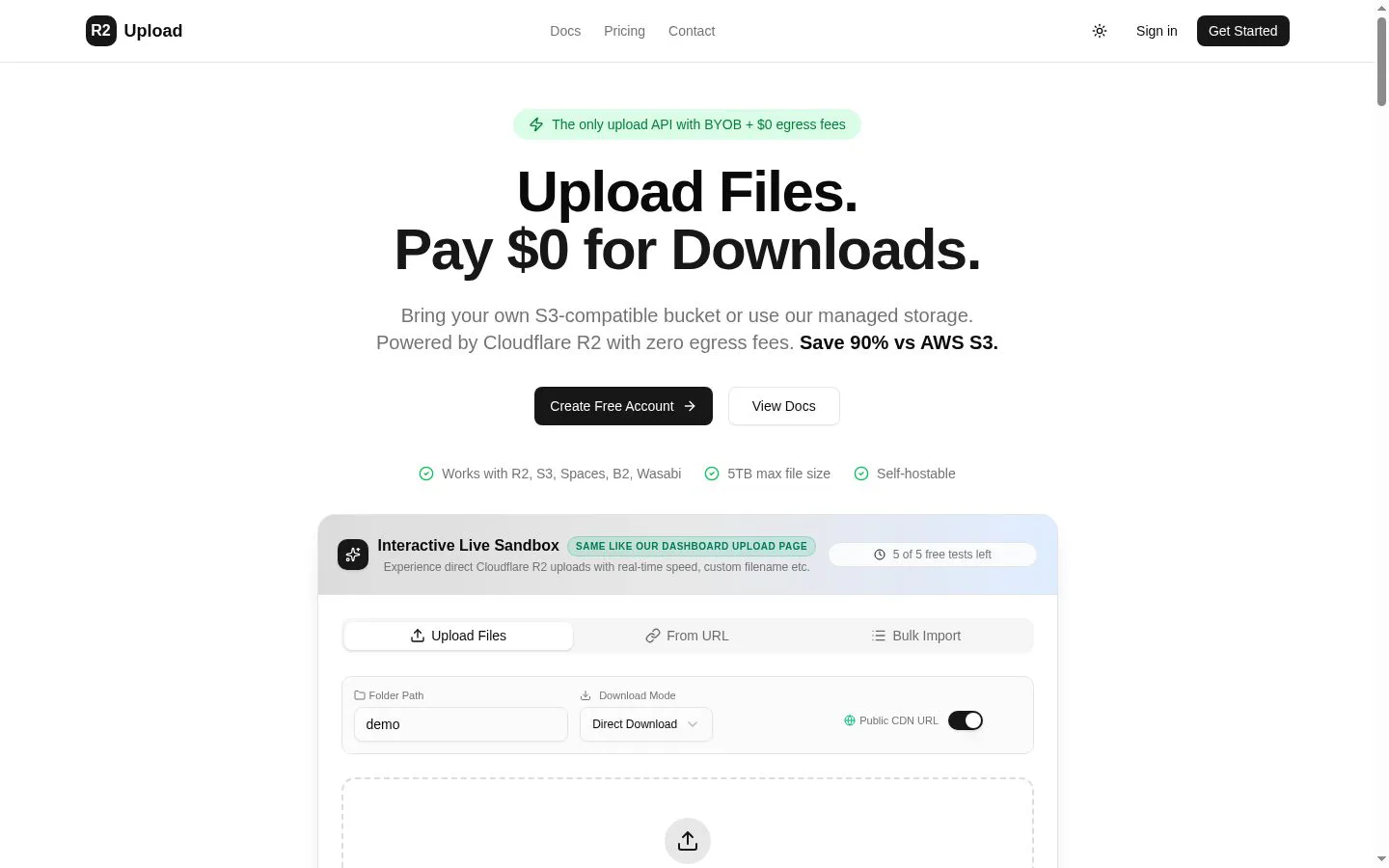
$0 Egress File Upload API for Cloudflare R2 and S3
- Category
- Developer tools
- Stage
- Growth
- For
- Developers, SaaS teams, media platforms, e-commerce businesses, and agencies managing file uploads to S3-compatible storage.
About
File upload API with BYOB S3-compatible storage, $0 egress fees, 5 TB max file size, remote URL uploads, bulk API, magic links, and an embeddable widget. Powered by Cloudflare R2.
Features
- Problem
- Egress fees can make high-download workloads expensive.
- How it works
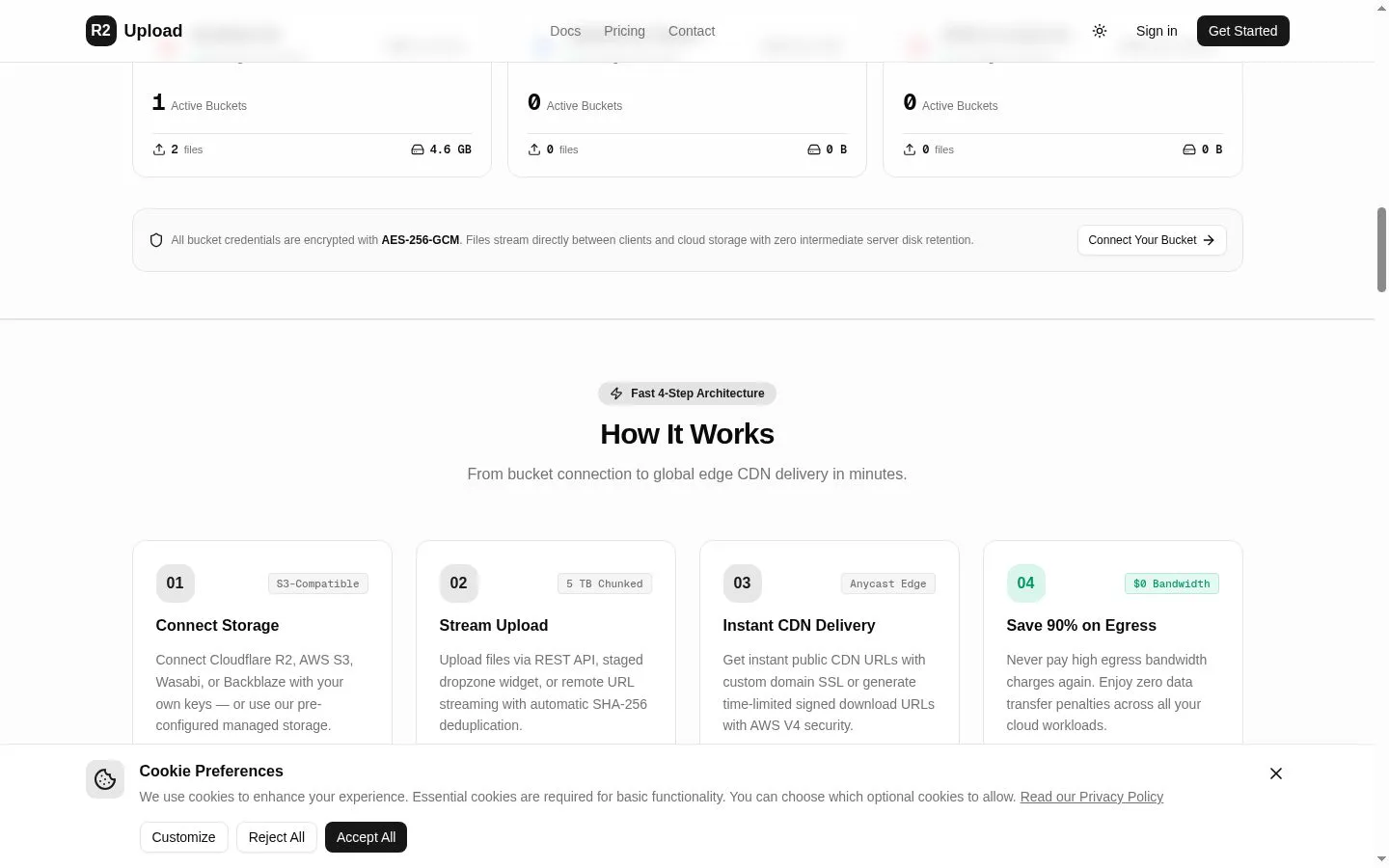
- Uses Cloudflare R2-backed managed storage and supports R2-connected buckets with zero-egress delivery positioning.
- Result
- Lower bandwidth costs for file-heavy applications.
- Why
- Avoids traditional per-GB download charges.
- Problem
- Supporting multiple storage providers requires separate integrations.
- How it works
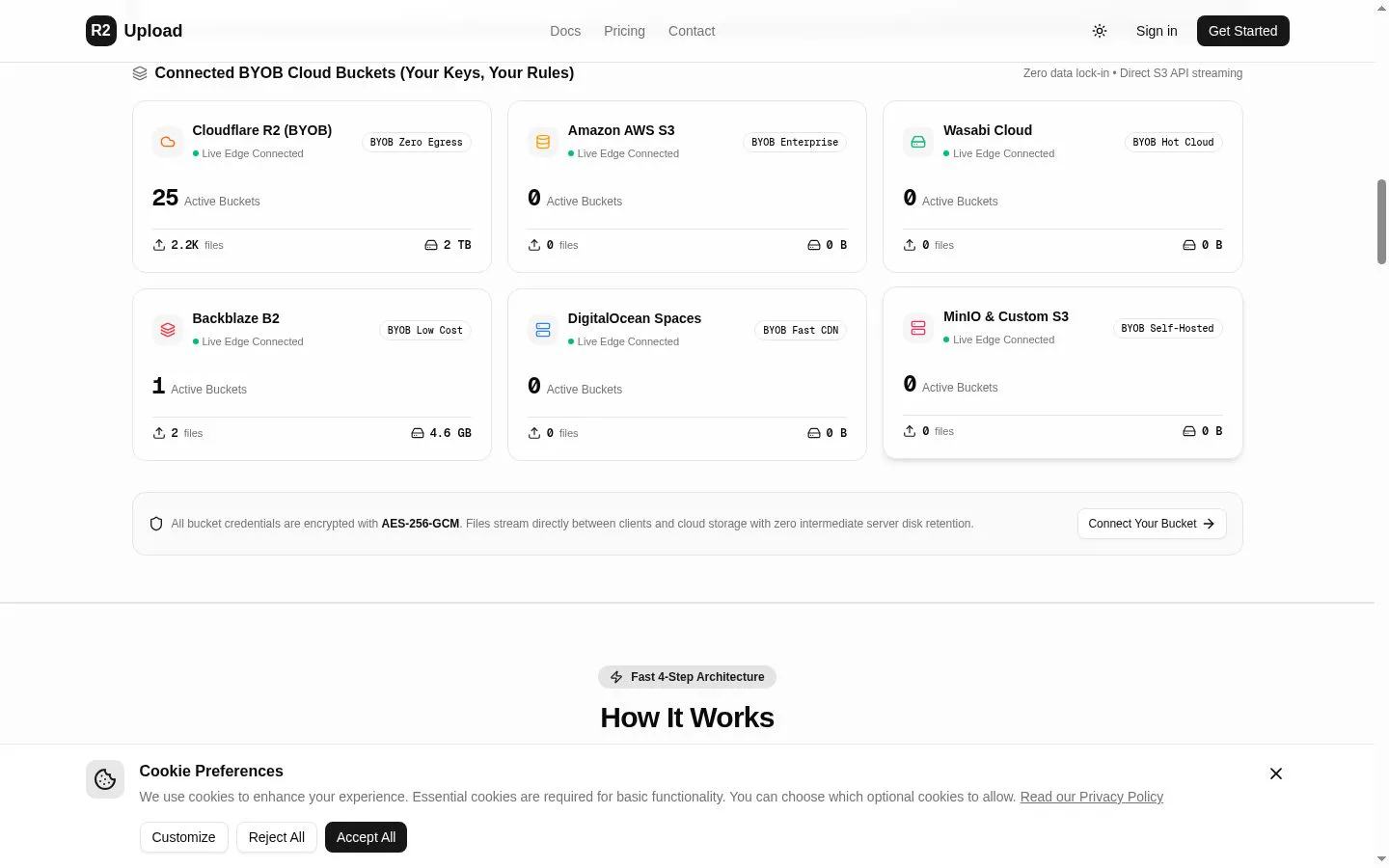
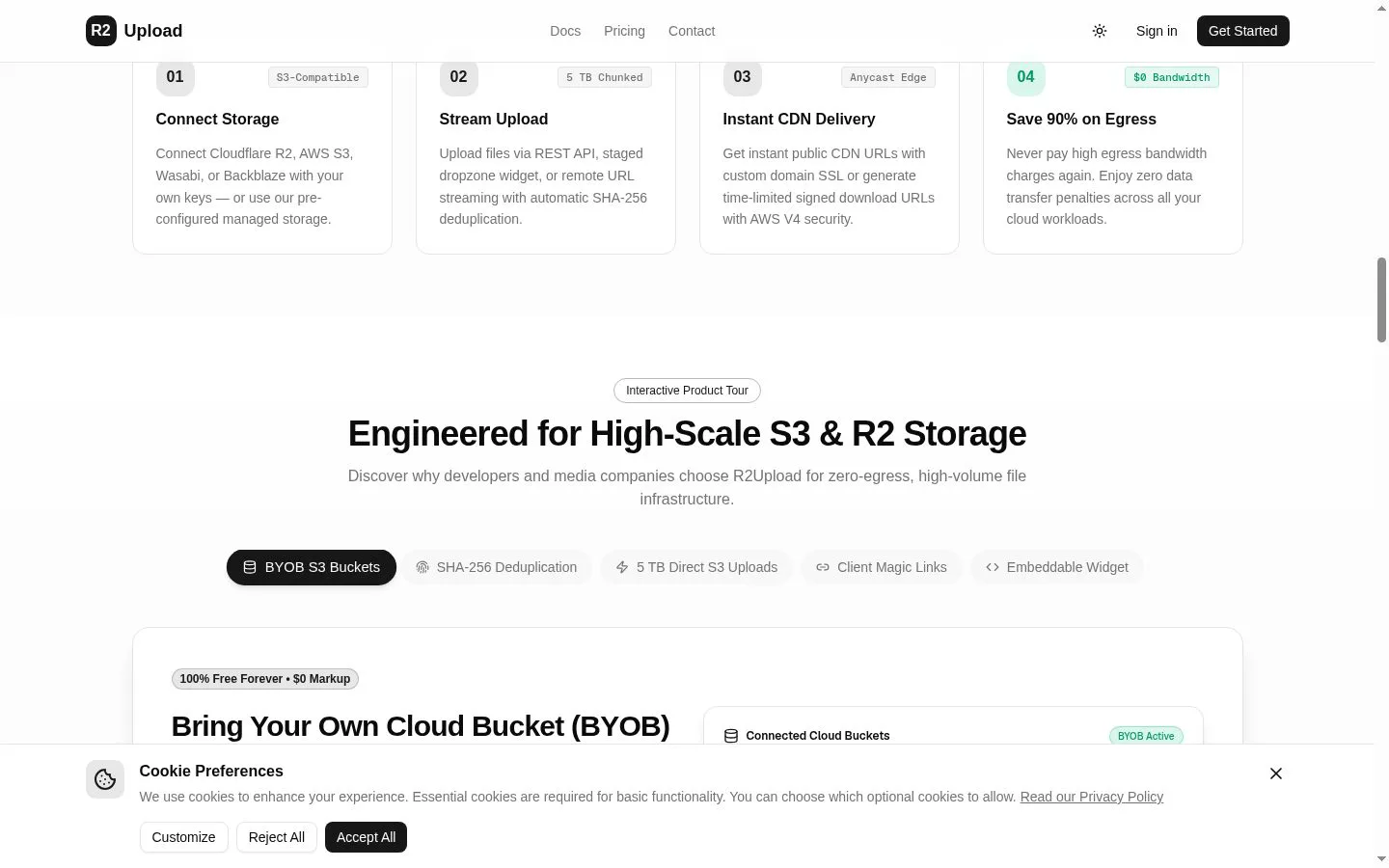
- Connects Cloudflare R2, AWS S3, Wasabi, Backblaze B2, DigitalOcean Spaces, MinIO, and compatible S3 storage through one API.
- Result
- Multi-cloud BYOB uploads without storage lock-in.
- Why
- Lets teams retain their chosen storage infrastructure.
- Problem
- Large files and remote assets need reliable ingestion paths.
- How it works
- Supports chunked multipart uploads up to 5 TB, remote URL streaming, and bulk ingestion of up to 100 URLs per call.
- Result
- Scalable file ingestion workflows.
- Why
- Covers direct user uploads, migrations, and catalog imports.
- Problem
- Duplicate uploads increase storage consumption.
- How it works
- Performs automatic SHA-256 integrity verification and deduplication.
- Result
- Reduced duplicate storage costs.
- Why
- Identical assets can share physical storage.
- Problem
- Applications need controlled file access and external submission flows.
- How it works
- Generates public CDN URLs, time-limited signed URLs, and password- and expiry-capable Magic upload links.
- Result
- Flexible, secure access for users and clients.
- Why
- Supports both public delivery and restricted sharing.
- Problem
- Teams need a faster way to add uploads to their product.
- How it works
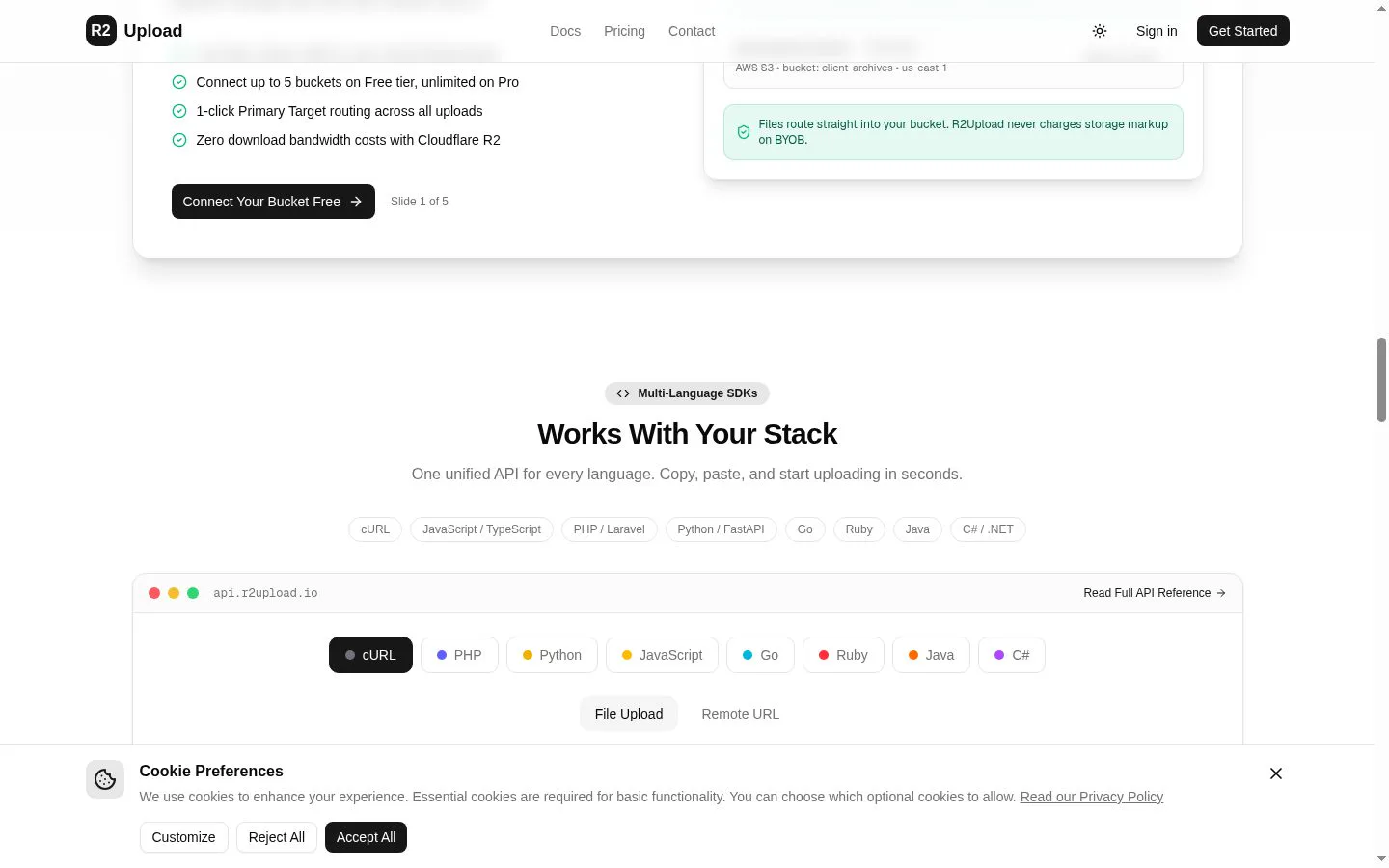
- Offers a REST API, multi-language examples, and an embeddable drag-and-drop upload widget with progress tracking.
- Result
- Quicker implementation of file-upload experiences.
- Why
- Reduces custom frontend and backend upload work.
Screenshots