Developer Tools
Sidebox
A multi-project dashboard for indie developers.
- Category
- Developer Tools
- Stage
- Growth
- For
- Indie hackers, solo founders, and small teams managing multiple products.
- Platforms
- Web
- Pricing
- Free Trial Available for all plans Starting at $12/mo
About
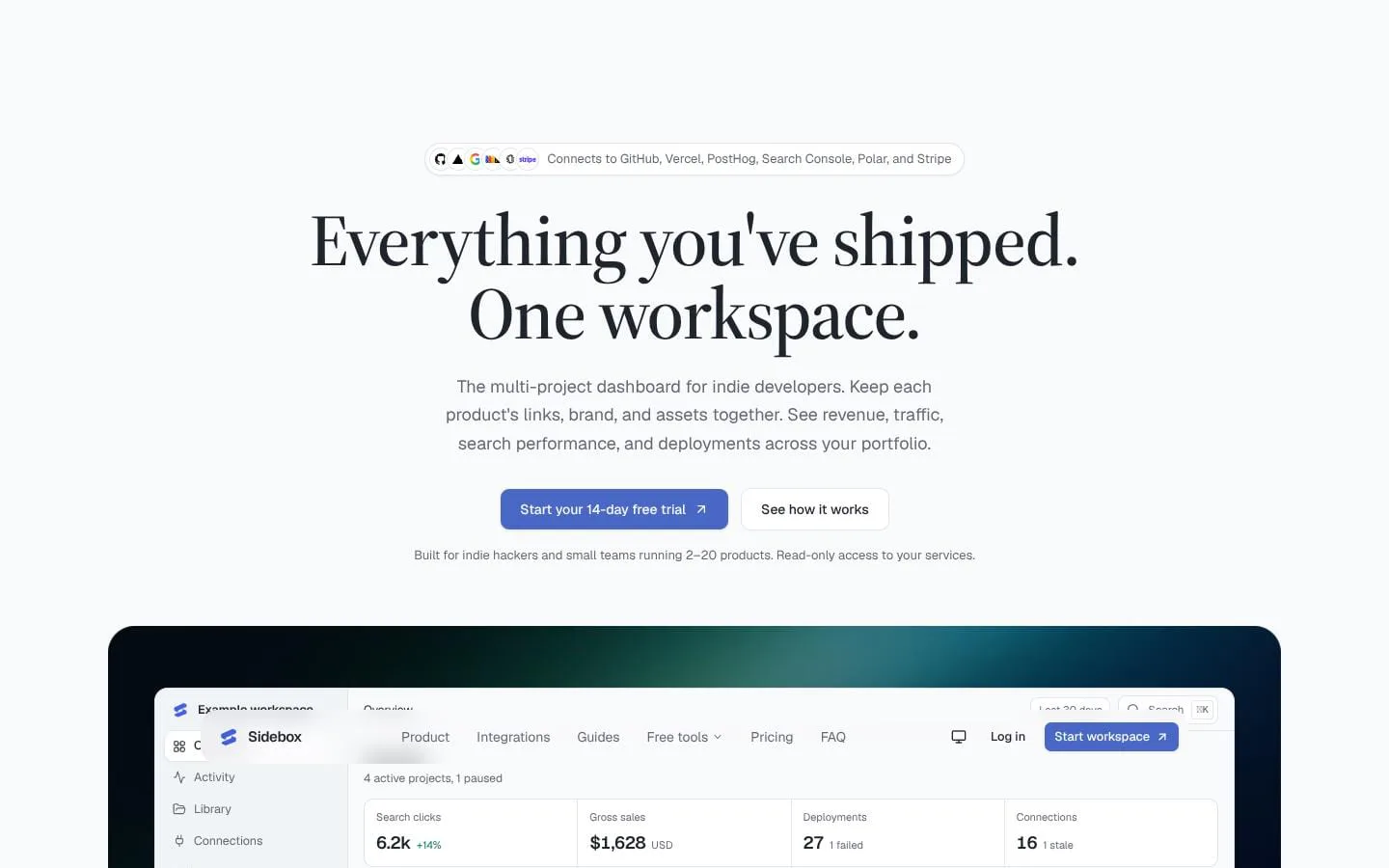
A dashboard for indie hackers and solo founders running multiple products. Keep links, brand, and assets beside revenue, traffic, search, and deployments.
Use cases
- View all your apps metrics in one place
Features
- Problem
- Product resources and identity are scattered.
- How it works
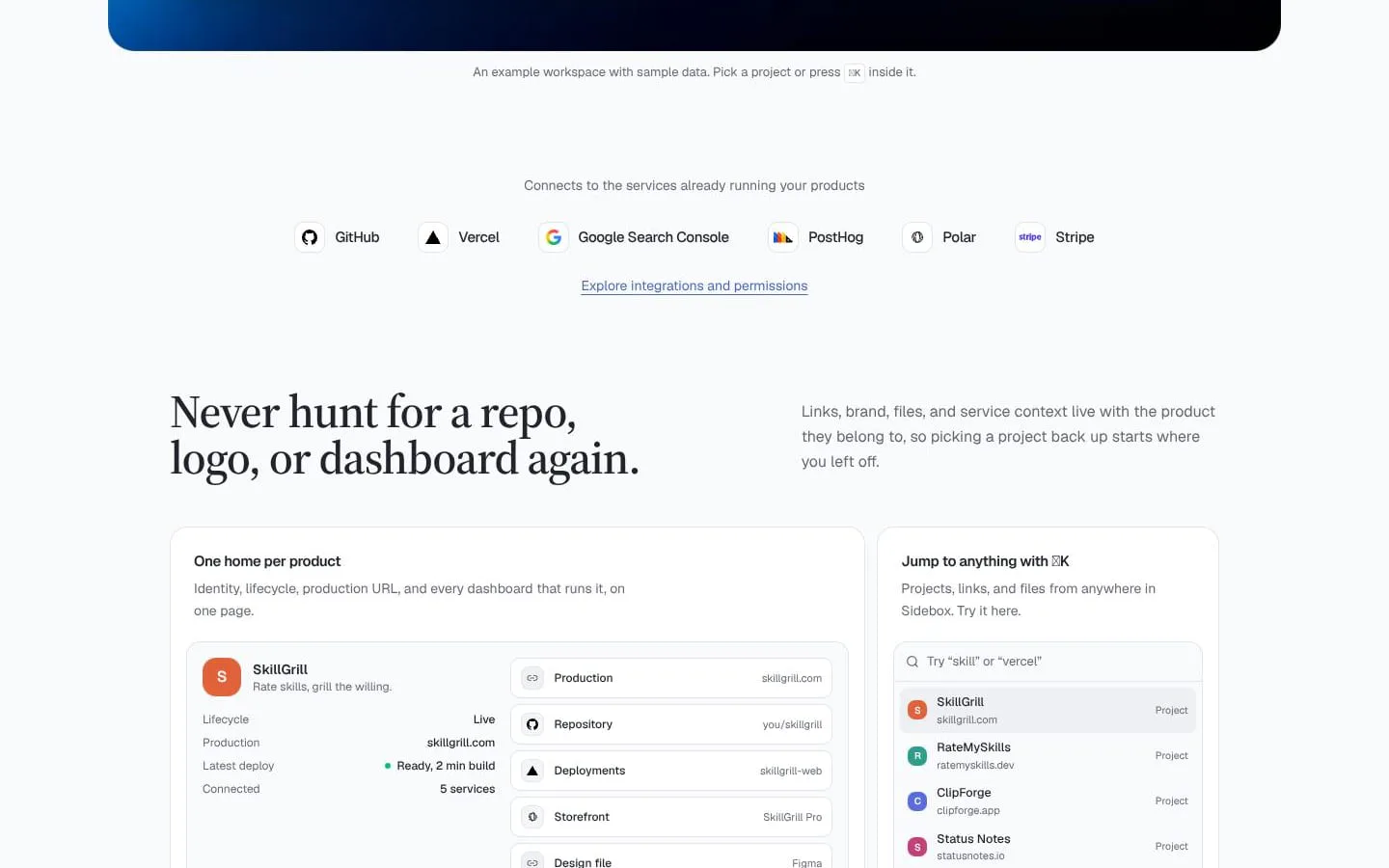
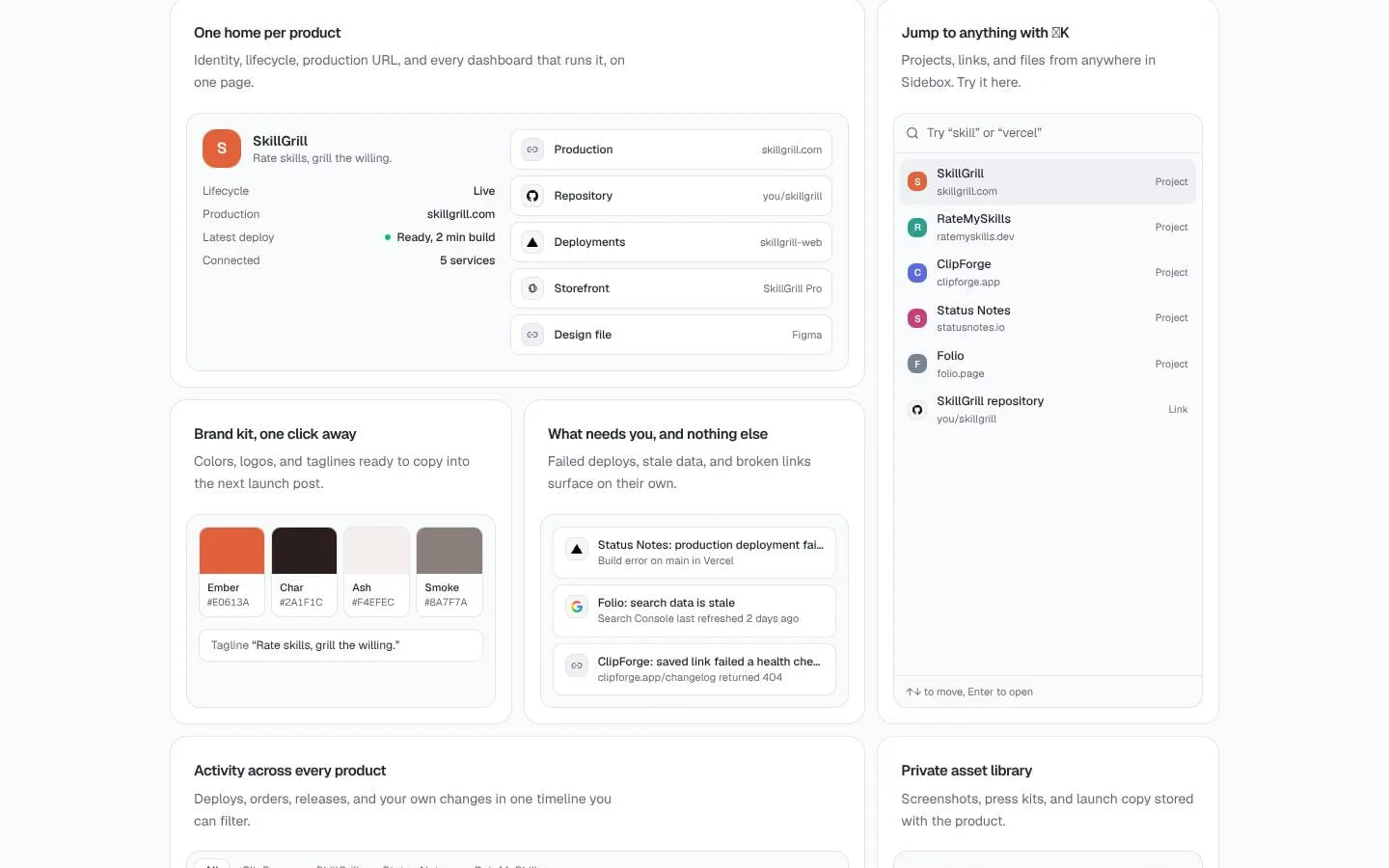
- Creates one project home containing identity, lifecycle, production URL, connected services, saved links, brand details, and private assets.
- Result
- Users can resume work without hunting for repositories, dashboards, logos, or launch files.
- Why
- Context remains attached to the product it belongs to.
- Problem
- Checking every product requires a tab-by-tab review.
- How it works
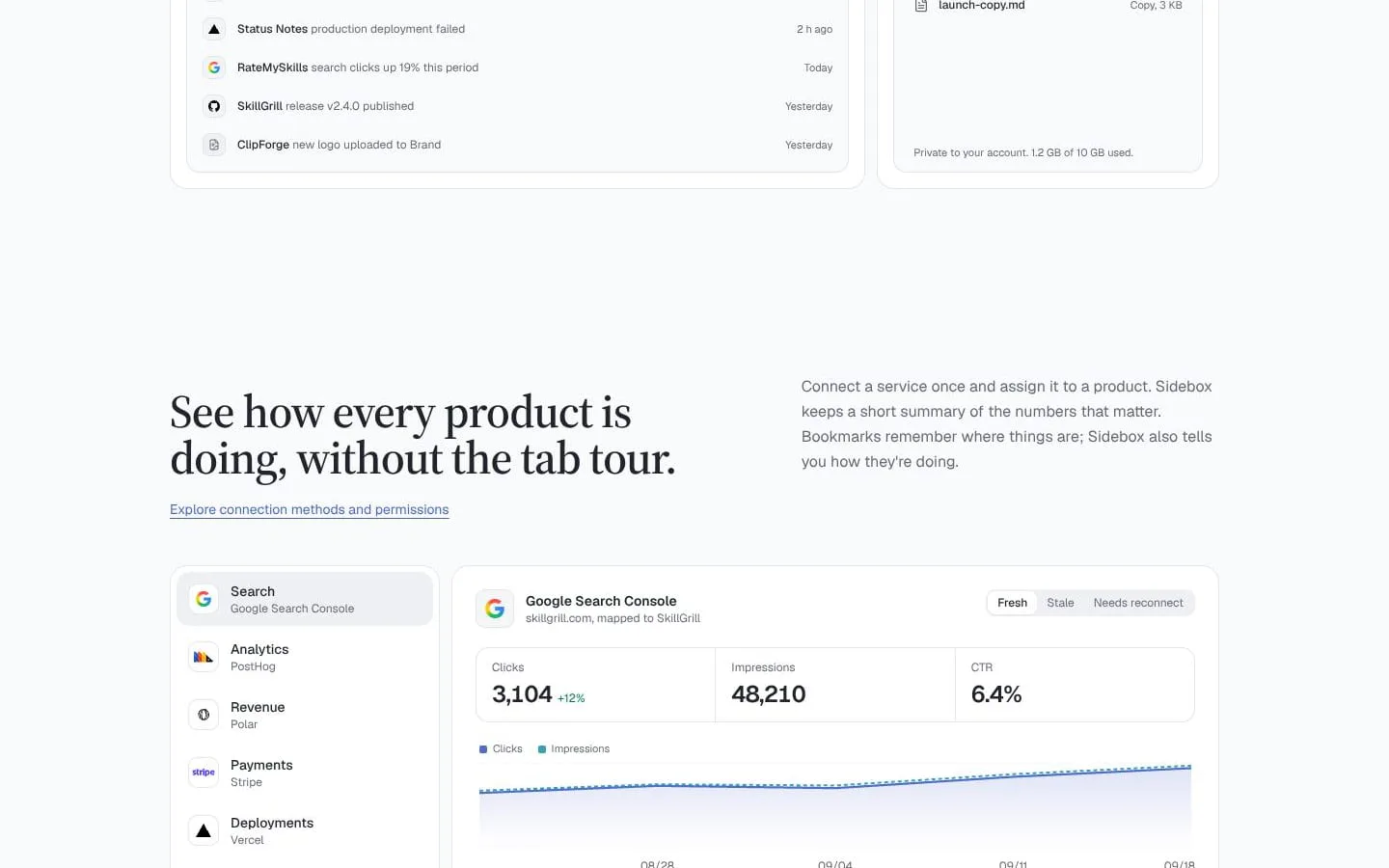
- Shows portfolio-level signals for search, analytics, revenue, deployments, connection health, recent activity, and attention items.
- Result
- Users can quickly identify which products need attention.
- Why
- Cross-project summaries make meaningful operational signals visible from one workspace.
- Problem
- Provider data can be stale, unavailable, or misleading when summarized.
- How it works
- Uses read-only, cached provider summaries with source identity, mapped resource, refresh time, and failure or stale states.
- Result
- Portfolio decisions are based on clearly qualified data.
- Why
- Missing information is not represented as zero, and users can assess data freshness before acting.
- Problem
- Returning to a project requires navigating multiple tools.
- How it works
- Provides a command palette for projects, links, and files, plus direct links to the relevant native provider page.
- Result
- Users can retrieve context quickly and investigate details in the original service.
- Why
- Sidebox is a starting point rather than a replacement for specialist tools.
- Problem
- Brand and launch assets are difficult to locate across products.
- How it works
- Stores brand colors, logos, taglines, screenshots, press kits, and launch copy in a private per-product asset library.
- Result
- Assets and brand details are ready for launches and updates.
- Why
- Reusable materials stay organized alongside the associated product.
Screenshots