Healthcare
Helpmate
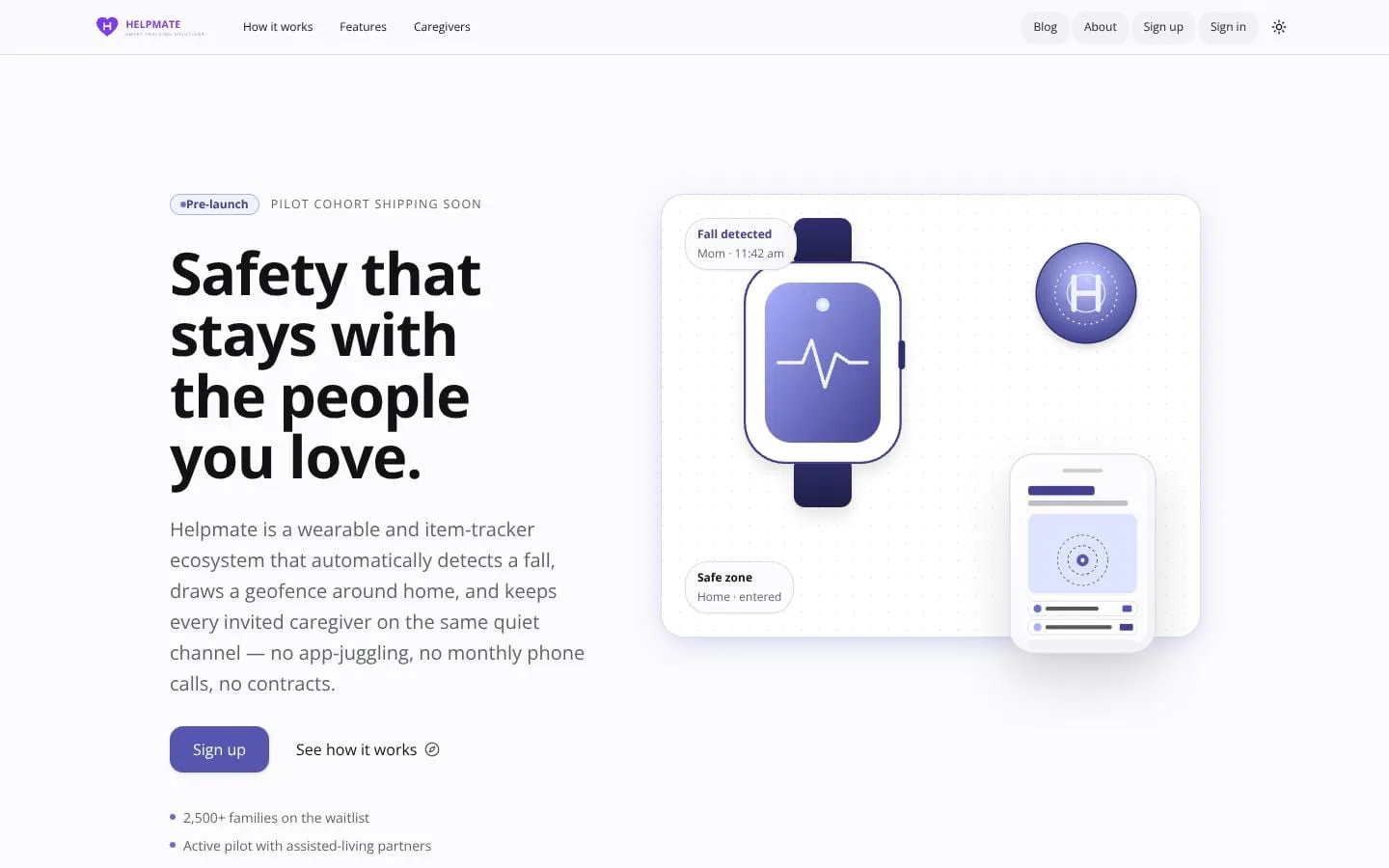
Wearable safety and tracking for seniors, with shared caregiver alerts.
- Category
- Healthcare
- Stage
- Pre-launch
- For
- Seniors, family caregivers, and assisted-living partners.
About
Connected wearable and item-tracker ecosystem that keeps seniors safe and caregivers in the loop.
Features
- Problem
- A wearer may be unable to press a help button after a fall.
- How it works
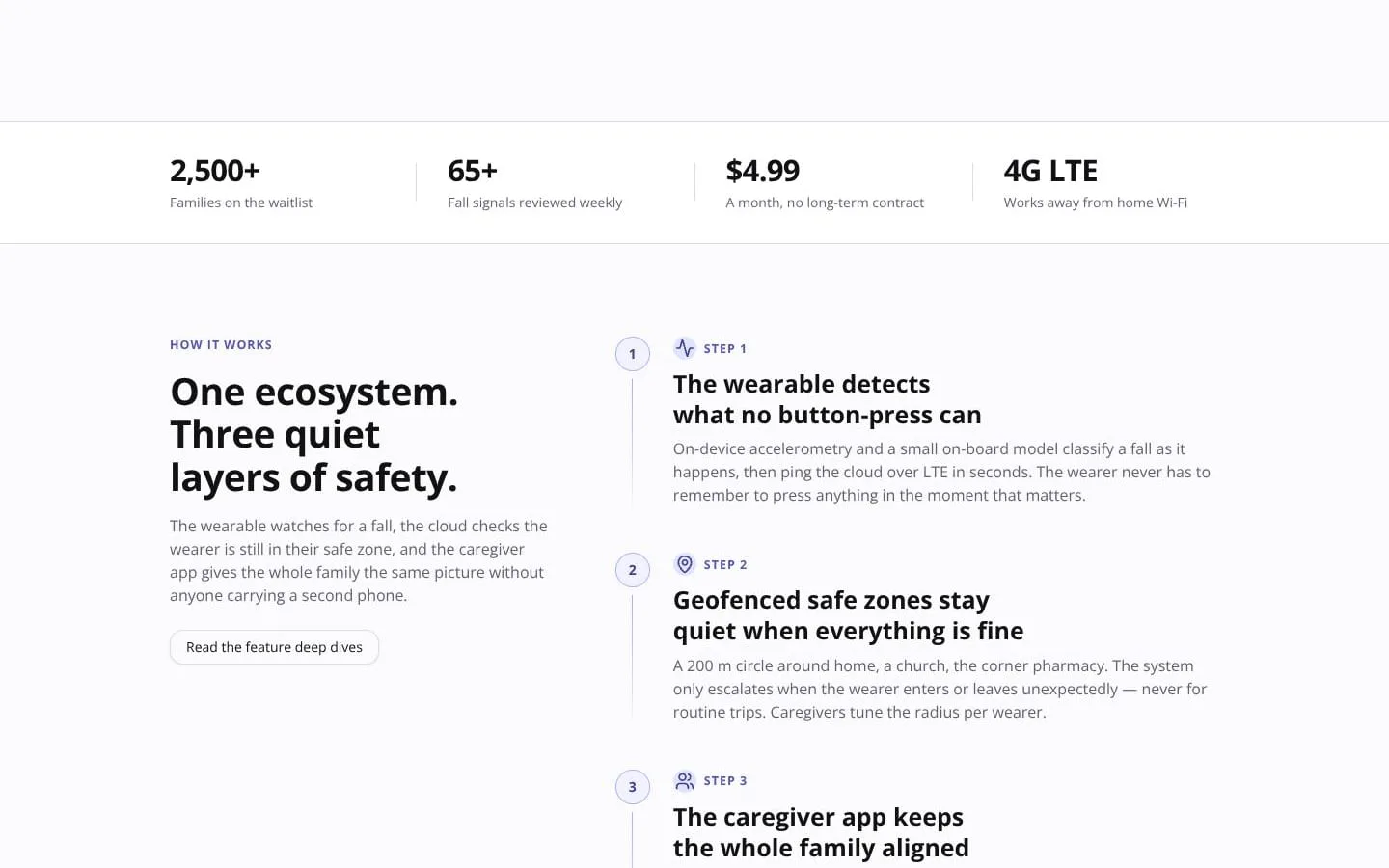
- The wearable uses on-device accelerometry and an on-board model to classify falls, then sends an LTE cloud alert.
- Result
- Caregivers can be notified of detected fall events.
- Why
- Detection is designed to work without requiring action from the wearer in the moment.
- Problem
- Caregivers need to know about unexpected departures or arrivals without continuous location noise.
- How it works
- Caregivers configure per-wearer geofenced zones, radii, and quiet hours; the system alerts on relevant crossings.
- Result
- The care circle receives fewer, more relevant safe-zone alerts.
- Why
- The product emphasizes event-based location pings rather than a continuous location trail.
- Problem
- Multiple family members and aides can otherwise rely on separate accounts, dashboards, or shared passwords.
- How it works
- A primary caregiver invites up to five additional caregivers into a shared timeline with individual accounts.
- Result
- Up to six caregivers per wearer can see the same alerts, location context, and battery status.
- Why
- Access is scoped to the care circle and caregiver views are audit logged.
- Problem
- Keys, wallets, and glasses are easily misplaced.
- How it works
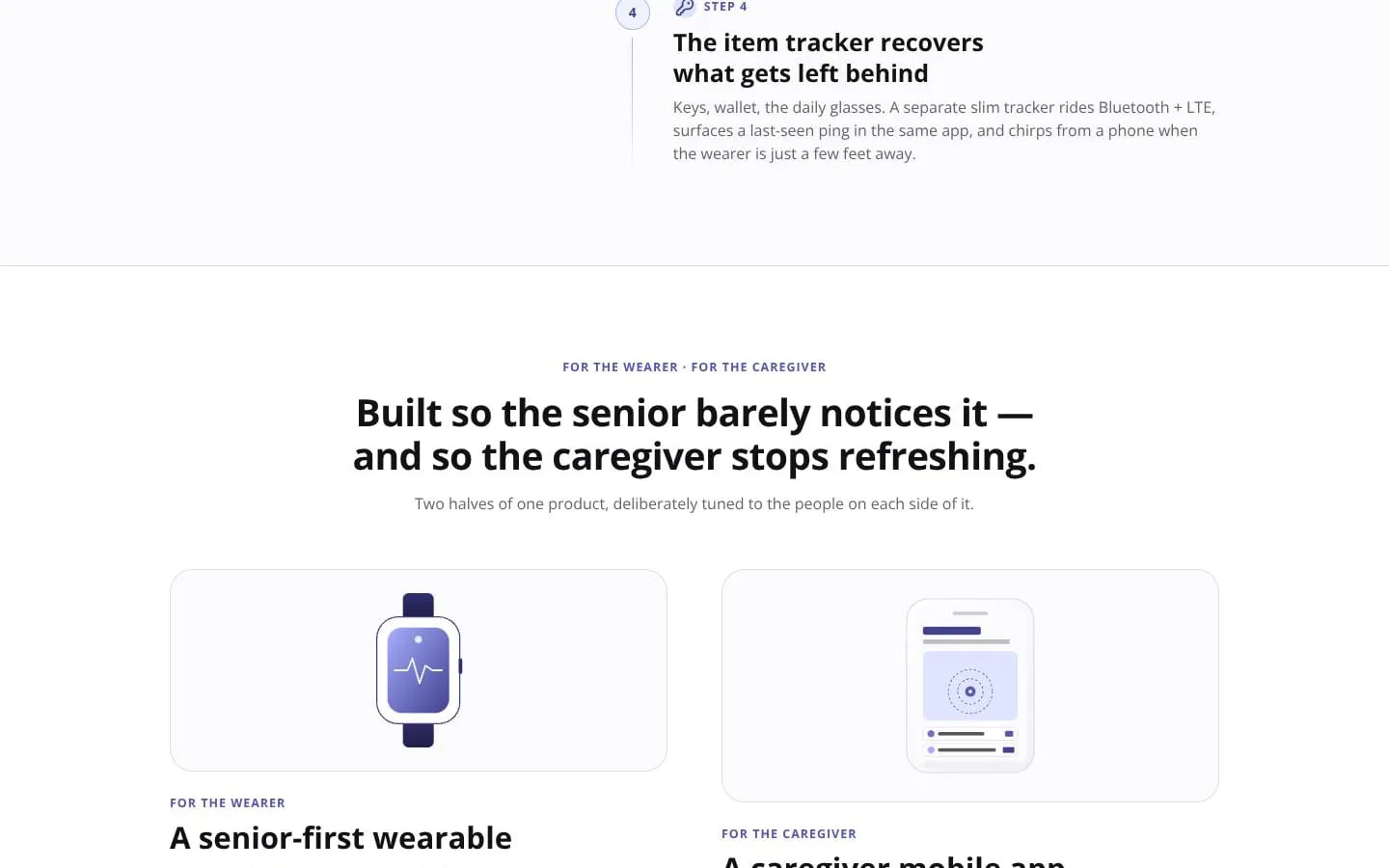
- A slim item tracker uses Bluetooth and LTE to report a last-seen ping and can chirp from a nearby phone.
- Result
- Caregivers can help locate commonly misplaced items.
- Why
- Tracker information appears in the same caregiver app as wearable events.
- Problem
- Sensitive location and biometric information requires explicit privacy controls.
- How it works
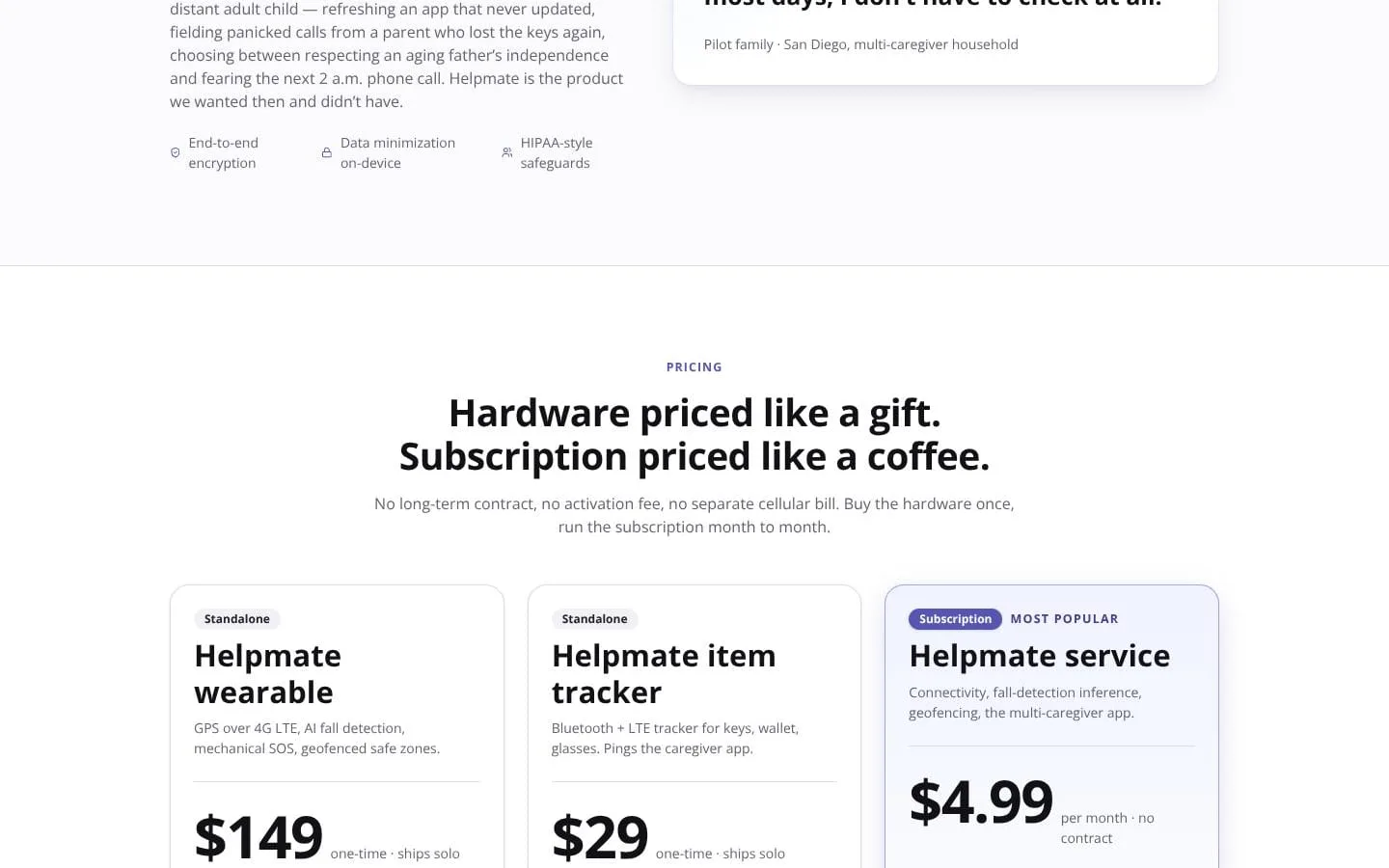
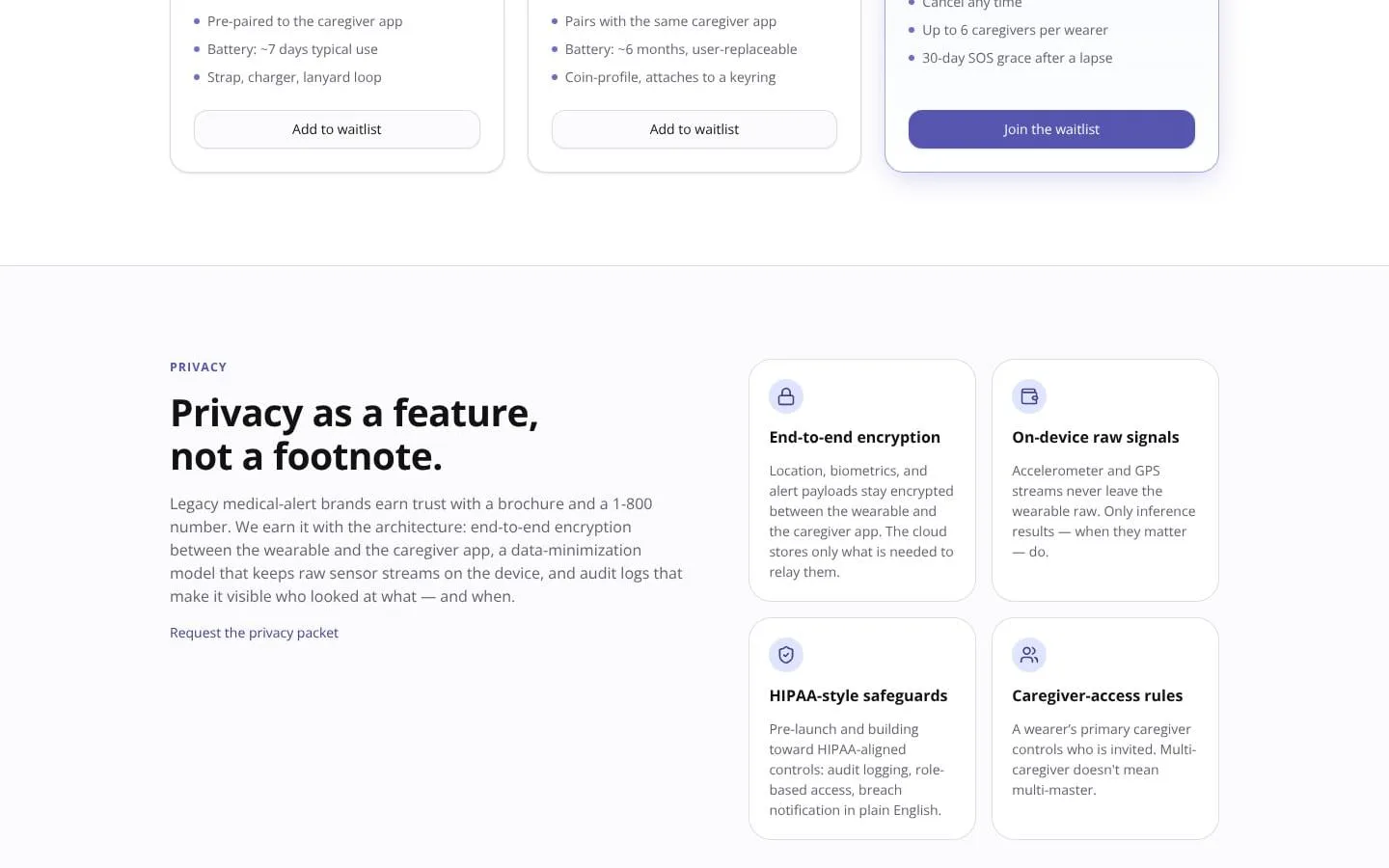
- Helpmate states that raw sensor streams stay on the wearable, while transmitted data is end-to-end encrypted and caregiver-driven deletion is available.
- Result
- Families have controlled access, visibility into caregiver views, and a deletion path.
- Why
- The service limits collection to safety-relevant data and records caregiver access in audit logs.
Screenshots