Developer tools
X1Y1
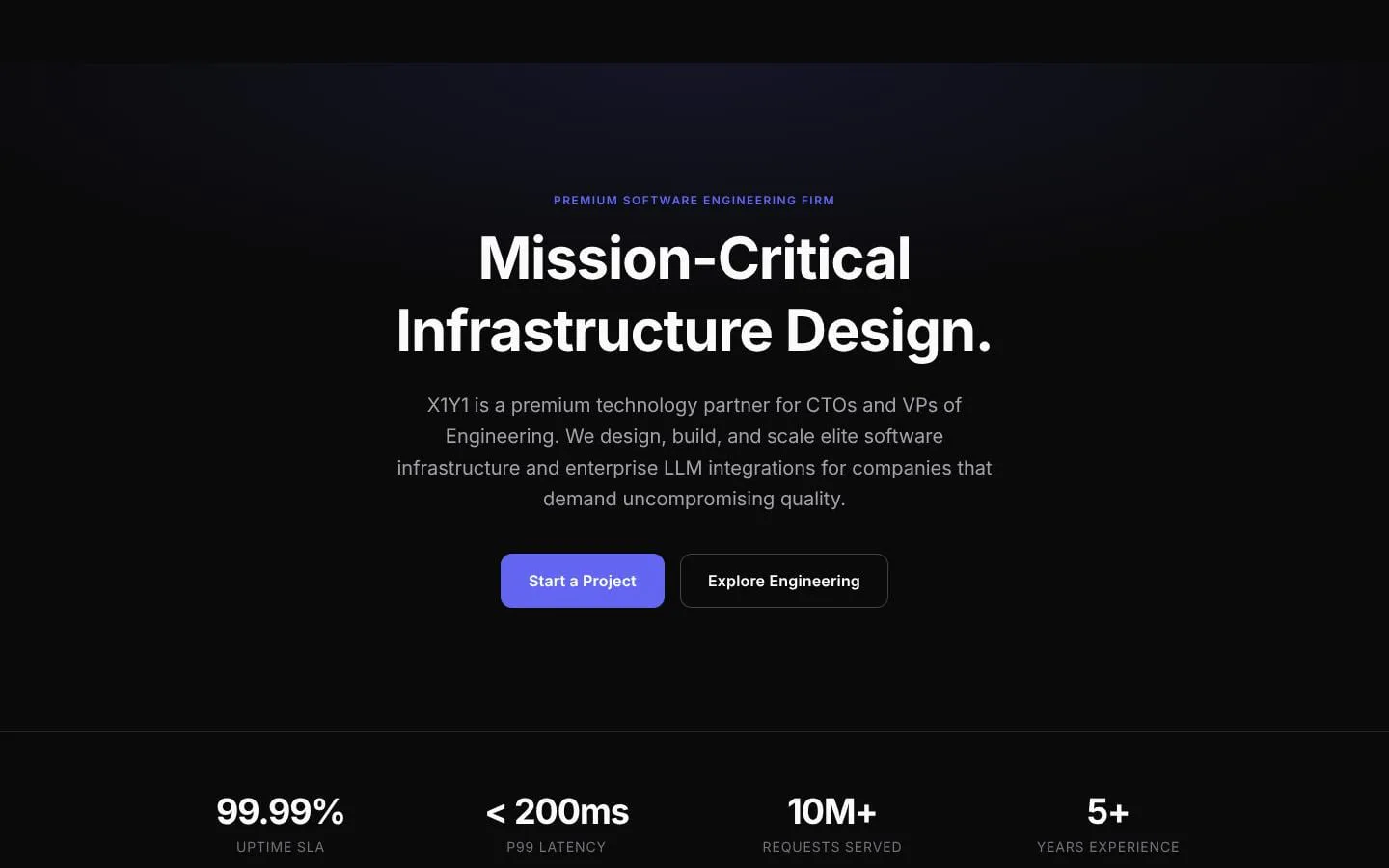
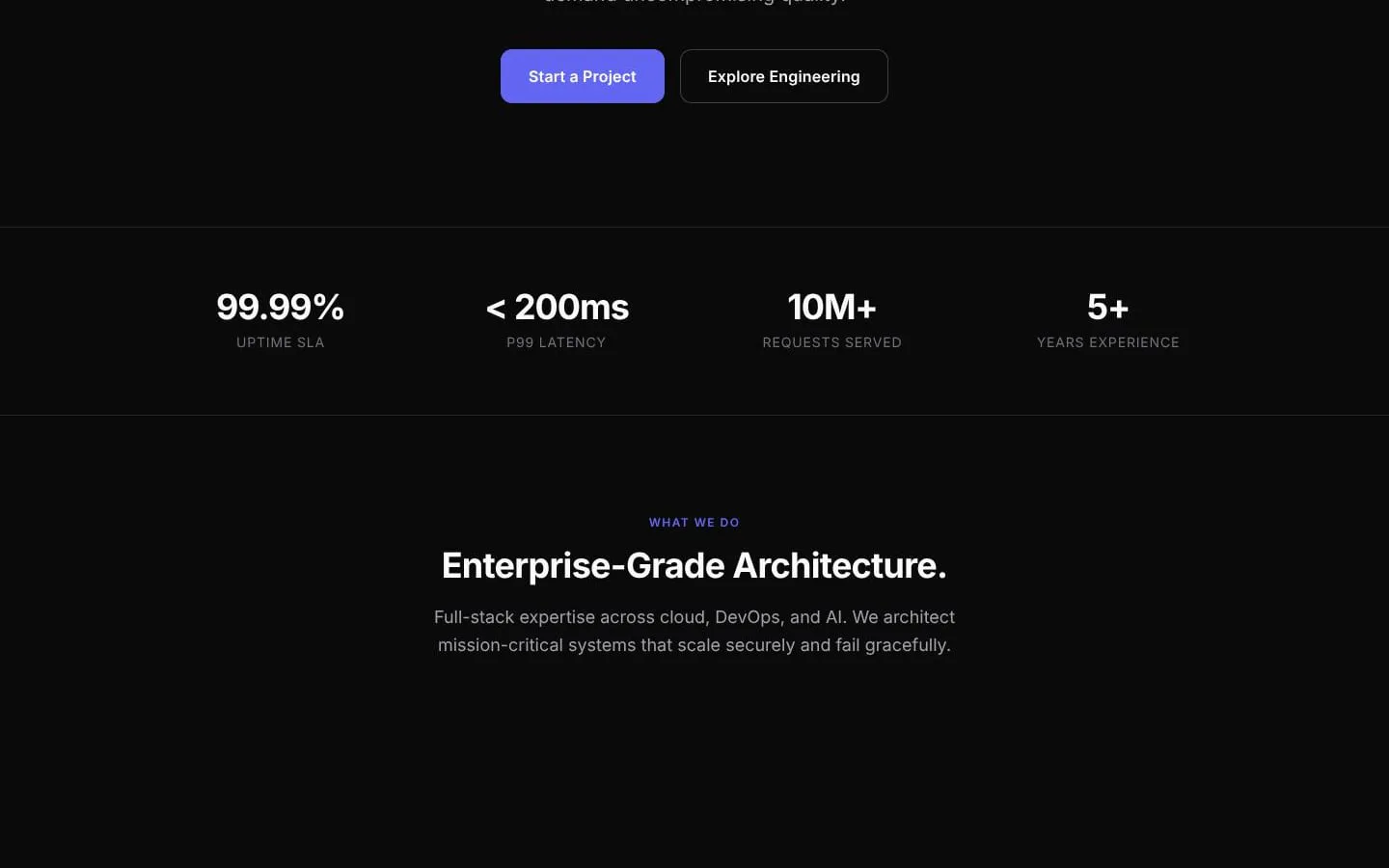
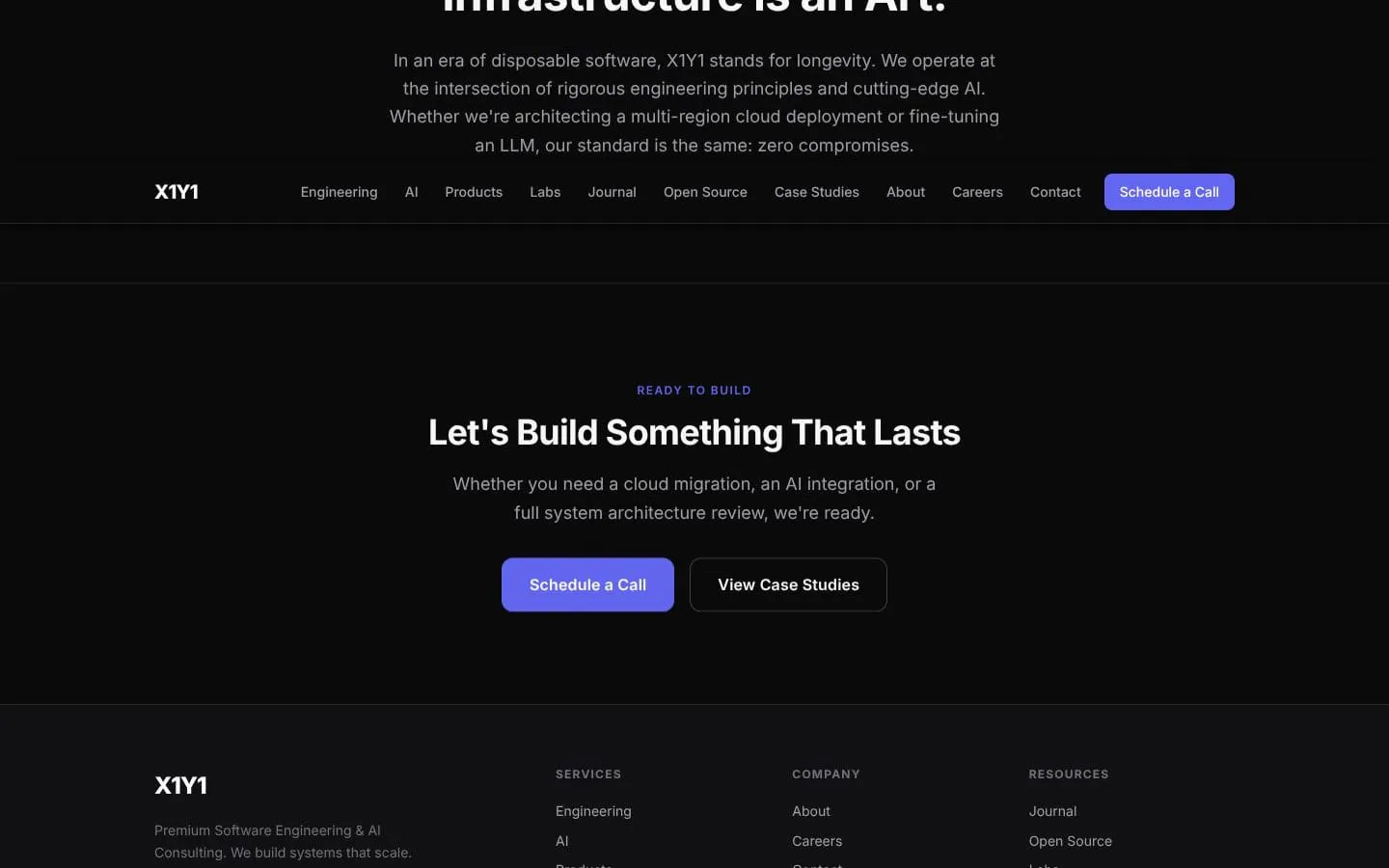
Premium Software Engineering & AI Consulting
- Category
- Developer tools
- Stage
- Growth
- For
- CTOs and VPs of Engineering needing enterprise infrastructure, cloud, and AI integration services.
About
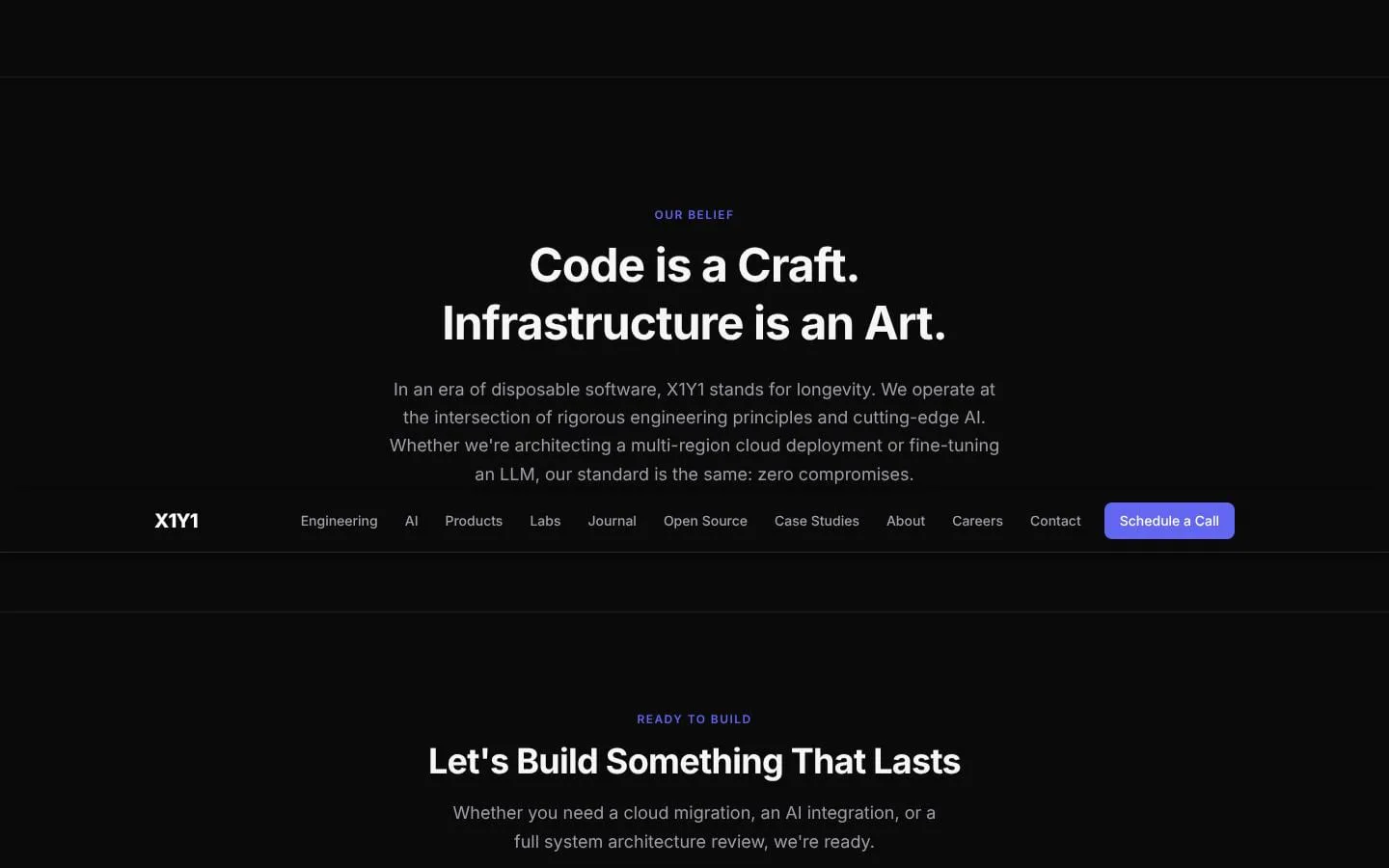
X1Y1 is a premium software engineering and AI consulting firm specializing in enterprise infrastructure and production-grade AI integration.
Features
- Problem
- Infrastructure outages and scaling limits threaten critical applications.
- How it works
- Designs cloud, DevOps, distributed backend, and multi-region architectures with fault tolerance, horizontal scale, and zero-downtime deployment practices.
- Result
- More resilient infrastructure designed for high availability and low latency.
- Why
- Mission-critical systems must fail gracefully while maintaining performance under load.
- Problem
- Enterprise AI initiatives can be unreliable, insecure, or disconnected from company data.
- How it works
- Builds RAG pipelines, vector-search systems, MCP servers, agentic workflows, and enterprise AI integrations.
- Result
- Production-oriented AI systems integrated with internal APIs and data sources.
- Why
- Grounding, secure tool access, and observable workflows make LLM applications practical in production.
- Problem
- Teams need private, domain-adapted AI without losing control of data or costs.
- How it works
- Fine-tunes open-source models including Llama, Mistral, and Qwen on proprietary data and deploys them on client-controlled infrastructure.
- Result
- Customized AI capabilities aligned to enterprise data and operational requirements.
- Why
- Self-hosted deployment supports data privacy and cost control.
- Problem
- Slow releases and inconsistent engineering practices reduce delivery velocity.
- How it works
- Implements infrastructure as code, CI/CD pipelines, developer platforms, golden paths, and fixed-scope senior-led sprints.
- Result
- Improved deployment workflows and maintainable engineering foundations.
- Why
- Repeatable delivery practices help teams move faster without weakening foundations.
- Problem
- AI and distributed systems are difficult to debug and govern in production.
- How it works
- Applies observability, tracing, latency profiling, input validation, scoped credentials, and security-first architecture.
- Result
- More observable, debuggable, and secure production operations.
- Why
- Operational visibility and least-privilege controls reduce risk across systems and agent workflows.
Screenshots