Fintech
Rendben
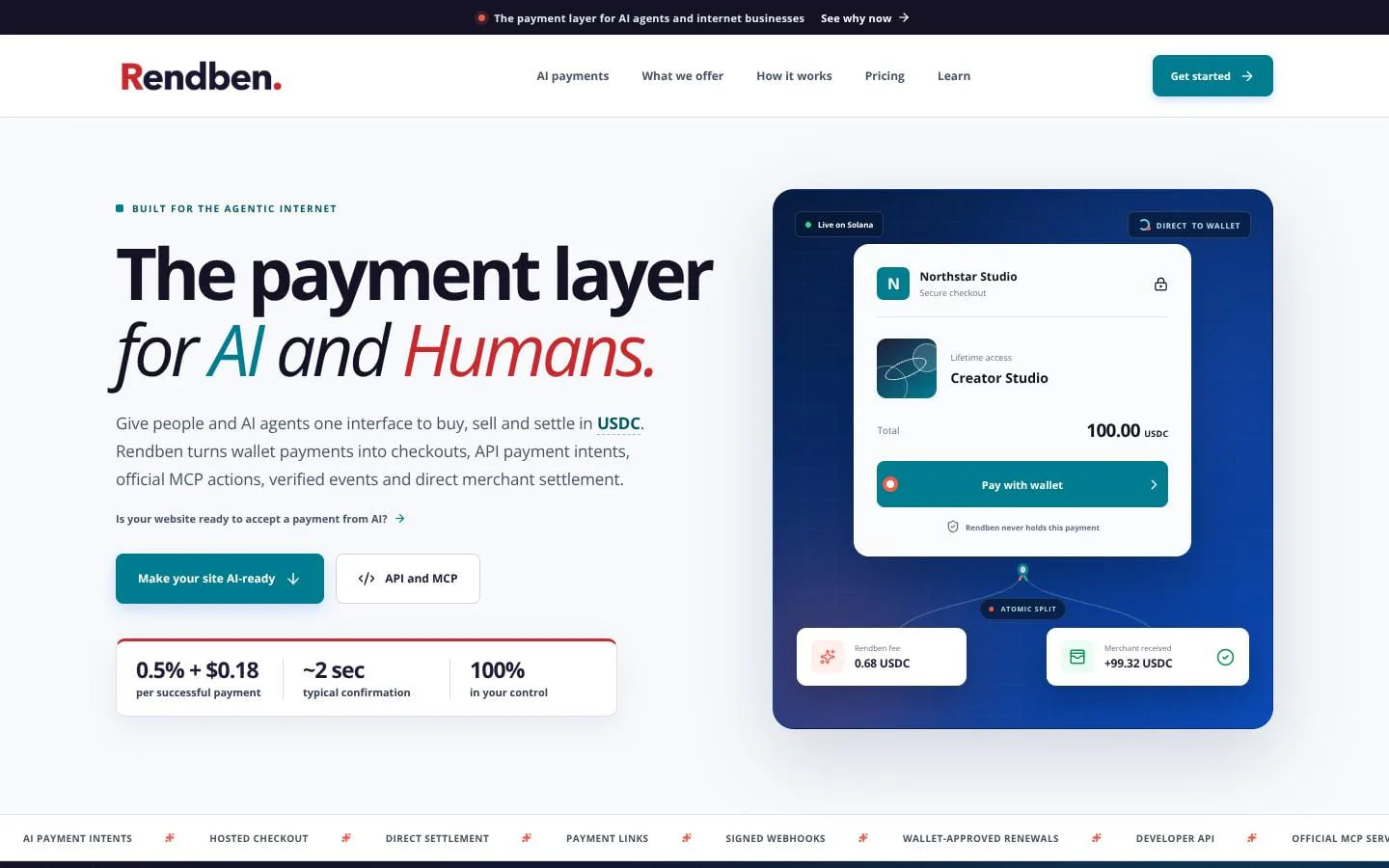
Non-custodial USDC checkout on Solana — money lands in your own wallet, 0.5% + $0.18, with an MCP server so AI agents can pay too.
- Category
- Fintech
- Stage
- Beta
- For
- Indie developers, API and SaaS builders, and digital-product sellers who want to accept USDC without a custodian — plus AI agents paying per call.
About
Let people and AI agents pay in USDC through checkout links, an agent-ready API and an official MCP server. Merchants receive funds directly for 0.5% plus $0.18 per successful payment.
Features
- Problem
- Raw wallet transfers do not provide a customer-friendly commerce experience.
- How it works
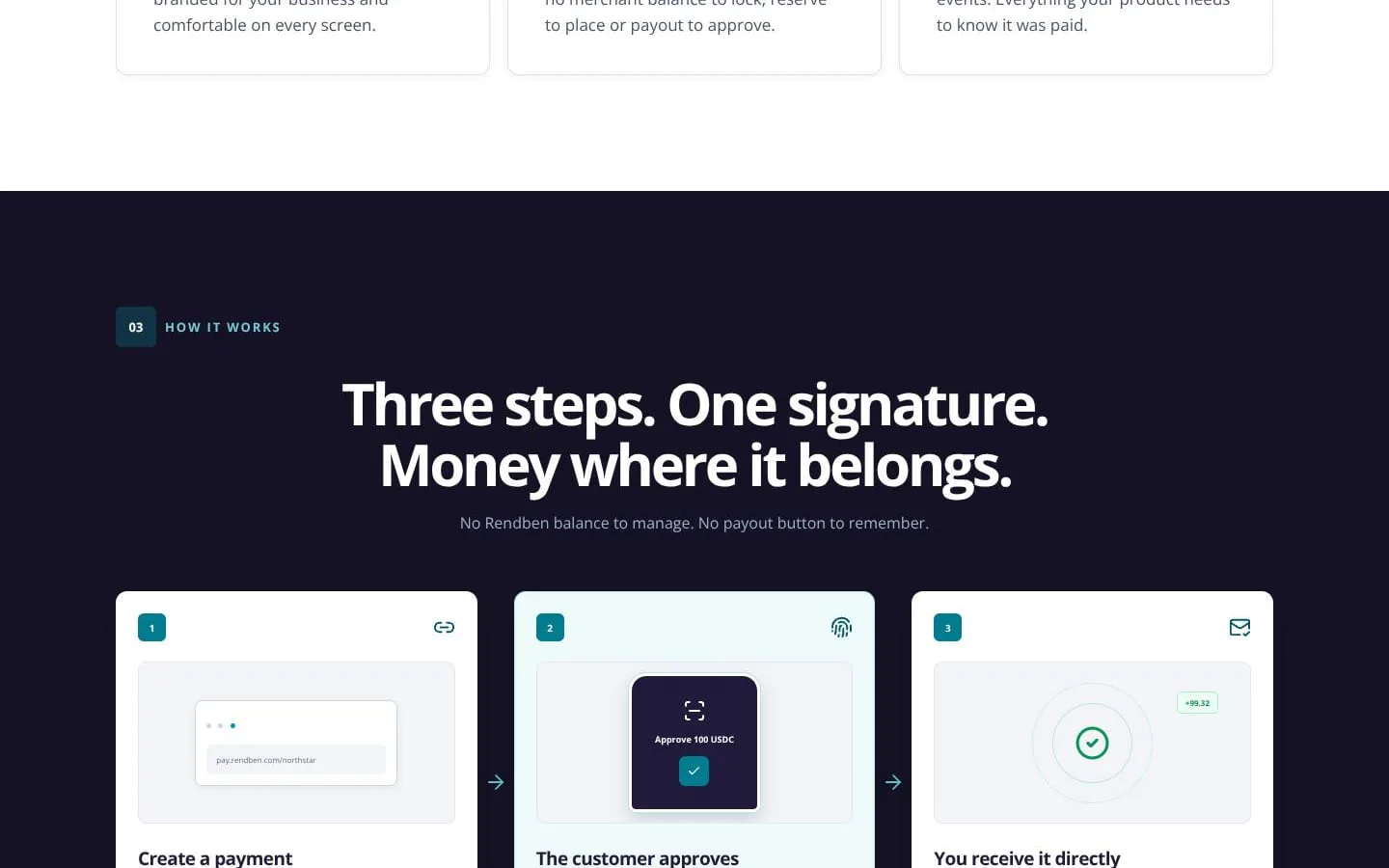
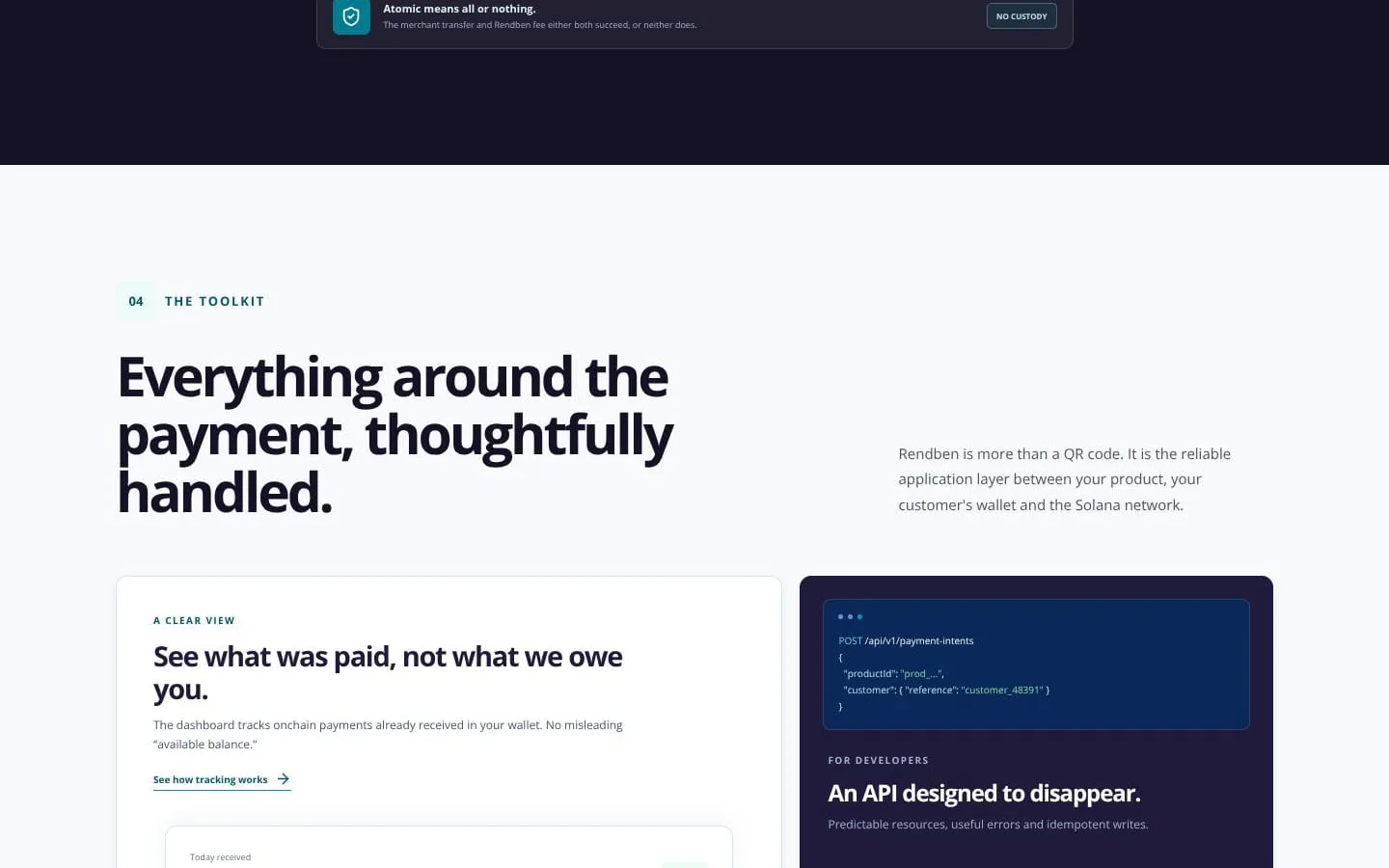
- Provides hosted checkout, payment links, QR codes and an embeddable payment button branded for the merchant.
- Result
- Customers can approve a clear USDC payment flow from a wallet.
- Why
- Makes Solana wallet payments usable for digital-product sales.
- Problem
- Platform-held balances can delay or restrict merchant access to revenue.
- How it works
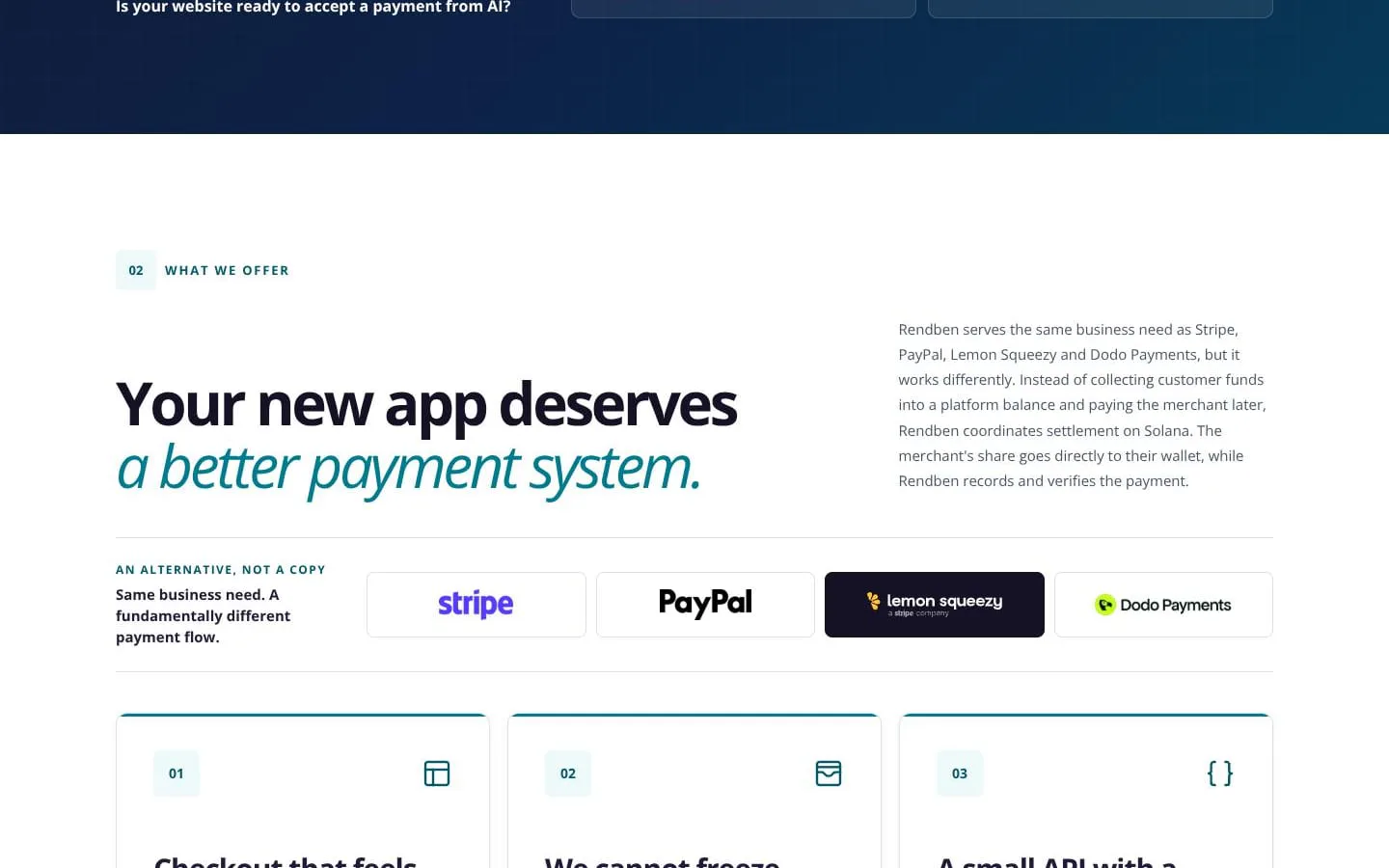
- Splits the merchant amount and Rendben fee atomically on Solana, sending the merchant share directly to its wallet.
- Result
- Merchants receive settled USDC directly after payment confirmation.
- Why
- Rendben does not hold a merchant balance or operate payout schedules.
- Problem
- Products need reliable payment status for access control and reconciliation.
- How it works
- Offers payment intents, order and subscription verification, idempotent writes, signed webhooks, retries, manual replay and continuous reconciliation.
- Result
- Applications can grant entitlements from confirmed payment facts and maintain payment records.
- Why
- Webhook delivery alone is not treated as final proof; Rendben independently verifies network outcomes.
- Problem
- AI agents need to pay without disclosing wallet credentials.
- How it works
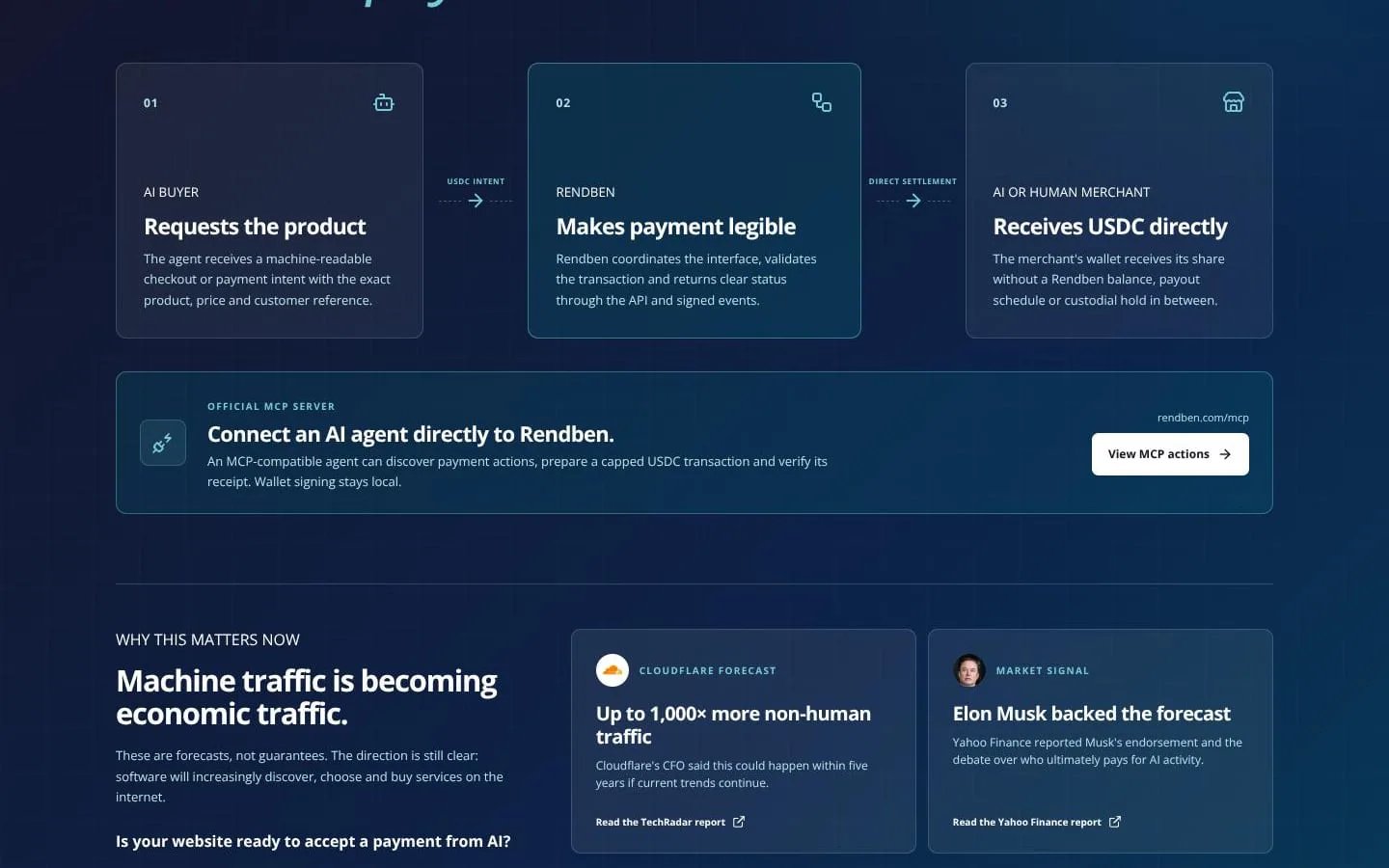
- Provides official MCP actions to inspect checkouts, set a maximum USDC amount, prepare unsigned transaction bytes and verify payment status.
- Result
- MCP-compatible agents can execute bounded USDC purchases while retaining local key control.
- Why
- The payer signs locally through its own wallet or trusted Solana RPC; MCP tools do not accept wallet secrets.
- Problem
- Recurring billing can create surprise debits or weak identity binding.
- How it works
- Supports recurring USDC products, server-bound customer references, reminders and wallet-approved renewals.
- Result
- Merchants can offer subscriptions with explicit wallet consent and verify active access.
- Why
- The checkout binds receipt and entitlement identity server-side, while wallet approval remains part of renewal.
- Problem
- Small transactions can be unattractive under higher fixed payment fees.
- How it works
- Charges 0.5% plus $0.18 only on successful payments.
- Result
- A $1 payment has a stated Rendben fee of $0.185, with $0.815 sent directly to the merchant wallet.
- Why
- The pricing is presented as predictable for sales including low-value purchases.
Product questions
What does Rendben do?
Rendben is a non-custodial USDC payment layer on Solana for internet businesses and AI agents. It turns wallet transfers into hosted checkouts, payment links, API payment intents, signed events and direct merchant settlement.
Who is Rendben for?
Indie developers, API and SaaS builders, and digital-product sellers who want to accept USDC without a custodian — plus AI agents paying per call.
Screenshots