Education
KemaFox
Understand it. Speak it.
- Category
- Education
- Stage
- Growth
- For
- People learning Japanese who want to improve listening and speaking with real-world audio and video, including learners studying JLPT levels N5–N1.
About
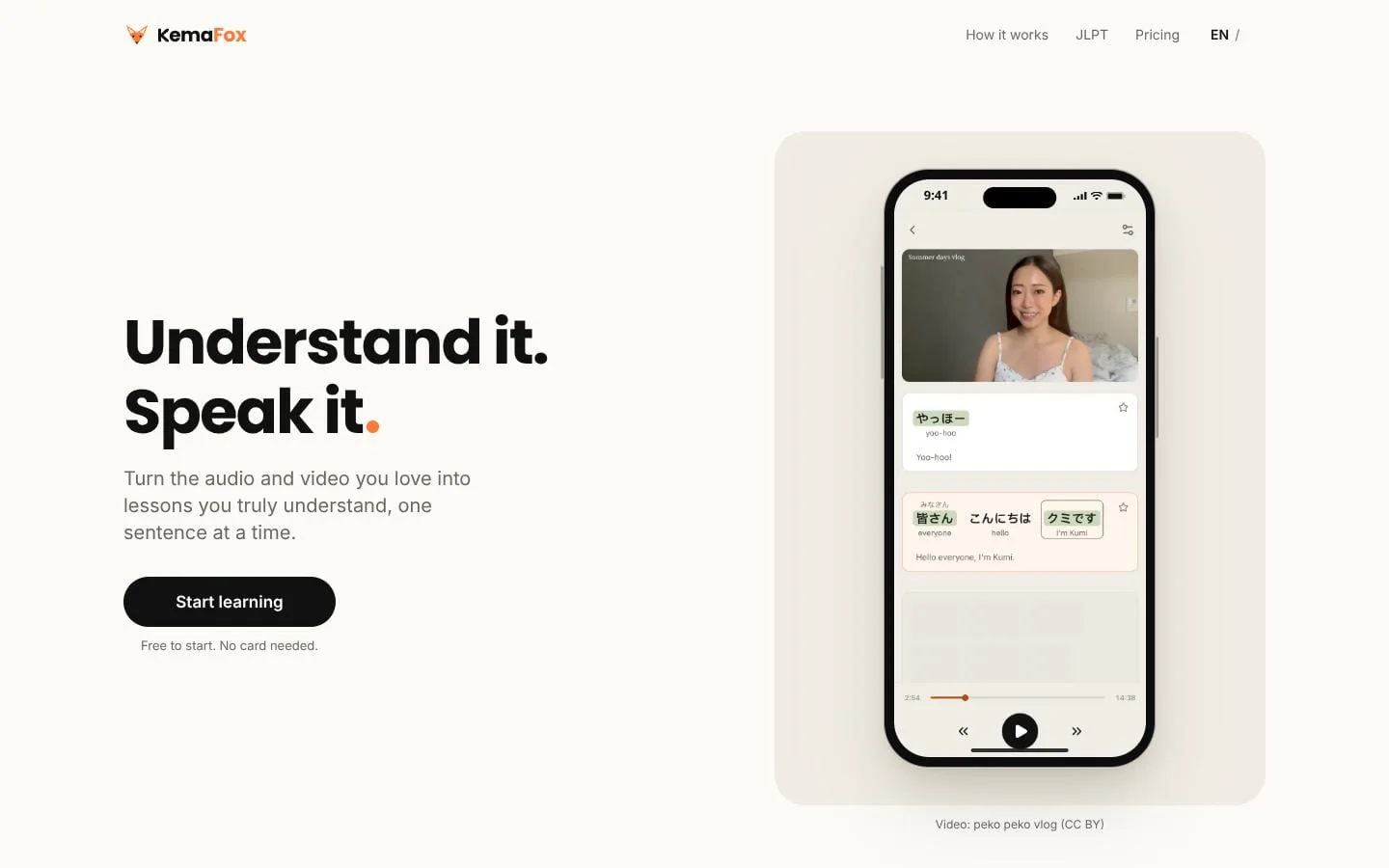
KemaFox turns the audio and video people care about into comprehensible input, so they understand it, and then speak it.
Features
- Problem
- Learners struggle to follow audio and video that interests them.
- How it works
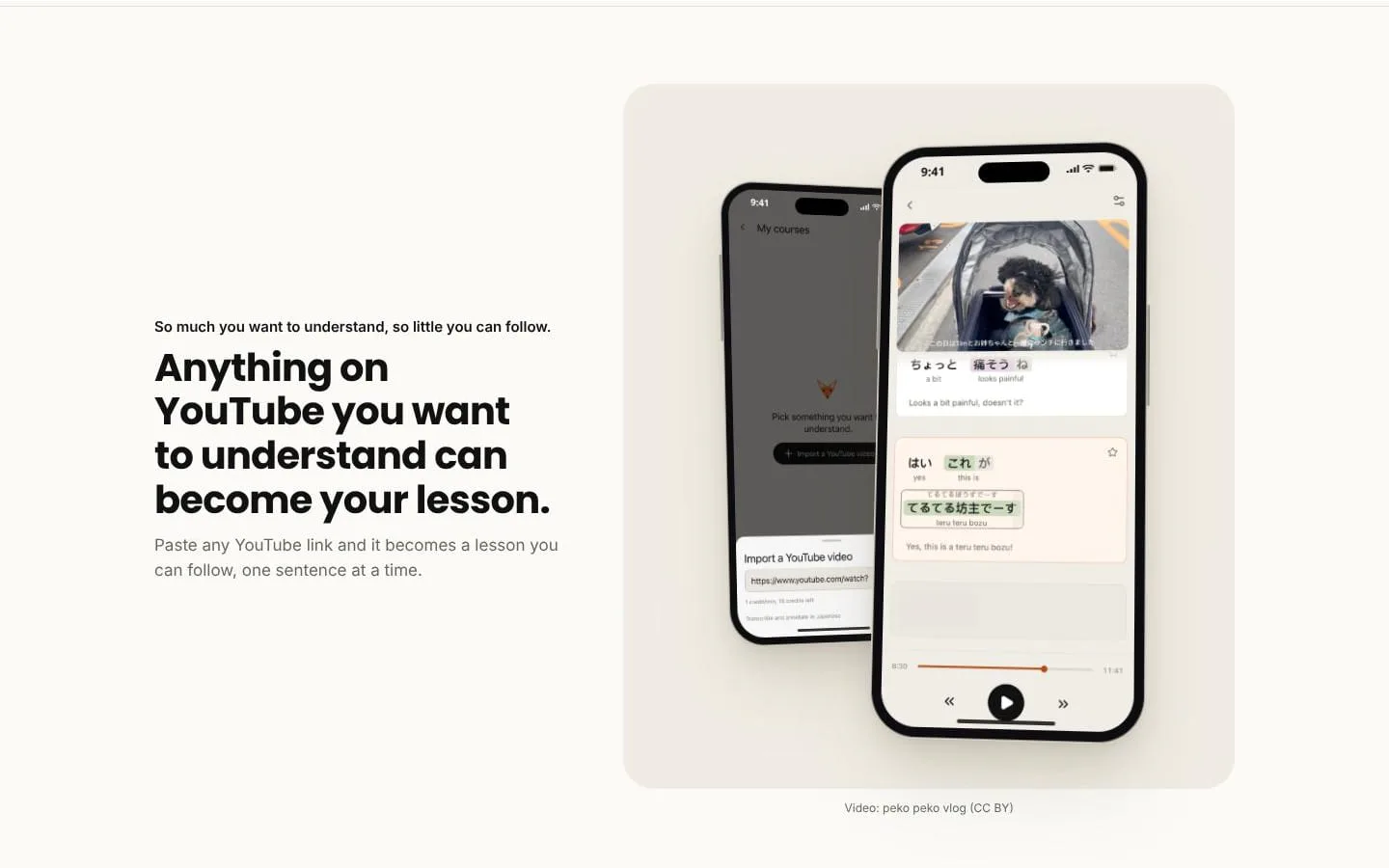
- Users can paste a YouTube link to turn it into a sentence-by-sentence lesson.
- Result
- Learners can work through familiar real-world media one sentence at a time.
- Why
- Practice can use content the learner already wants to understand.
- Problem
- Finding suitable real-world listening material can be difficult.
- How it works
- A hand-picked YouTube library includes anime, songs, vlogs, street life, and games, organized by level, topic, and format.
- Result
- Learners can choose from varied material without sourcing every lesson themselves.
- Why
- Organized selections make it easier to find content that fits a learner's interests and level.
- Problem
- Recognizing words does not always lead to understanding a whole sentence.
- How it works
- Sentences are split into chunks with tap-accessible readings and meanings; curated lessons also include vocabulary and grammar. Subtitles appear after a short beat.
- Result
- Learners can practice following spoken sentences with contextual support.
- Why
- Chunk-level support and delayed subtitles give learners a chance to listen before reading.
- Problem
- Words and grammar studied in a lesson can be hard to revisit in context.
- How it works
- Users can save words, grammar points, and whole sentences, each tied to its original line and voice.
- Result
- Learners can return to saved items and replay their original lines.
- Why
- Keeping saved material connected to its source preserves the audio context for review.
- Problem
- Study can feel scattered across JLPT levels.
- How it works
- Vocabulary and grammar courses are organized from N5 to N1, in level-based groups, with real example sentences learners can hear.
- Result
- Learners can study vocabulary and grammar systematically alongside listening examples.
- Why
- A level-by-level structure helps learners follow a more ordered course of study.
- Problem
- Learners may want to try the service before committing to a plan.
- How it works
- New accounts receive 15 free credits without a card; paid options include monthly credit plans and a one-time credit pack.
- Result
- Learners can try lessons and choose a paid option based on their usage.
- Why
- A free starting allowance and credit-based pricing let learners begin with a small commitment.
Product questions
What does KemaFox do?
KemaFox turns Japanese audio and video—either a YouTube link you choose or lessons from its curated library—into sentence-by-sentence listening practice. Learners can explore material by level, topic, and format, with study support from JLPT N5–N1 courses.
Who is KemaFox for?
People learning Japanese who want to improve listening and speaking with real-world audio and video, including learners studying JLPT levels N5–N1.
Screenshots