Developer tools
Social Fetch
Public social media data as JSON, via API and MCP
- Category
- Developer tools
- Stage
- Growth
- For
- Developers and product teams building applications, analytics, monitoring, creator research, and AI agents that use public social media data.
About
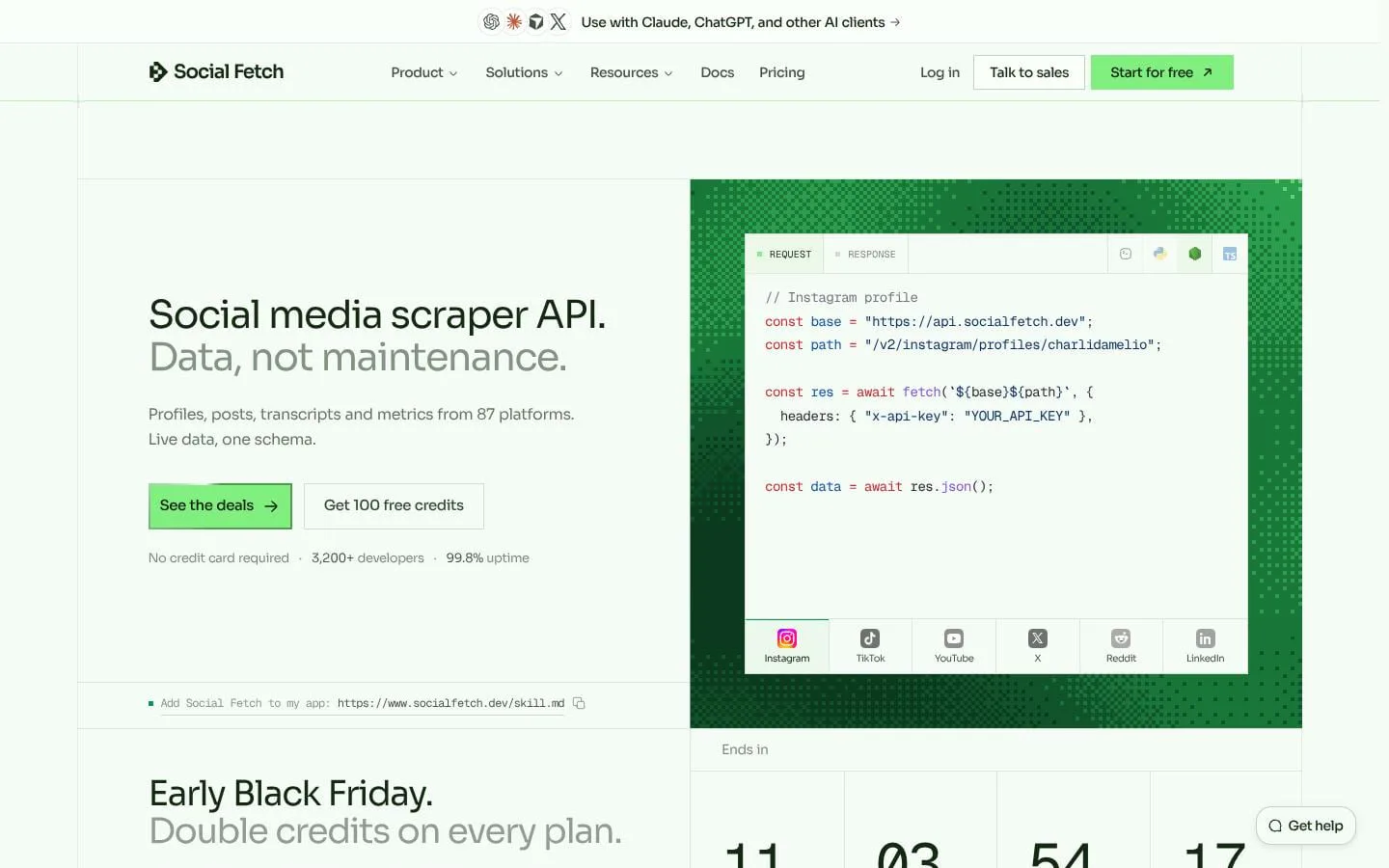
Social Fetch is an API that returns public social media data as JSON. Pull profiles, posts, comments, transcripts and search results with one API key, or connect AI agents through the hosted MCP server. Credits are pay as you go and never expire. New accounts get 100 free credits with no card.
Features
- Problem
- Each platform requires separate data-fetching logic and schema handling.
- How it works
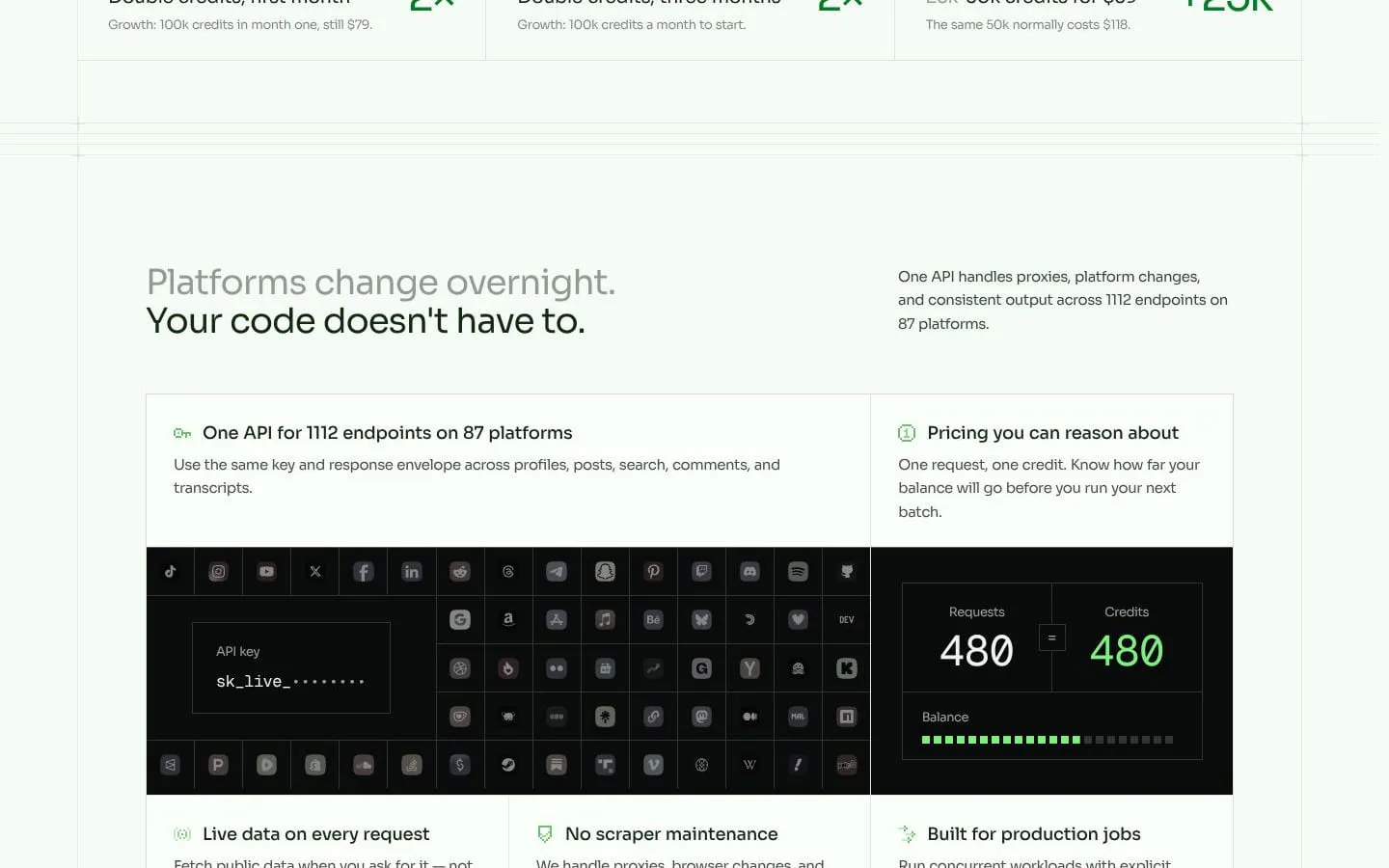
- Provides one API and consistent JSON response envelope across 87 platforms and 1,112 endpoints.
- Result
- Teams can build cross-platform data products around one integration.
- Why
- A common interface reduces platform-specific integration and schema maintenance.
- Problem
- Scrapers break when platforms change page structures or access behavior.
- How it works
- Social Fetch manages proxies, browser changes, and scraper maintenance while preserving versioned output.
- Result
- Downstream applications can keep using predictable response fields.
- Why
- The product absorbs changes behind a stable API contract.
- Problem
- Stale cached data can undermine monitoring and research.
- How it works
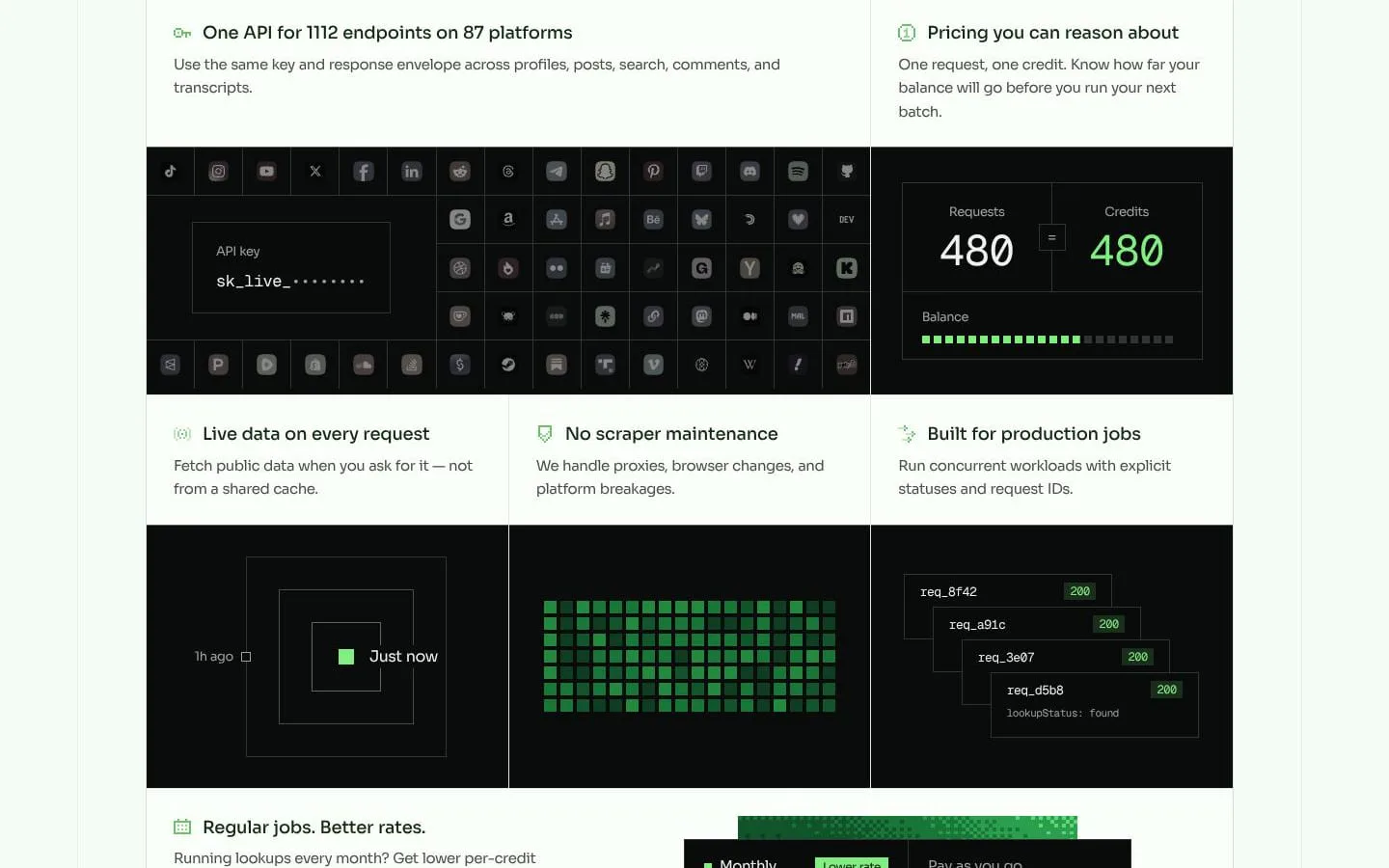
- Fetches publicly available data at request time rather than from a shared cache.
- Result
- Applications can work with data fetched when they need it.
- Why
- Live lookups provide current results for each request.
- Problem
- Unclear lookup outcomes and costs make production pipelines difficult to operate.
- How it works
- Returns explicit lookup statuses, request IDs, and credit charges; supports concurrent jobs and request tracing.
- Result
- Developers can build more traceable jobs and handle errors deliberately.
- Why
- Structured outcomes distinguish completed lookups from retryable failures and make usage auditable.
- Problem
- Social data needs to flow into varied developer and AI workflows.
- How it works
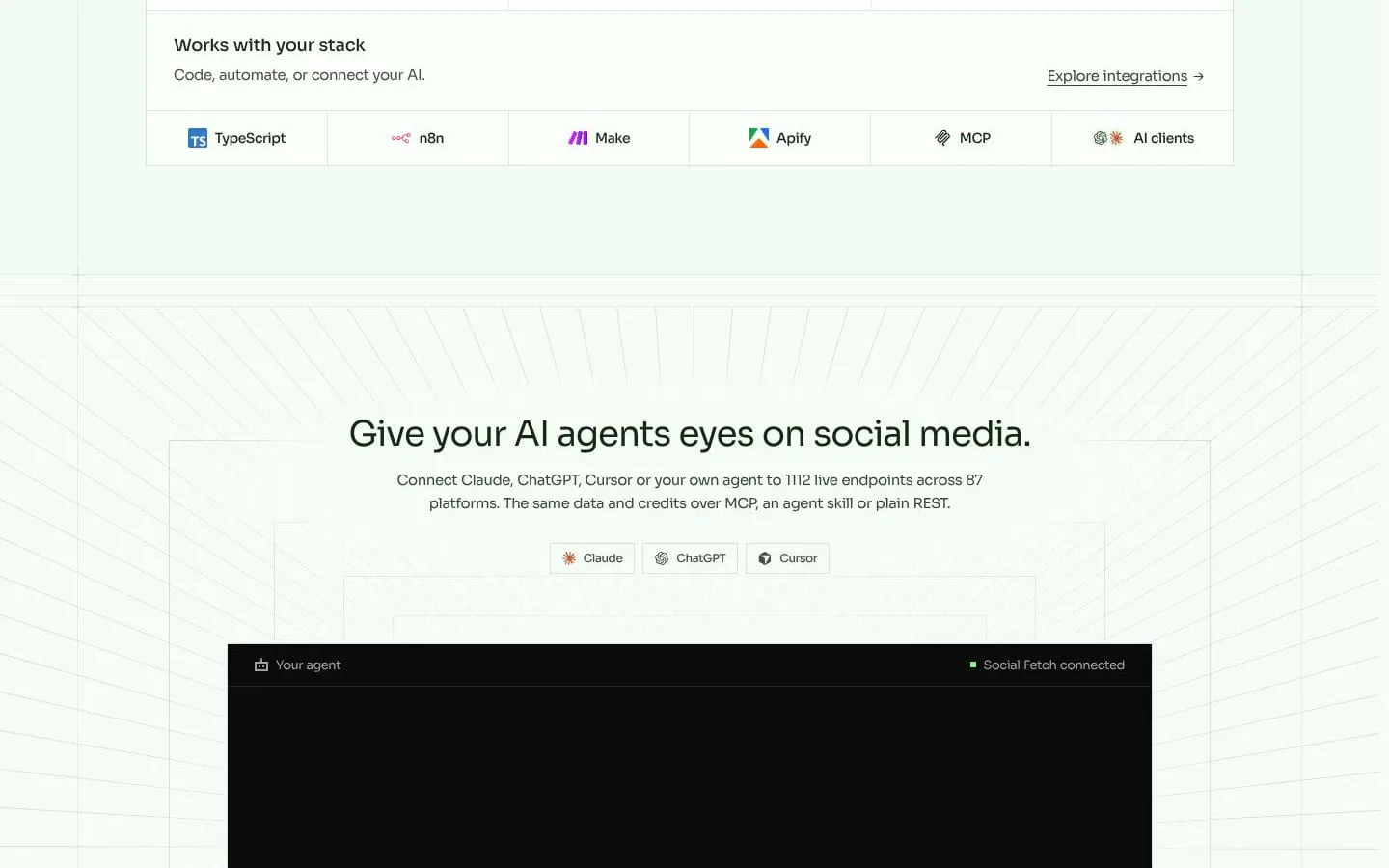
- Offers REST, MCP, a TypeScript SDK, and integrations for n8n, Make, and Apify; monitors can watch sources and deliver new items by webhook.
- Result
- Teams can connect live data to applications and workflows using their preferred integration path.
- Why
- Multiple access paths fit code, automation, and AI-agent workflows.
- Problem
- Social content is difficult to use for creator analysis and text-based research.
- How it works
- Provides profile and post metrics, creator discovery routes, and transcript endpoints for supported video platforms.
- Result
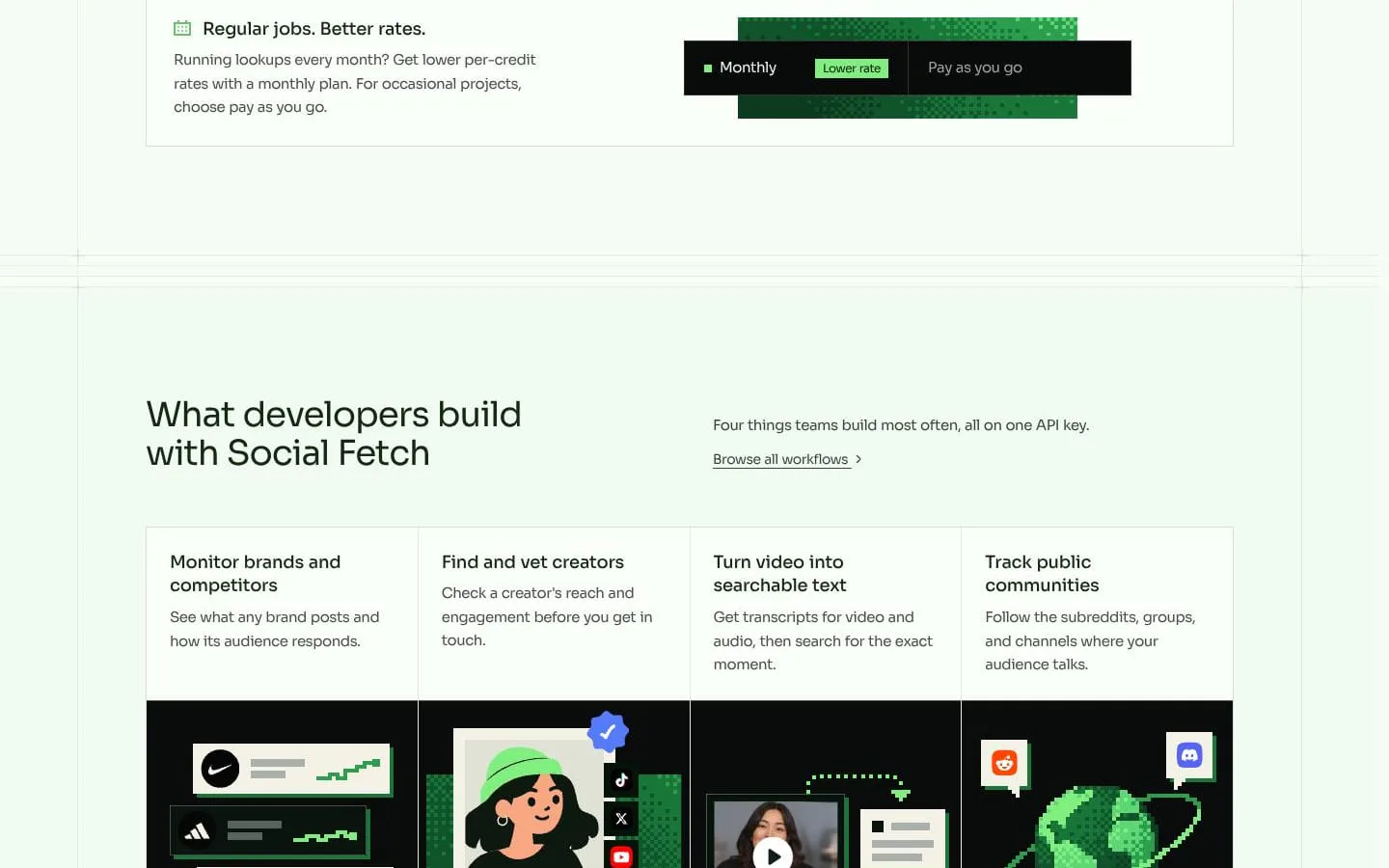
- Teams can build creator research, monitoring, and transcript workflows.
- Why
- Structured metrics and extracted text support analysis beyond raw links or page content.
Product questions
What does Social Fetch do?
Social Fetch provides live public social and web data as normalized JSON through a REST API, MCP, SDK, and automation integrations. It covers profiles, posts, comments, search results, transcripts, and metrics across 87 platforms.
Who is Social Fetch for?
Developers and product teams building applications, analytics, monitoring, creator research, and AI agents that use public social media data.
Screenshots