Marketing tools
Be1st.ai
The Website Control Layer for Humans and AI Agents
- Category
- Marketing tools
- Stage
- Growth
- For
- AI-assisted website builders, marketing agencies, business owners, and SEO/web freelancers
About
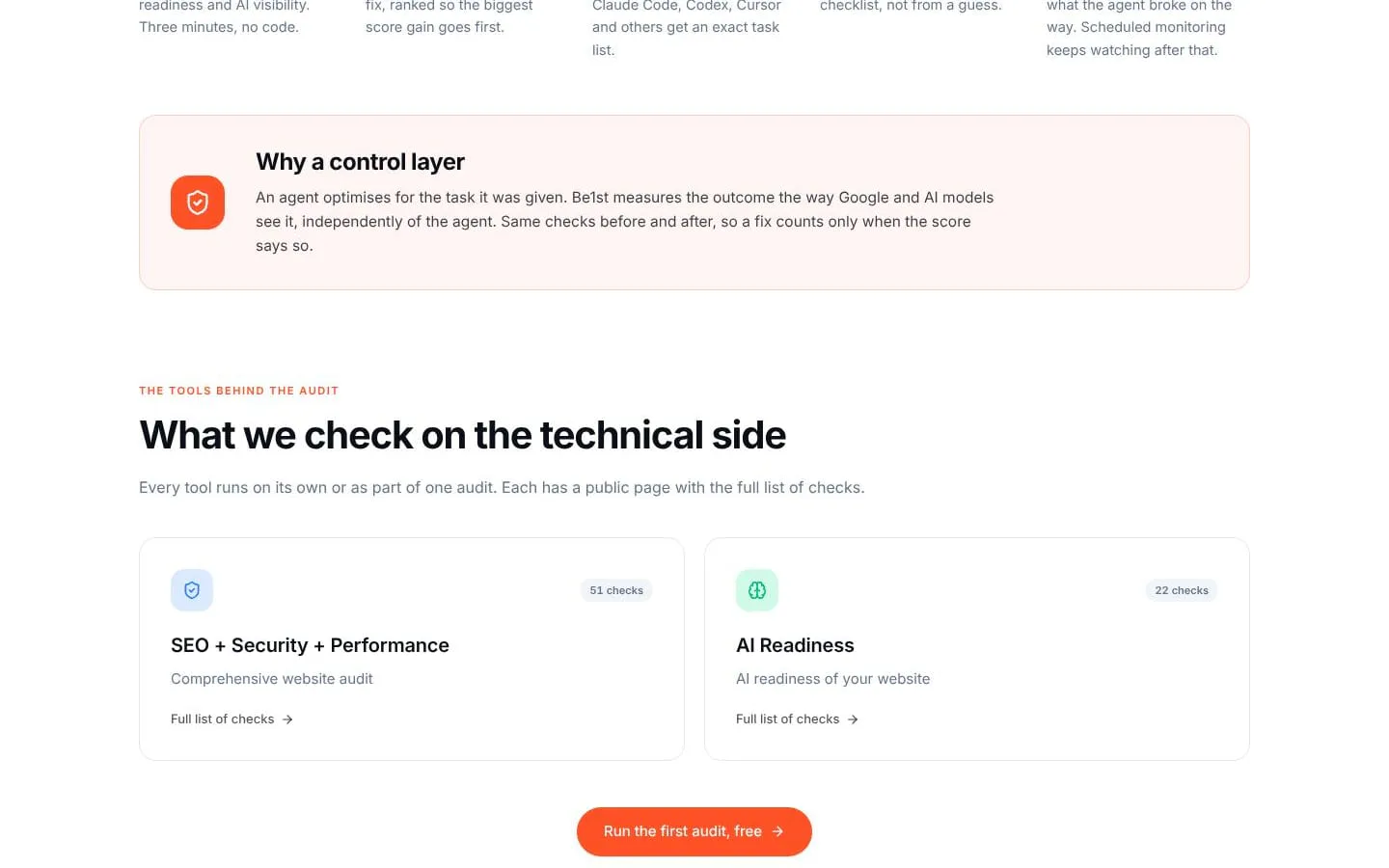
Complete website analysis: 4 tools, 106 checks, AI scoring.
Features
- Problem
- AI-built sites can ship without a post-deployment quality check.
- How it works
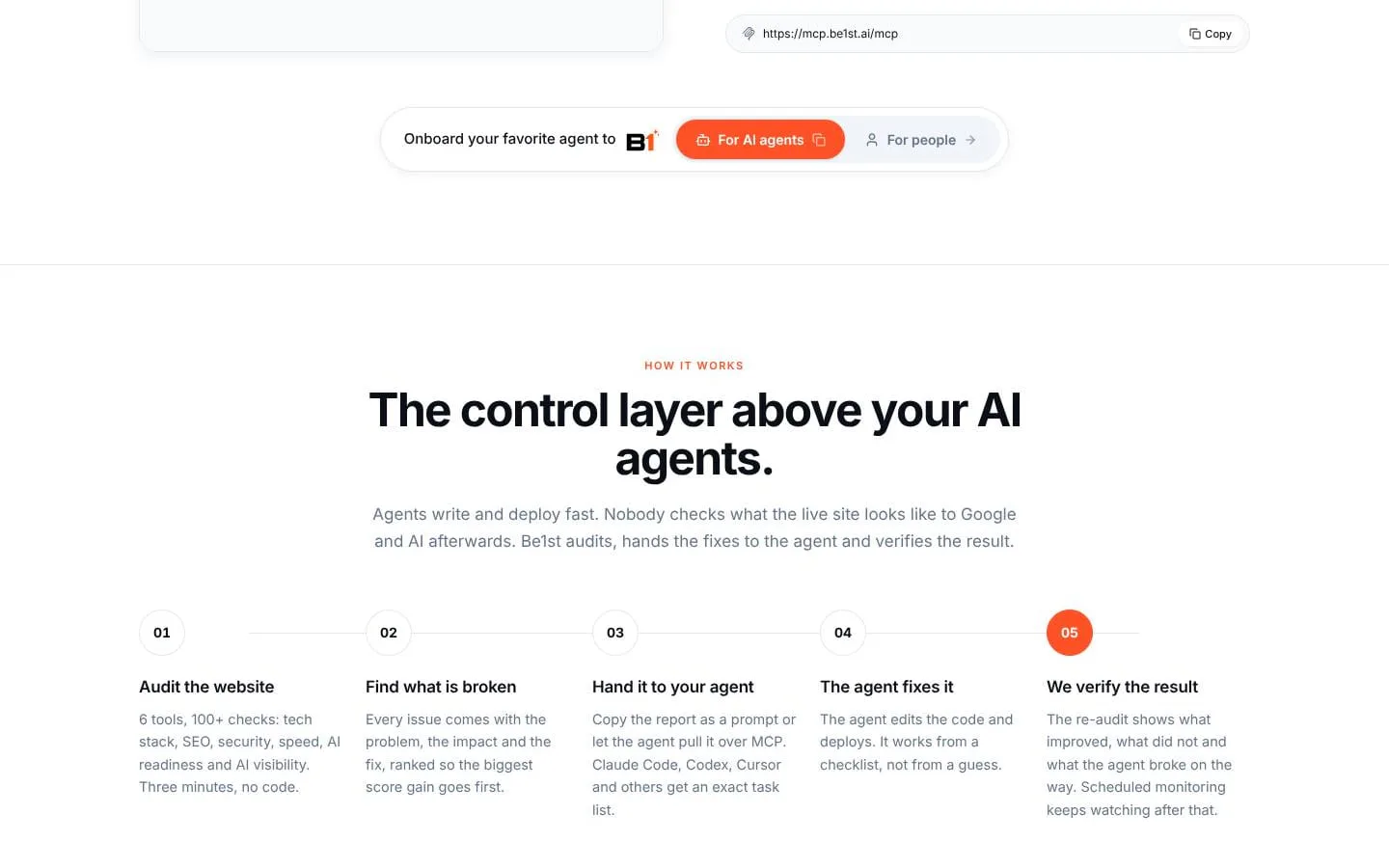
- Runs an audit in about three minutes across tech stack, SEO, security, speed and AI readiness.
- Result
- Users get an independent baseline of website health and AI/search readiness.
- Why
- A single assessment evaluates the live site rather than relying on what an agent intended to build.
- Problem
- Audit findings can be difficult to prioritize and action.
- How it works
- Produces issue-level problem, impact and fix guidance, ranked by expected score gain.
- Result
- The highest-impact remediation work can be addressed first.
- Why
- Teams and agents need an ordered task list rather than a generic score.
- Problem
- AI coding agents need structured access to audit work.
- How it works
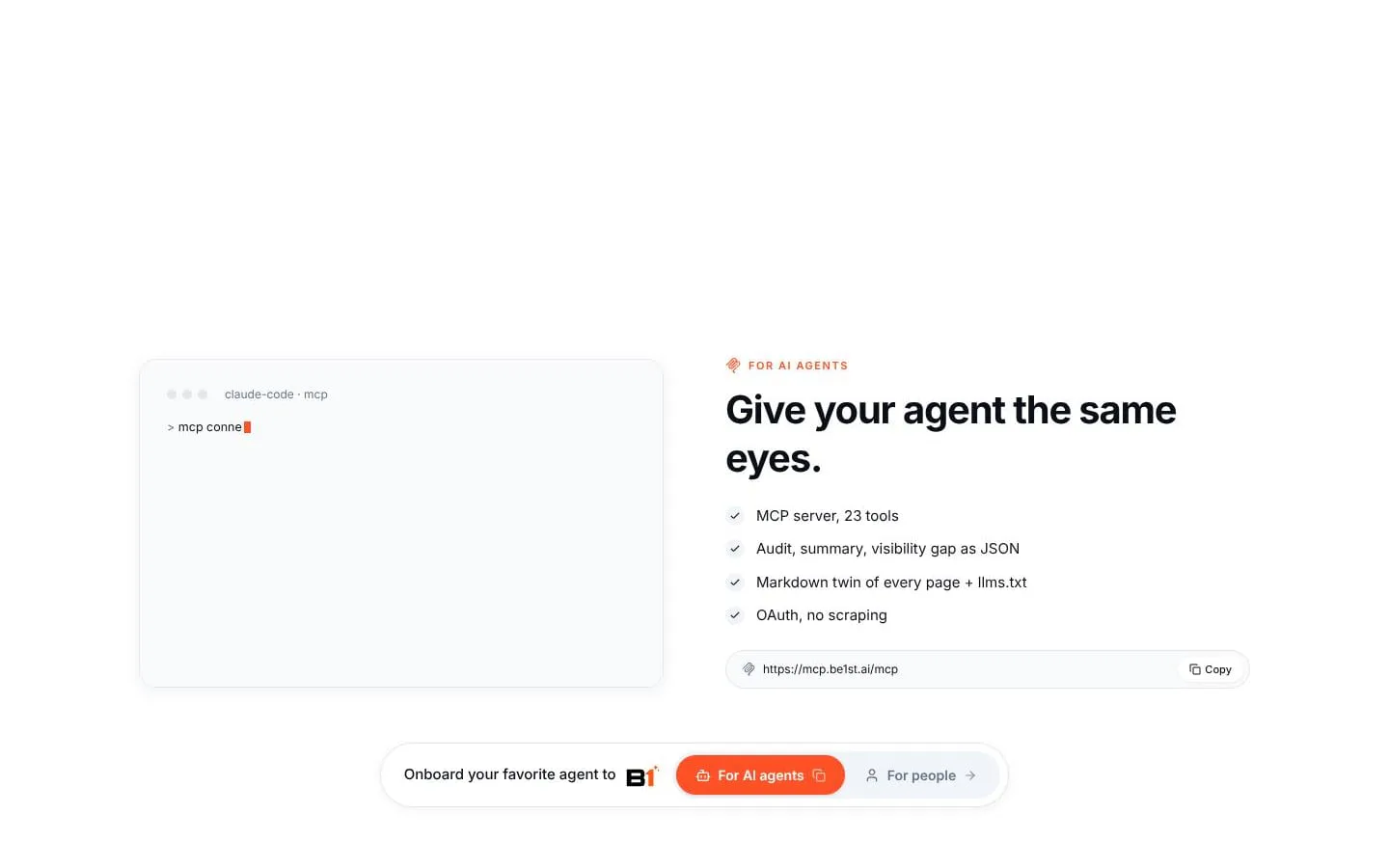
- Offers an MCP server with 23 tools, OAuth sign-in, JSON summaries and visibility gaps, complete Markdown reports, and agent-specific setup guidance.
- Result
- Claude Code, Codex, Cursor, OpenCode and compatible agents can work from audit results.
- Why
- Agents can pull audit data and fixes directly instead of requiring manual handoffs.
- Problem
- A fix may regress other parts of a website.
- How it works
- Re-audits report what improved, what did not, and what broke; scheduled audits continue monitoring afterward.
- Result
- Teams can verify outcomes rather than assuming changes worked.
- Why
- The same checks before and after implementation make changes measurable.
- Problem
- Website owners need visibility into AI-search preparedness.
- How it works
- Checks AI readiness, including structured data, LLM-oriented content, Markdown availability and llms.txt; AI Visibility measures presence in AI responses and identifies topic gaps.
- Result
- Users can identify and address barriers to AI discoverability.
- Why
- Websites increasingly need to serve both conventional search and AI readers.
- Problem
- Agencies and researchers need market context beyond a single domain.
- How it works
- Tracks Google search-volume trends and reports technology adoption across audited sites, with stack comparisons and trend views.
- Result
- Users can use observed keyword and technographic data alongside their audits.
- Why
- Demand and technology choices inform website, SEO and competitive decisions.
Screenshots