Productivity
Sova Planner
Everyday planner for iPhone
- Category
- Productivity
- Stage
- Mature
- For
- iPhone users, families, friends, and small teams organizing shared plans.
About
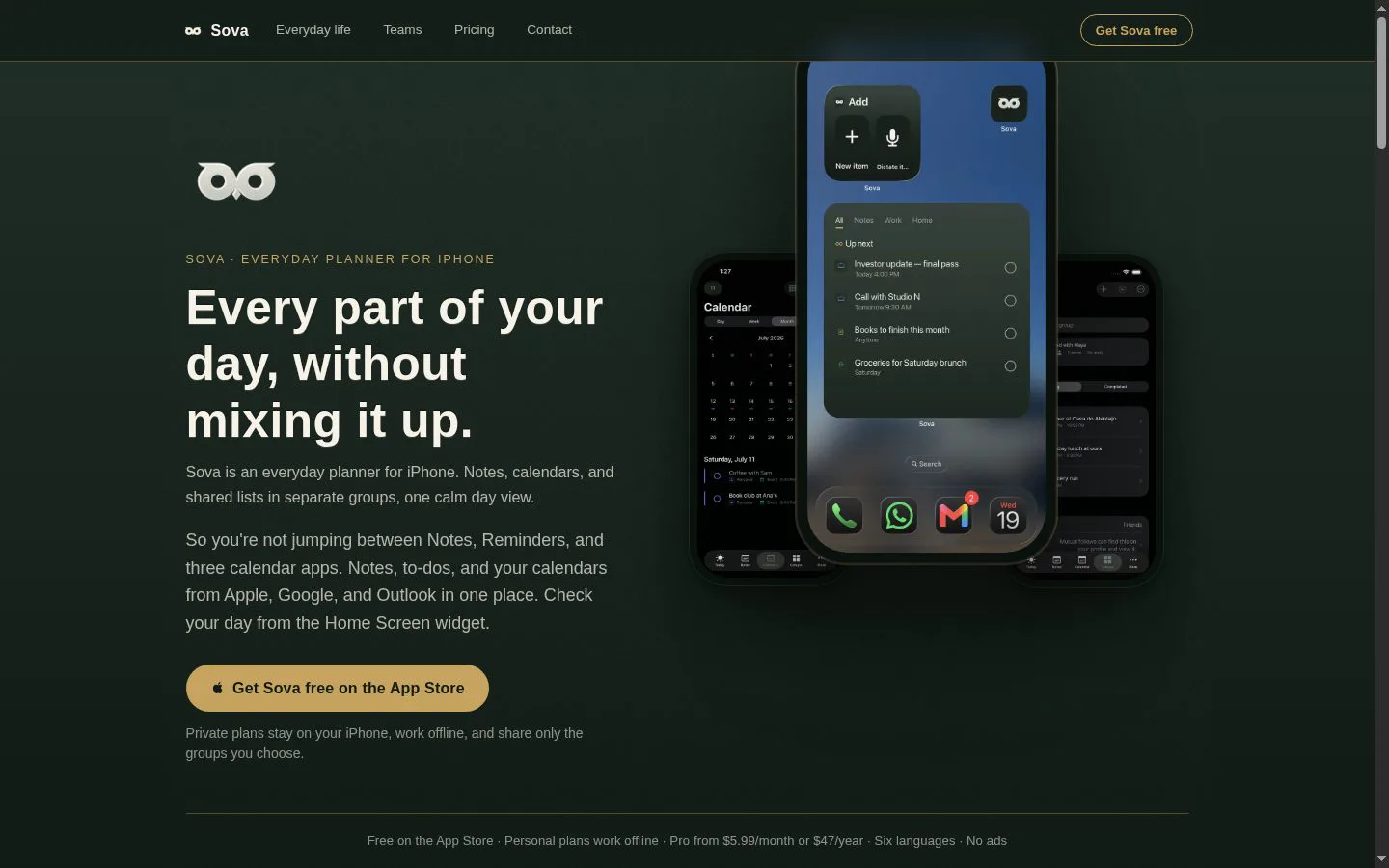
Everyday planner for iPhone: notes, to-dos, and calendars in one place, groups you share in one tap, and capture that turns email text, photos, screenshots, or voice into plans in seconds.
Features
- Problem
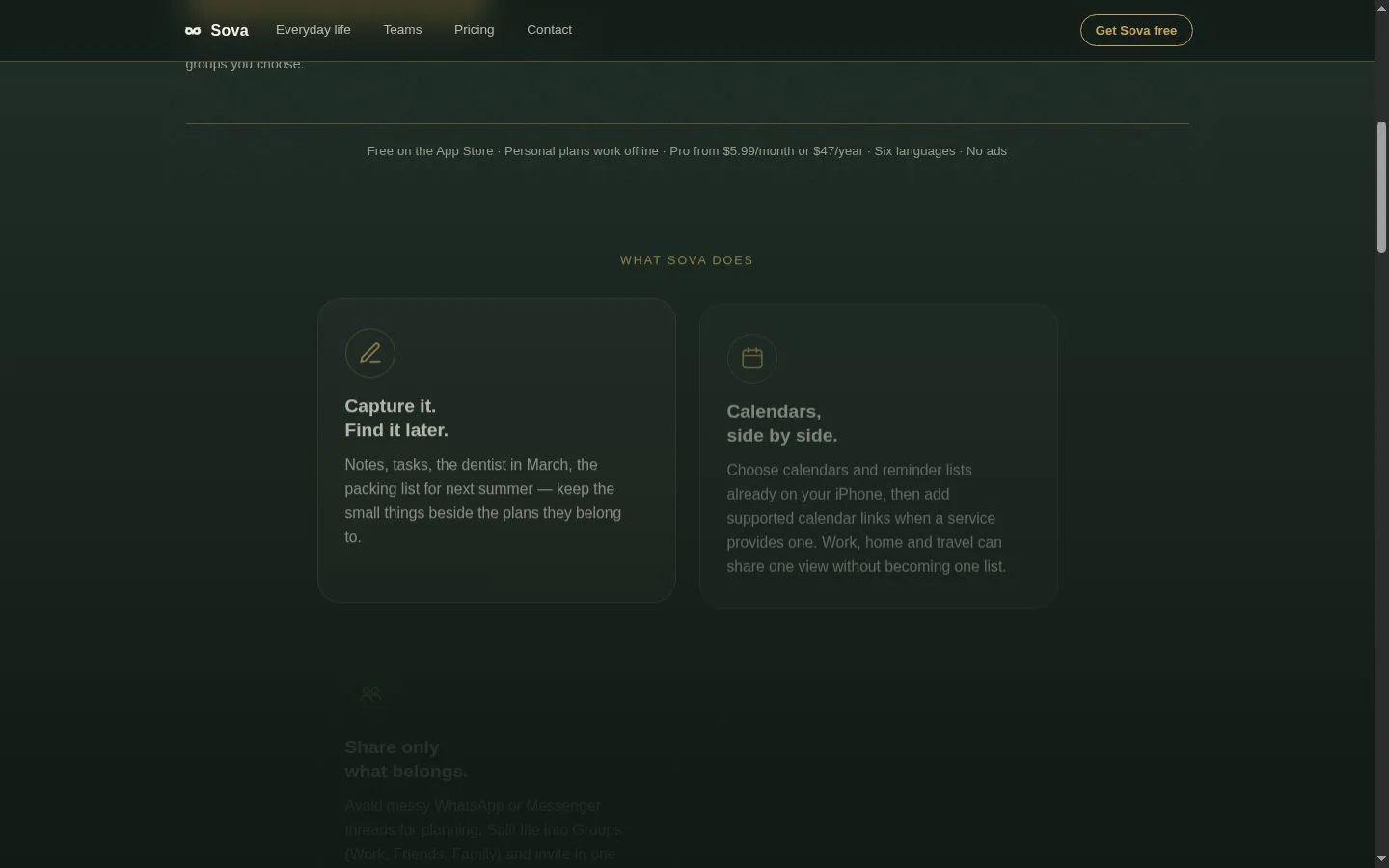
- Notes and future tasks get lost away from the plans they support.
- How it works
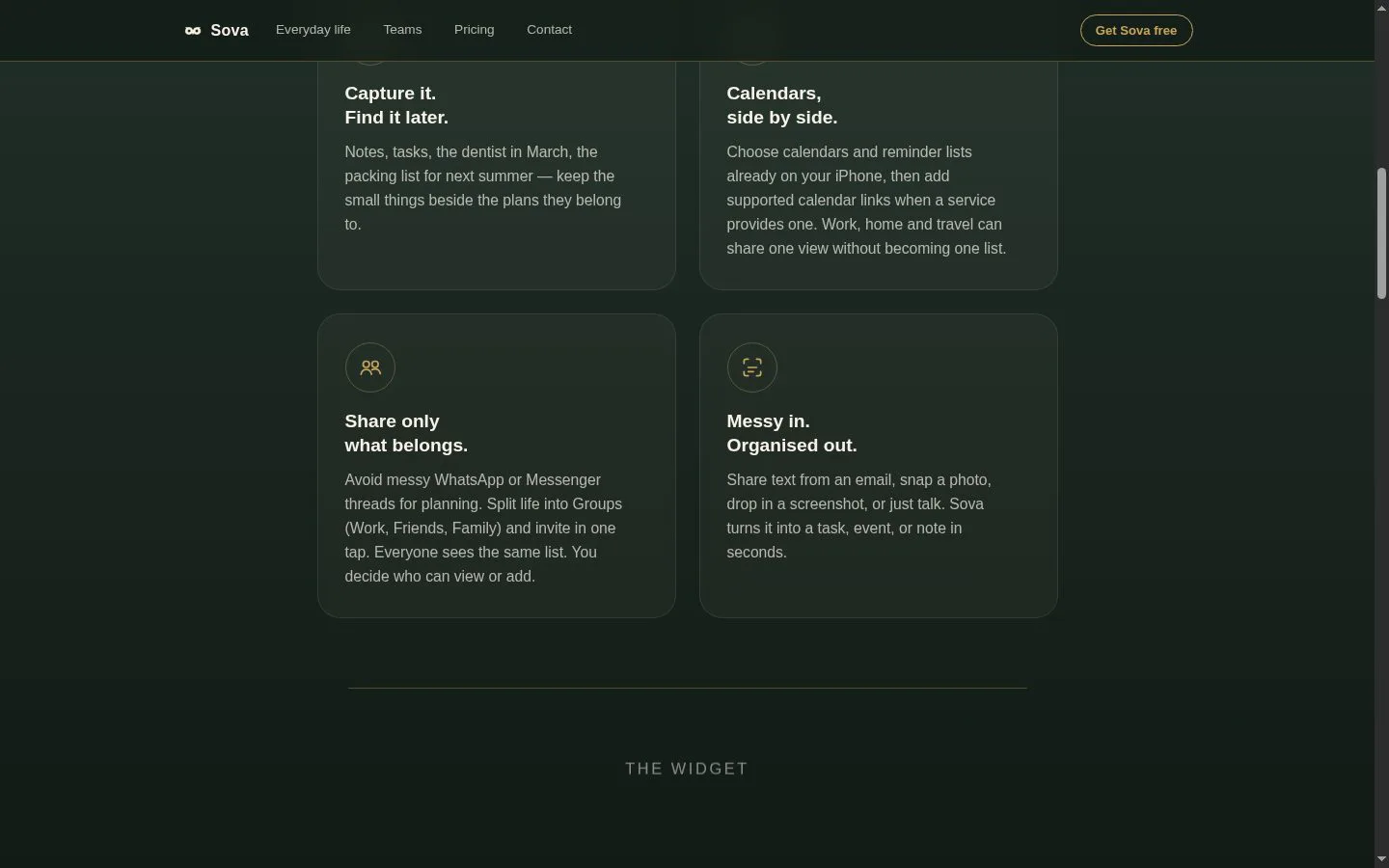
- Stores notes, tasks, events, reminders, checklists, and attachments within separate groups.
- Result
- Users can capture information now and find it when the plan matters.
- Why
- A packing list, appointment, and work note remain beside their relevant context rather than in unrelated apps.
- Problem
- Calendar, reminder, and planning information is scattered across services.
- How it works
- Shows selected iPhone calendars and reminder lists alongside supported calendar links in Today, Calendar, and the Home Screen widget.
- Result
- Users get one view of their day without merging every plan into one list.
- Why
- Sources remain recognisably separate while being viewable together.
- Problem
- Group planning in chats lacks clear membership and permissions.
- How it works
- Lets users share a group by link or QR code, with viewer, creator, and admin roles plus configurable link access.
- Result
- Shared lists stay coordinated without exposing unrelated private plans.
- Why
- Only the people invited to a given family, trip, friend, or team group participate.
- Problem
- Bookings and plans often require manual re-entry.
- How it works
- Converts shared text, photos, screenshots, and voice input into draft tasks, events, or notes; screenshot scanning extracts booking details for review.
- Result
- Plans can be captured in seconds with less retyping.
- Why
- Nothing is silently added, and the user reviews the draft before saving.
- Problem
- Private planning should remain usable without a connection.
- How it works
- Keeps private groups on the iPhone for offline use; shared lists are stored online for invited members to receive updates.
- Result
- Users retain offline access and control over which groups are shared.
- Why
- The product separates local private planning from explicitly shared collaboration.
- Problem
- Teams need schedules and availability without disclosing sensitive plan details.
- How it works
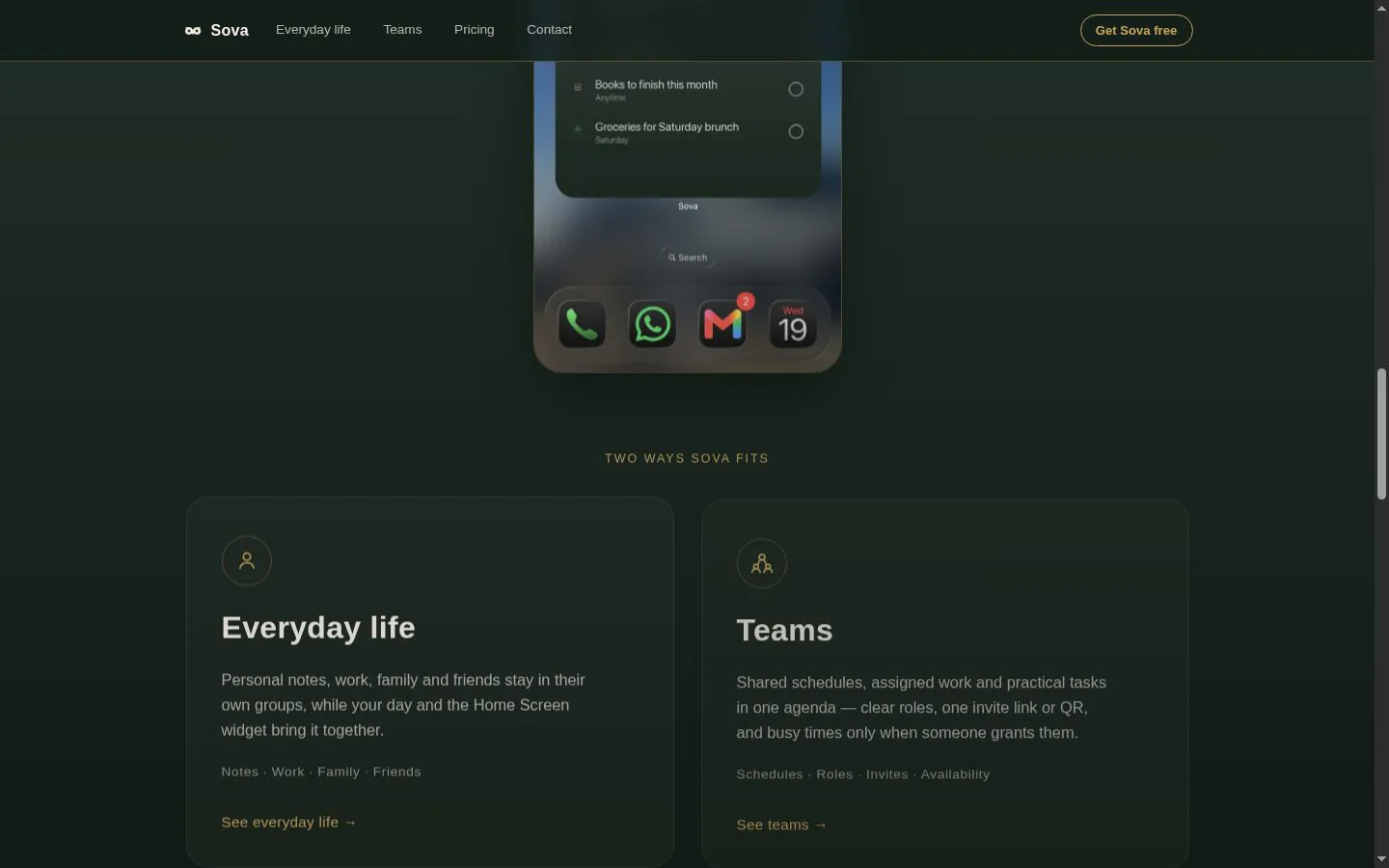
- Supports assigned items, member-only details, and opt-in availability that exposes busy times but not titles or reasons.
- Result
- Small teams can coordinate sessions, shifts, and work while preserving privacy.
- Why
- Roles and visibility controls limit what each member can see.
Screenshots