Build in public
7 SaaS Founders Building in Public to Follow in 2026
Meet seven SaaS founders sharing their launches, growth milestones, product decisions, failures, and lessons from building software businesses in public.
By Uriel Bitton · · 8 min read

The short answer
Seven SaaS founders stand out for sharing the real work behind building software in public: Pieter Levels, Marc Lou, Marie Martens, Tony Dinh, Dmytro Krasun, Damon Chen, and Arvid Kahl. Their updates offer practical lessons on shipping, customer-led growth, bootstrapping, distribution, technical tradeoffs, and selective transparency.
What does building in public mean?
Building in public means sharing parts of your company-building process with an external audience.
For a SaaS founder, that could include:
Product demos and feature launches
Customer research and positioning decisions
Revenue or user milestones
Experiments that worked—and those that did not
Technical challenges
Hiring and operating decisions
Personal reflections about running the business
Most founders share through X, LinkedIn, YouTube, newsletters, blogs, podcasts, or founder communities.
How to build a SaaS in public
Start by choosing one channel where your target customers or peers already spend time. You do not need to publish everywhere.
Then focus your content on useful decisions rather than generic progress reports. “We worked on onboarding today” is forgettable. Explaining why customers were abandoning onboarding, what you changed, and what happened next is useful.
A simple approach is to publish around four themes:
What you shipped
What you learned from customers
What worked or failed
What you are changing next
Consistency matters more than volume. One valuable post every week for three months will teach you more than a burst of daily content followed by silence.
Seven SaaS founders building in public
The financial figures below are founder-reported rather than independently audited. They are included with dates because public revenue figures can change quickly.
1. Pieter Levels
Pieter Levels is one of the most established examples of a solo founder repeatedly launching software in public.
His active products include Photo AI, Interior AI, Nomads, and Remote OK. His public project archive, updated in August 2026, also includes a long list of products that failed, stalled, or were discontinued.
That complete record is what makes his journey useful. Instead of presenting every launch as a winner, Pieter shows how a high volume of experiments can produce a small number of unusually successful products.
Active on: X, personal blog, podcasts
Content: Live product demos, launches, revenue snapshots, technical decisions
Core message: Ship repeatedly and let real demand select the winners
Funding: Bootstrapped
Best lesson to copy: A visible archive of experiments can become both a personal brand and a distribution channel
His content is sometimes broader than SaaS, but his work on subscription software, AI products, pricing, infrastructure, and solo operations remains highly relevant to software founders.
2. Marc Lou
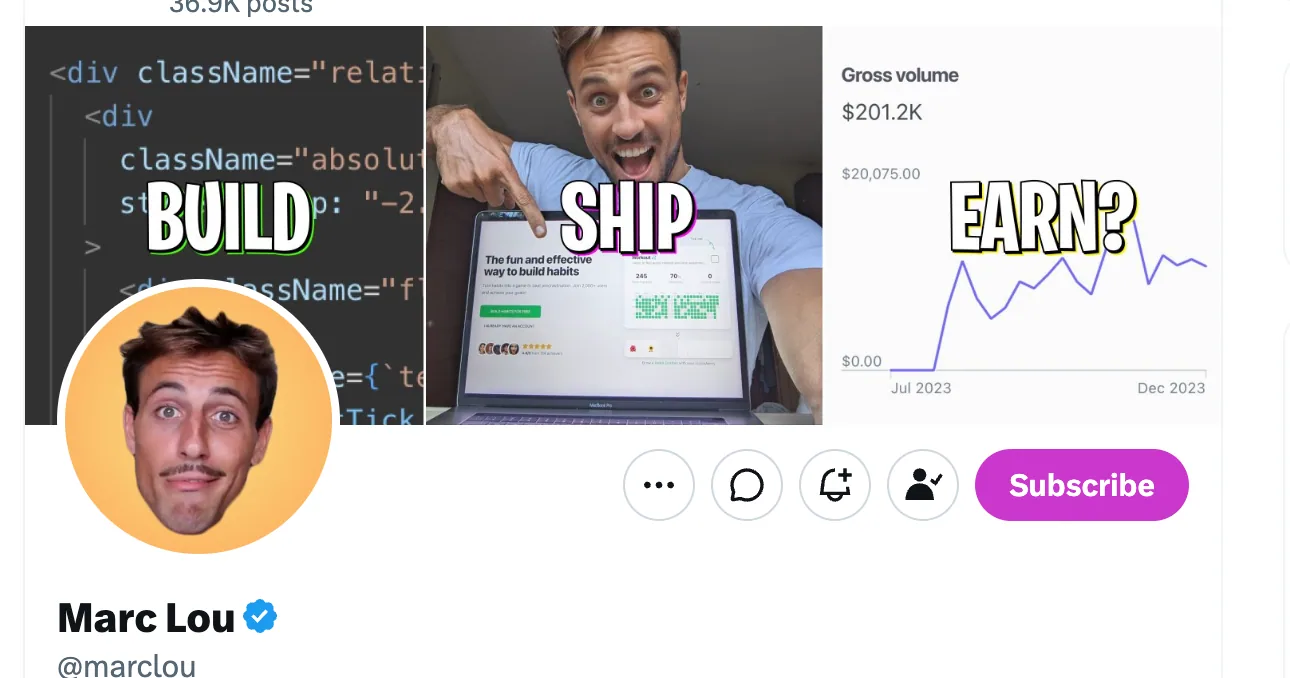
Marc Lou is a solo founder known for launching products quickly and letting market response decide which ones deserve more attention.
His public portfolio contains dozens of launches, including SaaS products such as DataFast and TrustMRR alongside templates, educational products, and experiments. His dashboard currently displays revenue by product, making it easy to see the difference between his winners, smaller bets, acquisitions, and discontinued ideas.
Marc’s content is particularly useful for founders interested in fast validation, founder-led distribution, launch strategy, and managing a portfolio of small software products.
Active on: X, YouTube, newsletter
Content: Launch stories, product demos, marketing tactics, revenue updates
Core message: Ship quickly, charge early, and follow evidence
Funding: Bootstrapped
Best lesson to copy: Build a reusable launch system instead of treating every product as a completely new beginning
Marc’s portfolio uses a mixture of recurring and one-time revenue, so not every product should be classified as SaaS. Follow him for his micro-SaaS experimentation and distribution playbook rather than assuming every public revenue figure is MRR.
2. Marie Martens
Marie Martens is the co-founder of Tally, a simple form-building SaaS competing in a crowded category against much larger companies.
Marie and co-founder Filip Minev have documented Tally’s journey since its early MVP. In April 2026, Marie reported that Tally had crossed $5 million in ARR with a team of 11 while remaining fully bootstrapped.
Her updates stand out because they cover more than revenue. She writes about customer conversations, product quality, community, pricing, hiring, and the discipline required to keep a growing product simple.
Active on: LinkedIn, Tally’s blog
Content: Milestone retrospectives, product strategy, customer-led growth
Core message: Win through simplicity, focus, and closeness to users
Funding: Fully bootstrapped and customer-funded
Best lesson to copy: Turn milestone updates into detailed lessons customers and founders can both appreciate
Marie is an especially useful follow if you want to see what building in public looks like after a SaaS has moved beyond the solo-founder stage.
3. Tony Dinh
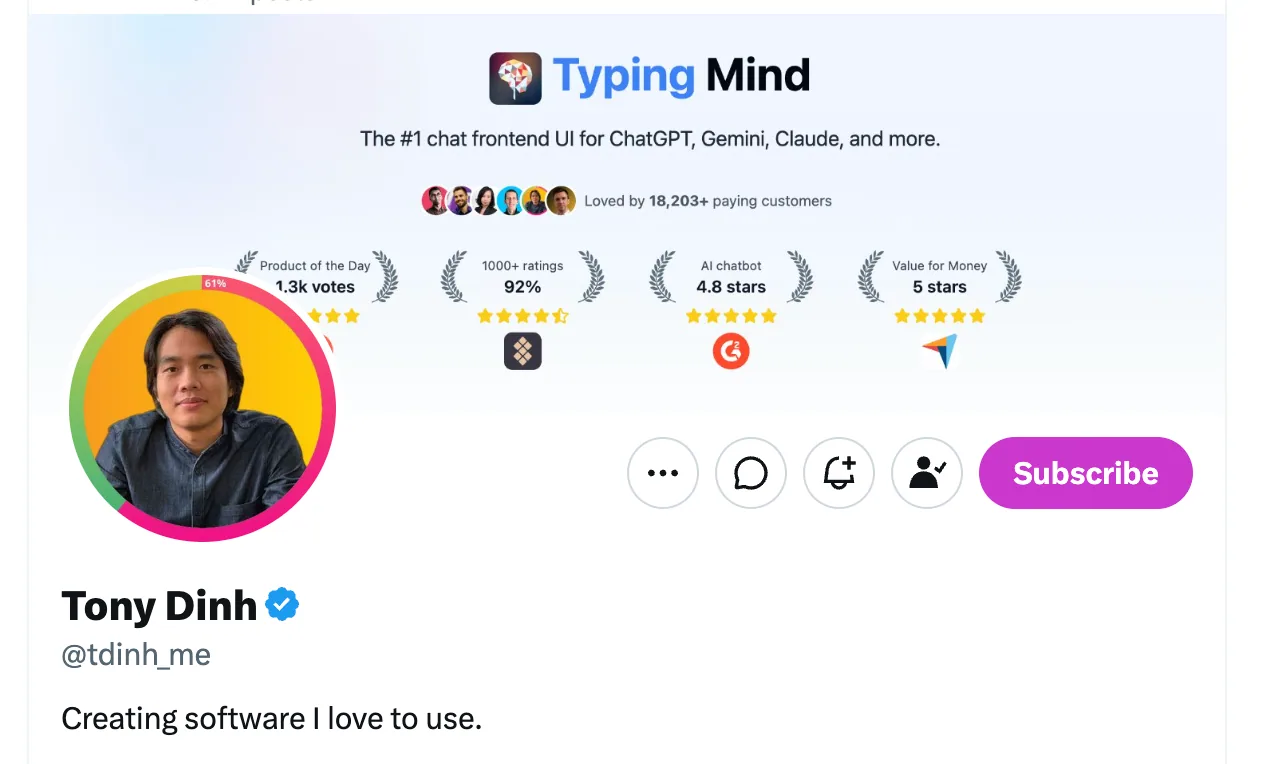
Tony Dinh is the founder of TypingMind, an advanced interface for working with multiple AI models.
Tony launched the first version shortly after the ChatGPT API became available, then documented the product’s rapid early traction and continued development. In his October 2025 business update, he reported monthly revenue of approximately $130,000–$160,000, with recurring revenue from the B2B team product accounting for more than half.
His content is a strong example of how an existing founder audience can accelerate a relevant product—but also why timing, usefulness, and continued product improvement still matter.
Active on: X, newsletter, LinkedIn
Content: Product updates, revenue recaps, technical decisions, indie-founder life
Core message: Move quickly when a platform shift creates a new customer problem
Funding: Bootstrapped
Best lesson to copy: Use public launches to create momentum, then earn retention by steadily improving the product
Tony also writes candidly about platform risk, hiring, failed marketing experiments, and the transition from one-time licenses toward recurring B2B revenue.
4. Dmytro Krasun
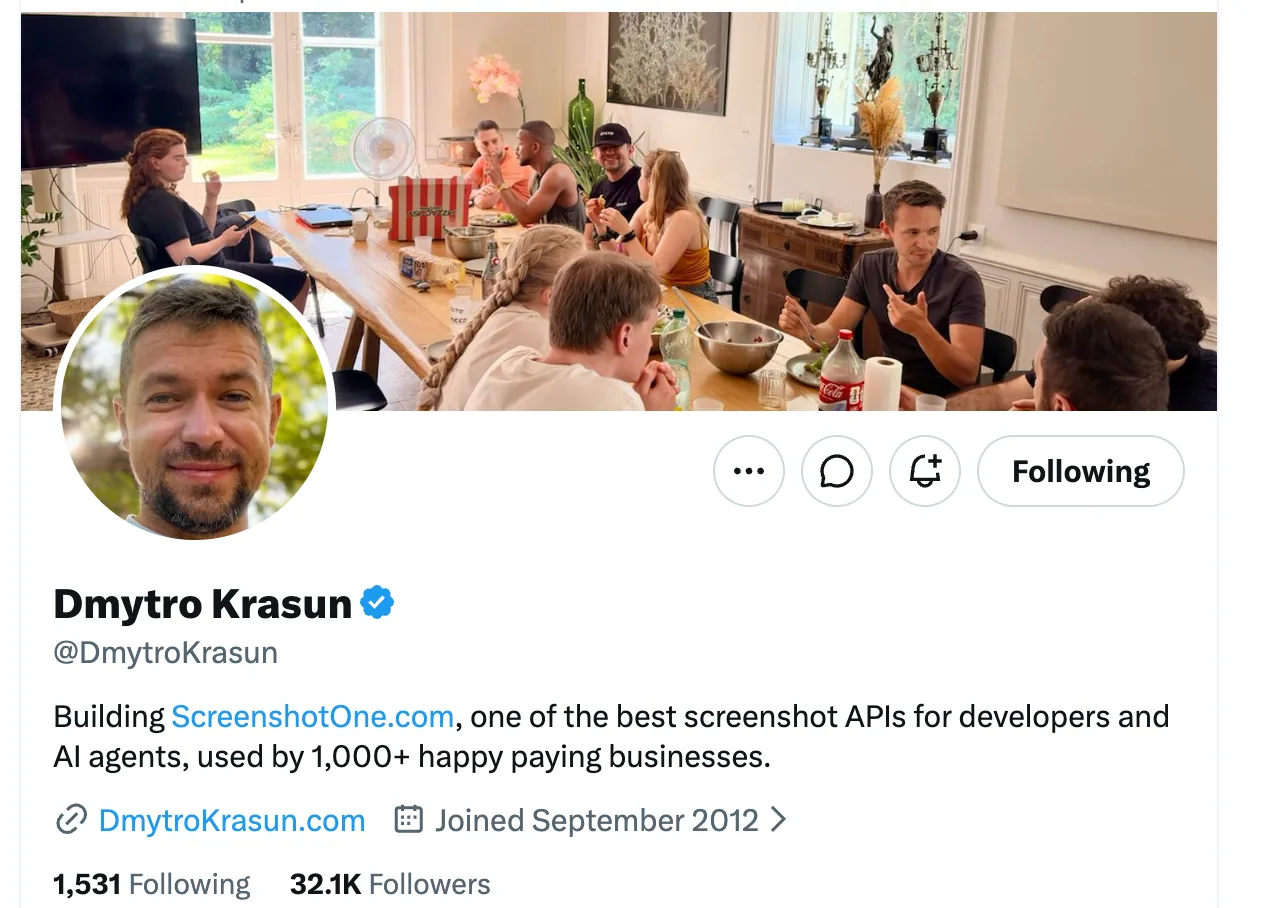
Dmytro Krasun is the founder of ScreenshotOne, an API that lets developers generate website screenshots without maintaining their own browser infrastructure.
ScreenshotOne is a great example of a narrow B2B SaaS growing through focus rather than hype. In his May 2026 review, Dmytro reported $33,000 in MRR, more than 1,000 paying customers, and over 100 million API requests.
He shares revenue milestones, technical incidents, marketing experiments, operating costs, personal challenges, and the tradeoffs of running infrastructure as a small company.
Active on: X, LinkedIn, personal blog, product blog
Content: Engineering lessons, transparent milestones, marketing and positioning
Core message: A narrow developer tool can become substantial through reliability and persistence
Funding: Fully bootstrapped
Best lesson to copy: Build authority by teaching from the exact problems your product solves
Dmytro is worth following if you prefer realistic, multi-year SaaS growth over overnight-success narratives.
5. Damon Chen
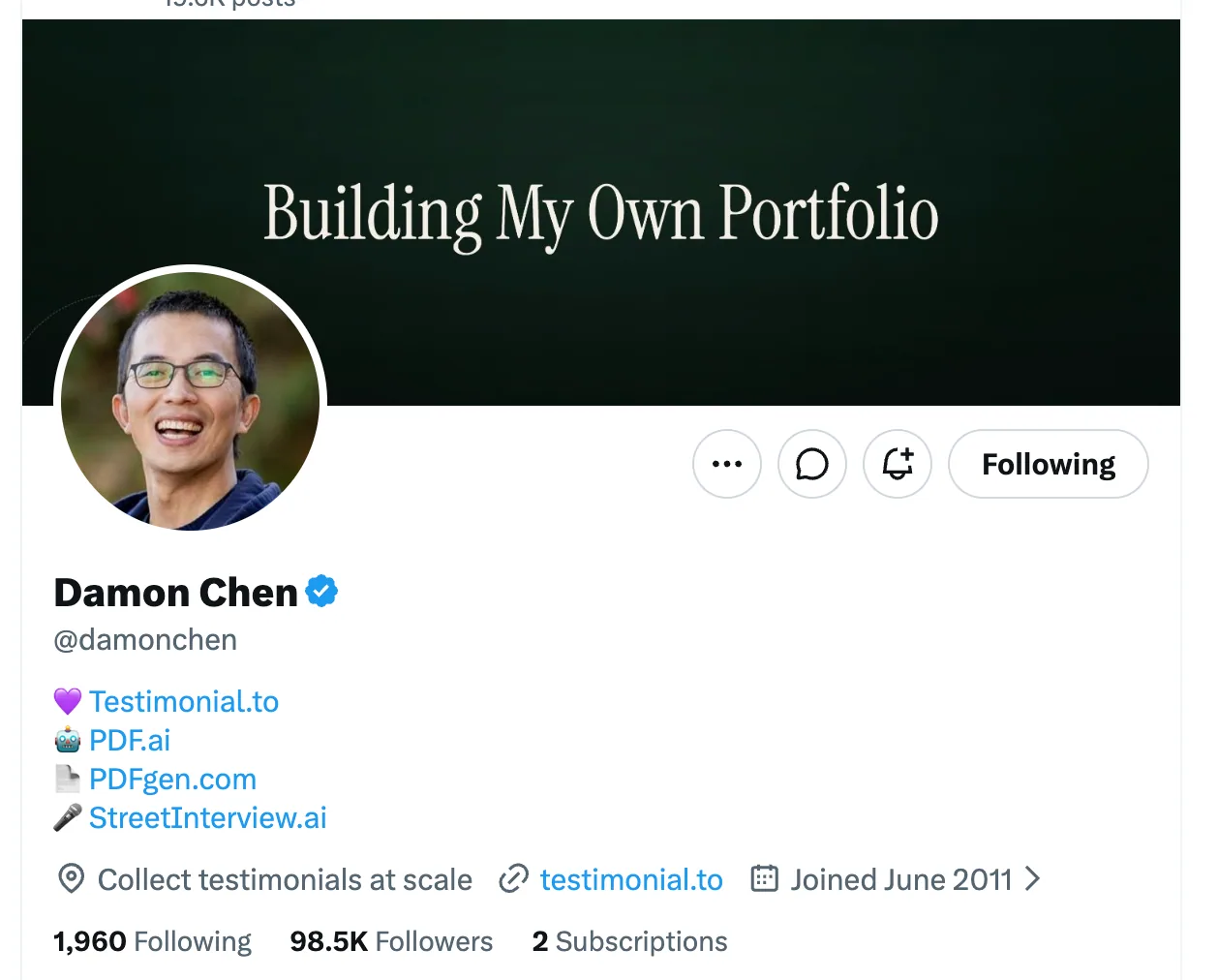
Damon Chen is the founder of Testimonial, a SaaS platform for collecting and displaying customer testimonials. He has also built products such as PDF.ai.
Before Testimonial worked, Damon launched several products that made little or no money. Rather than hiding those attempts, he shared them and reused parts of the earlier products to launch his next idea.
He later publicly documented Testimonial reaching $1 million in ARR and, subsequently, $2 million in cumulative revenue.
Active on: X, LinkedIn
Content: Product launches, milestone updates, failures, pricing, portfolio building
Core message: Failed products can contain the raw material for a successful one
Funding: Bootstrapped
Best lesson to copy: Treat every launch as an asset—code, audience knowledge, positioning, and customer insight can all be reused
Damon is a good follow for founders who need a more realistic picture of persistence and iteration.
7. Arvid Kahl
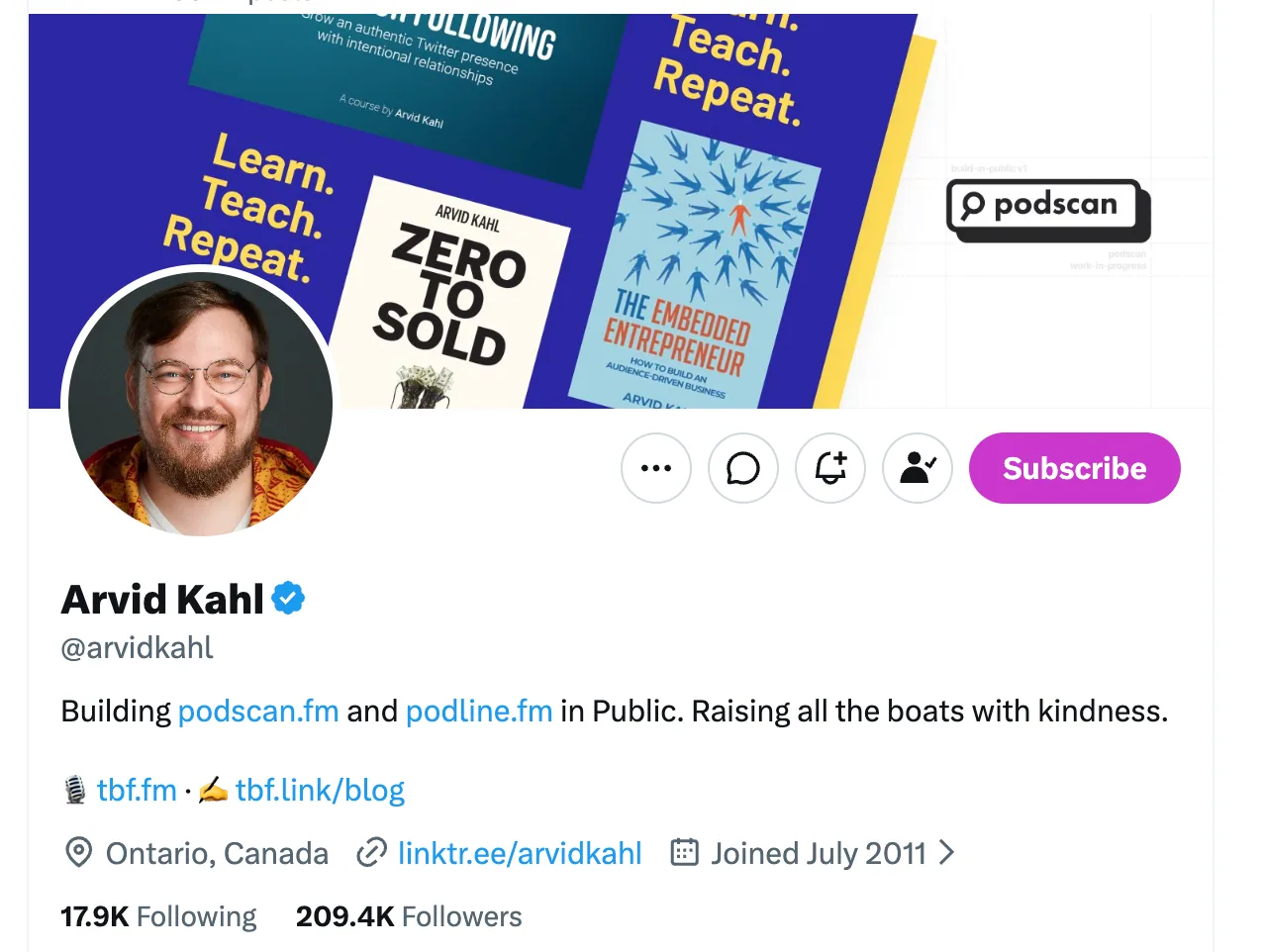
Arvid Kahl co-founded and sold FeedbackPanda, then started Podscan, a podcast-monitoring and data SaaS.
Arvid’s approach is different from founder accounts focused primarily on growth screenshots. Through his blog and The Bootstrapped Founder podcast, he discusses positioning, infrastructure, customer acquisition, profitability, founder psychology, and the less glamorous parts of running a SaaS.
Podscan’s official story describes it as a business built in public, although it secured seed funding in 2024. That makes Arvid useful for founders interested in both bootstrapped principles and the realities of operating a capital-intensive data product.
Active on: X, LinkedIn, blog, podcast
Content: Long-form essays, operating lessons, technical breakdowns, founder psychology
Core message: Build sustainable businesses around a specific audience and its real problems
Funding: Seed-funded; FeedbackPanda was bootstrapped
Best lesson to copy: Share the reasoning and lessons behind your decisions, not only the result
Arvid is also increasingly thoughtful about the risks of radical transparency. In 2026, he explained why he now favors selective, lessons-first building in public instead of publishing every number and customer detail.
Why building a SaaS in public works
Building in public can help a SaaS company in several ways:
It creates trust before a prospect is ready to buy.
It gives potential users a reason to offer early feedback.
It turns product development into useful marketing content.
It attracts customers, partners, employees, and potential acquirers.
It creates accountability for the founder.
It develops an audience that can support future launches.
The strongest founders do more than publish wins. They share decisions, evidence, constraints, and what they learned.
That distinction matters. Revenue screenshots might earn attention, but useful lessons build durable trust.
How to start without oversharing
Try publishing one update per week for eight weeks.
Each update can follow this structure:
The customer problem you noticed
The decision or experiment you made
The evidence you collected
What you learned
What you will change next
Avoid sharing customer identities, exploitable technical details, private team information, or numbers that would create more risk than value.
Your goal is not to make the company look successful. It is to make your work understandable and useful to the people you want to reach.
Want more practical SaaS growth breakdowns?
Join buildside.app for actionable lessons from founders building and growing software companies.
Frequently asked questions
What does building in public mean for a SaaS founder?
Building in public means sharing selected parts of how you build and operate your SaaS, such as product launches, customer research, growth experiments, technical decisions, milestones, and lessons learned.
Which SaaS founders are featured in this article?
The article features Pieter Levels, Marc Lou, Marie Martens, Tony Dinh, Dmytro Krasun, Damon Chen, and Arvid Kahl, with practical lessons from each founder’s approach to products, distribution, growth, and transparency.
How can I start building my SaaS in public?
Choose one channel, publish one useful update each week, and explain the customer problem, the decision or experiment, the evidence, what you learned, and what you will change next. Avoid sharing sensitive customer or company information.
A note from Uriel Bitton
Building in public is most valuable when an update helps another founder make a better decision. I put this list together to highlight founders who share the reasoning, tradeoffs, experiments, and setbacks behind their results—not only polished wins.
Keep building with us
Get practical founder lessons and product updates in your inbox.
Keep reading
Building in Public: A Practical Guide to Visibility, Distribution, and SEO
Learn how early-stage SaaS founders can use building in public to create visibility, distribution, and SEO value without oversharing.
How to Build in Public When You Have No Audience
Start building in public from zero by joining conversations your target users already have, contributing useful context, showing evidence from your work, and giving interested people a durable place to follow the product.
How to Build in Public to Attract Opportunities
Turn ordinary build-in-public updates into clear opportunity signals so potential customers, testers, collaborators, partners, and experts can understand where they fit and how to respond.
What Is Buildside? A Home for SaaS Founders Building in Public
Buildside is a home for SaaS founders building in public. Learn what it is, who it is for, and how founders can share their startup journey clearly.