



















Weekly challenges
Startup community challenges to build in public
Buildside challenges give your build-in-public routine a shared focus. Follow a community brief, choose a practical piece of work, and explain what you tried alongside other startup founders. A challenge can help you make progress on a product question while giving the community a clear reason to discuss your approach, your evidence, and what you learned.
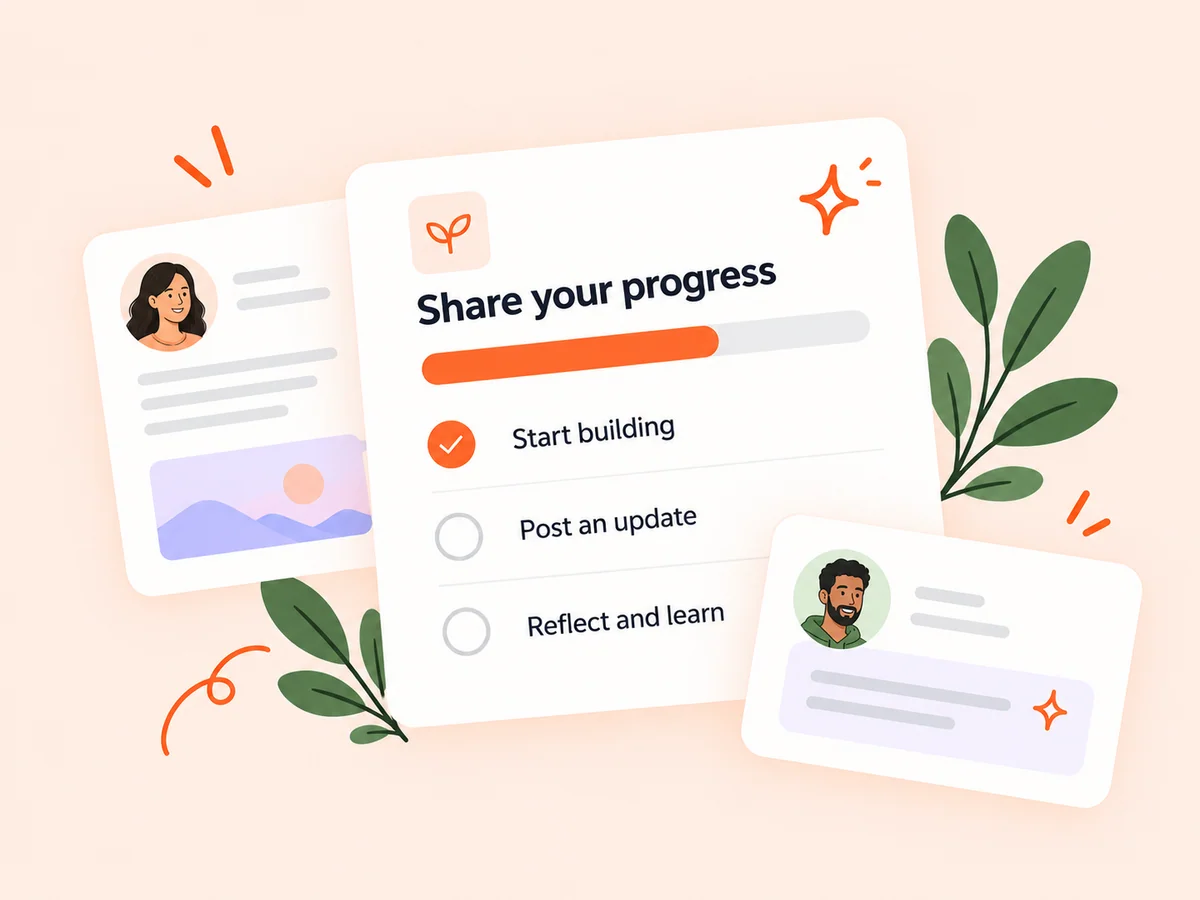
A closer look at Weekly challenges
A startup community challenge connects a prompt with work you can actually complete. Instead of looking for a grand announcement, identify a useful decision or experiment within the brief. Share the starting point, your approach, and the result. Other founders can compare their own experience with yours and ask questions about the choices behind the outcome.
A challenge supplies a shared focus when you want a reason to make and share progress. The useful part is the work you choose within that brief: a small experiment, a customer-facing improvement, or a reflection on what you learned. Read the current challenge carefully, because its timing, participation requirements, and expected contribution define the experience.
Make it useful
Turn a community challenge into a startup update
Use a challenge as a reason to share a concrete result or lesson. Explain what you tried, what happened, and what you would change next. Other founders can understand your contribution more easily when it includes the context behind the outcome rather than only a finished screenshot.
Describe the starting point so the result means something. If a challenge leads you to improve a landing page, explain the audience and the question you wanted the revision to answer. Show the relevant change and separate completed work from outcomes you have not measured. A finished screen is evidence of a change, not proof that it improved the business.
Explore the feed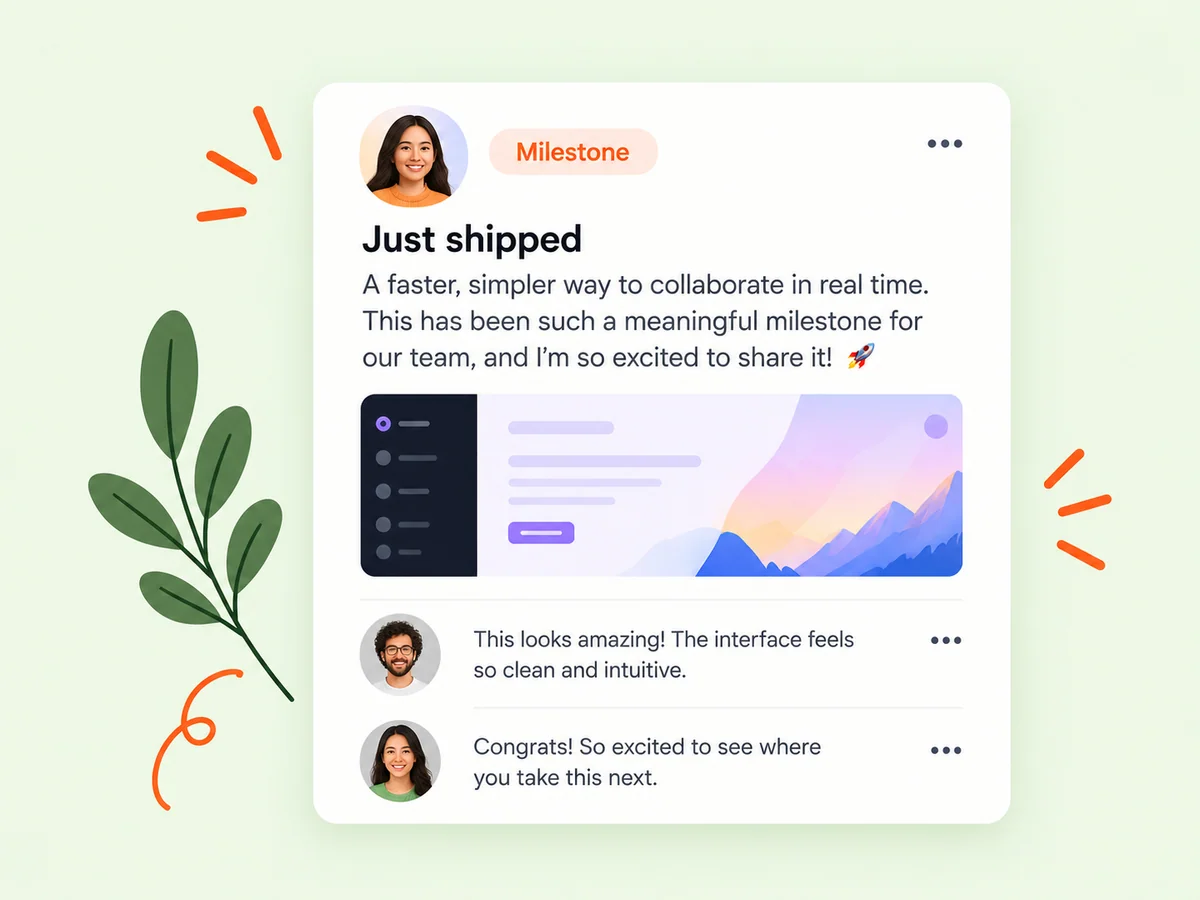
Keep building
Learn from other founders building in public
Explore other founders’ contributions and open profiles when their approach interests you. Community activity can introduce builders you would not otherwise encounter. Use those discoveries to find a thoughtful reply, a useful lesson, or someone whose future progress you want to follow.
Compare the reasoning behind different contributions rather than assuming the most visible result is the most useful example. Another founder may serve a different audience or be at a different stage. Ask a question about those conditions and identify which part of their approach you could reasonably test in your own product.
Explore founder momentum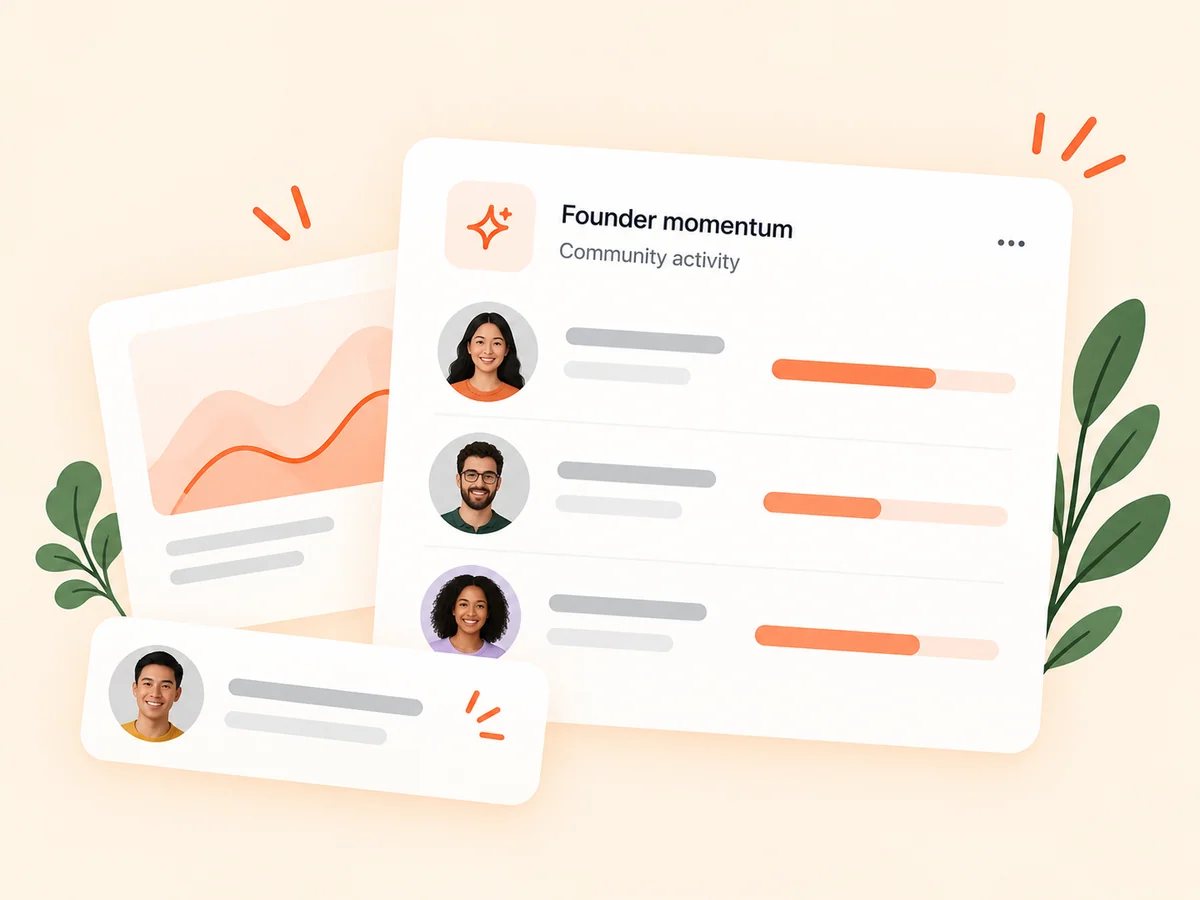
From idea to action
How to get started
Read the current brief
Open Challenges and understand the focus and participation details before deciding what to contribute. Read the goal, dates, and current participation details before choosing your work. Pick a contribution that fits both the brief and the time you can realistically devote to it.
Connect the goal to your work
Choose a small, relevant task or learning outcome that makes sense for your product stage. Keep notes while doing the work so the final update includes more than a screenshot. Record the decision, the observation, and any uncertainty that affects how someone should interpret the result.
Share and participate
Post your contribution through the challenge workflow and engage with other founders’ work. Review other contributions after sharing your own. A specific question or thoughtful reply can help you understand a different approach and give the other founder something useful in return.
Find your starting point
Choose a practical goal for a founder challenge
Join a challenge when a shared prompt can help you focus on work your product already needs. A founder might use it to clarify a landing-page message, test an onboarding assumption, or document a small release. Keep the scope manageable enough to explain the result. Participating should produce a useful lesson or decision, even if the experiment does not go as expected.
The community context also helps you learn from different approaches to the same prompt. Founders may interpret the goal through different products and audiences. Compare those choices to understand the reasoning, then decide which observation is relevant to your own work.
An example to adapt
Example: document a small landing-page experiment
Imagine a challenge brief that invites founders to improve how they explain their product. You choose the opening description of a budgeting tool and replace a broad promise with a specific audience and task. Your contribution shows the previous wording, the revision, and the reason for the change.
You ask readers what they expect the product to do after reading the revised description. Their answers inform a next check rather than proving a conversion improvement. This hypothetical example illustrates how a bounded contribution can produce an understandable lesson and a useful conversation.
Make the most of it
Share evidence with your build-in-public progress
Match your contribution to the challenge brief and show the work behind it. A before-and-after screenshot can illustrate a product change, while a short explanation makes the reasoning clear. Building in public through challenges is more useful when other founders can understand the starting point and limitations. Avoid presenting one experiment as a universal rule for startup growth.
Contribute to other people’s learning as well as presenting your own result. Explain what you noticed in their work, ask about a real uncertainty, or offer relevant experience. These exchanges make the challenge valuable beyond the act of submitting an update.
Good questions, clear answers
About Weekly challenges
How do startup community challenges help me build in public?
A challenge provides a shared prompt for choosing work, documenting progress, and discussing the result. On Buildside, you follow the current brief and share a contribution that explains what you tried. Other founders can learn from the details and compare approaches. Check each challenge’s requirements, because the scope and participation format can differ.
Do all challenges have the same requirements?
No. Read the current brief for the goal and participation details. Shape your contribution around that specific challenge. Check the challenge page rather than relying on an earlier event’s instructions. Timing and required actions can affect whether a contribution fits the current brief.
How can a challenge help my build-in-public routine?
It gives you a focused starting point for an update and a reason to learn from other people working on a related goal. Use the prompt to choose a small piece of real work, then explain the result in your own words. A challenge gives the routine a focus; useful participation still depends on the substance of your contribution.
What if I cannot finish the result I planned?
Describe what you attempted and what you learned within the challenge’s participation rules. A clear account of an obstacle can still be informative. Be explicit about what is incomplete and avoid presenting an intended outcome as a finished result simply because the challenge period is ending.
Should I choose a big project for a community challenge?
Choose a scope that fits the brief and lets you report something concrete. A small, completed experiment can be easier to understand and learn from than a broad project with an unclear outcome. If the work is larger, identify the specific part you intend to explore during the challenge.
Weekly challenges