




















Founder collaborations
Founder collaboration for your startup community
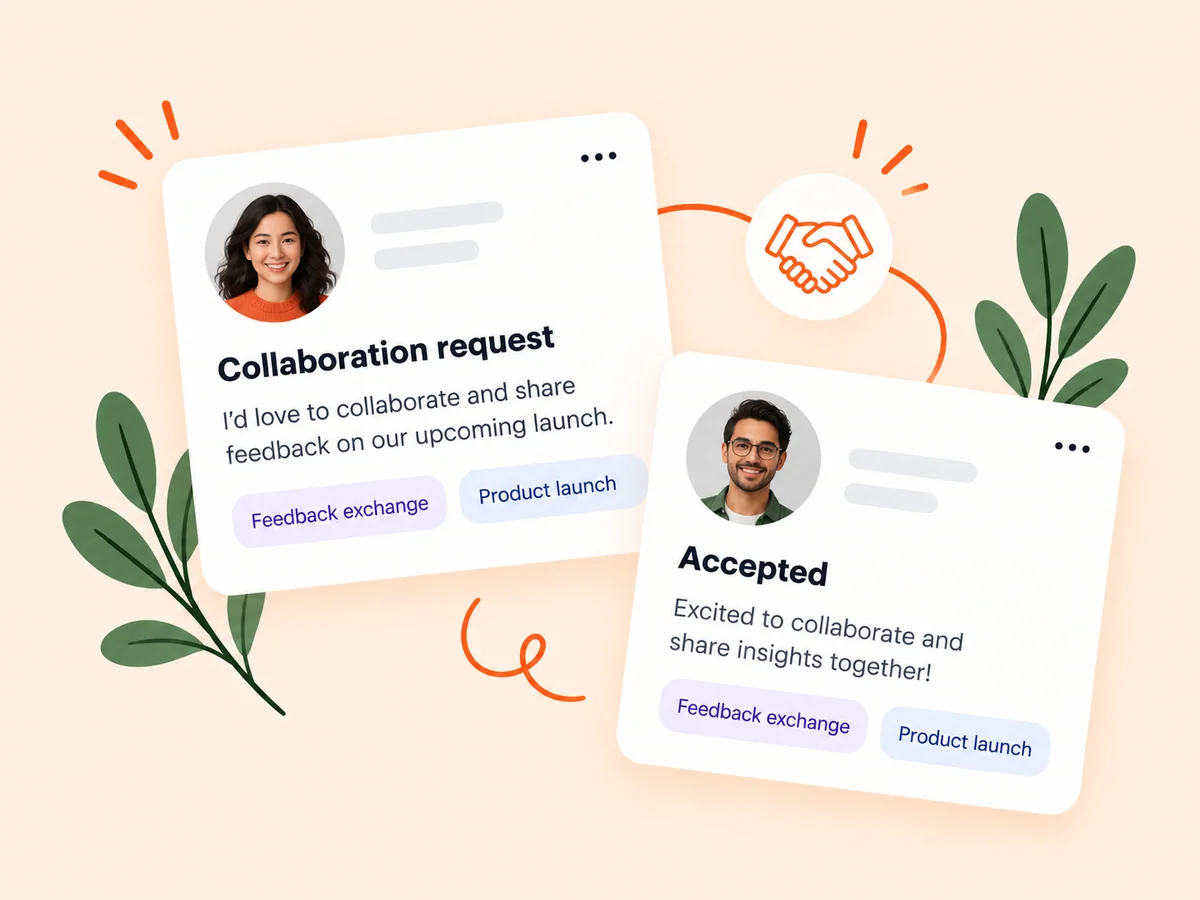
Founder collaboration on Buildside gives a useful connection a clear next step. Send a private proposal describing the opportunity, what you can contribute, and why the other person’s experience matters. Review incoming requests and continue accepted proposals in a direct conversation. Start with a focused exchange, such as product feedback or a shared experiment, before agreeing on broader work.
A closer look at Founder collaborations
Startup networking creates introductions; a collaboration proposal explains what two people might do together. Make the request concrete enough to assess: the product question, the expected contribution, and a manageable first step. A founder should be able to understand the opportunity without guessing what you need. That clarity also makes it easier to suggest a smaller or better-fitting alternative.
Collaboration can mean a focused feedback exchange, complementary product expertise, or an exploratory discussion about working together. These opportunities have different expectations. A structured request helps you explain the purpose and scope at the beginning, so the recipient can decide whether the proposal fits their current work and the contribution they are willing to make.
Make it useful
Find a shared product problem worth exploring
Use founder discovery and Founder Matches to learn about someone’s expertise and goals. Read their product and public updates before writing a proposal. Referencing a relevant detail makes the request easier to evaluate and gives you a basis for explaining the contribution you can offer.
Be specific about why you selected this person. Refer to a product, skill, or public update that relates to your proposal, then describe your own contribution. A useful request explains both sides of the exchange. It should also distinguish a small initial conversation from any larger project you might consider later.
Explore Founder Matches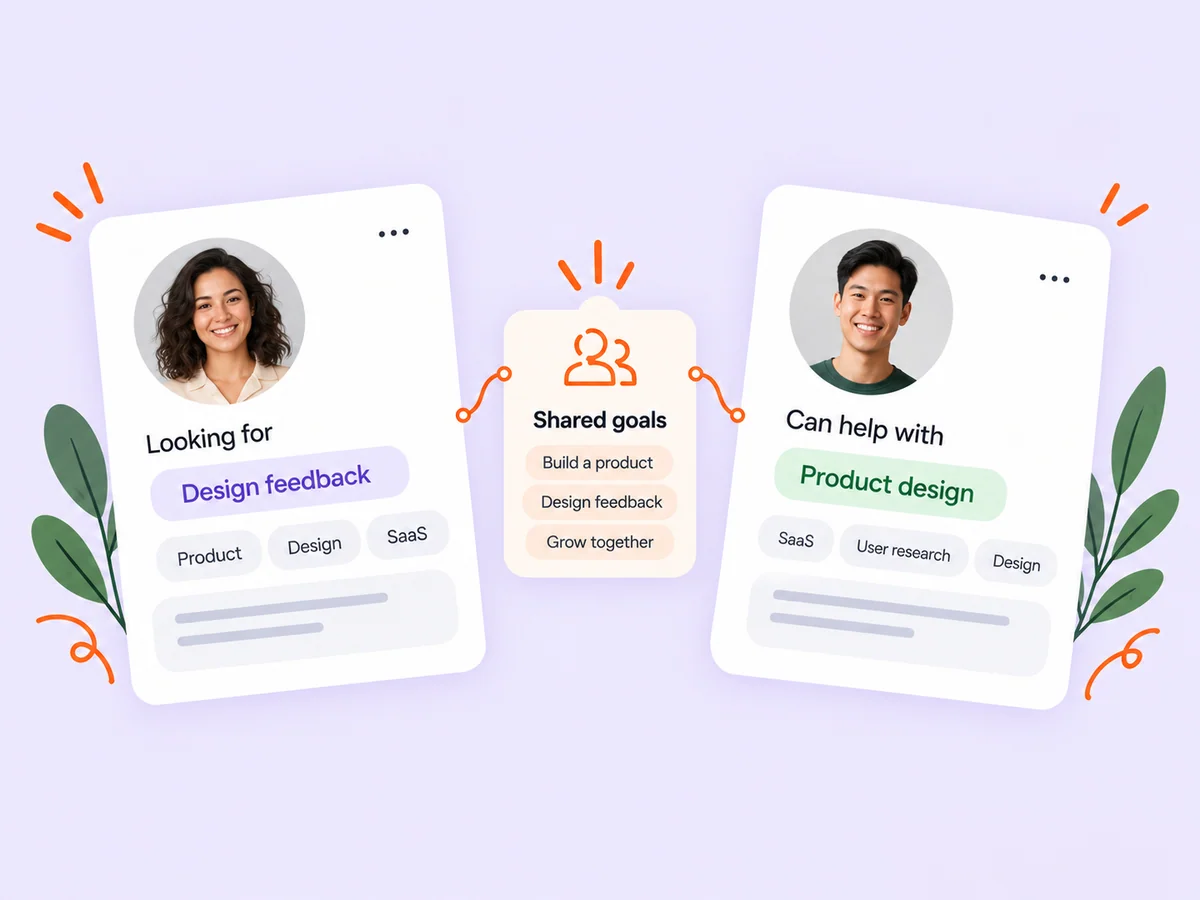
Keep building
Continue an accepted founder collaboration privately
When a collaboration is accepted, continue the discussion through direct messaging. Use the conversation to agree on scope, expectations, and a practical first step. For example, a feedback exchange can begin with a specific workflow and a short set of questions instead of an open-ended request to review an entire product.
An accepted request gives you a place to discuss the details, not a completed project agreement. Confirm what each person will do, what information is needed, and how you will know the first step is finished. If the scope changes, revisit those expectations before assuming the other founder has agreed to additional work.
Explore messaging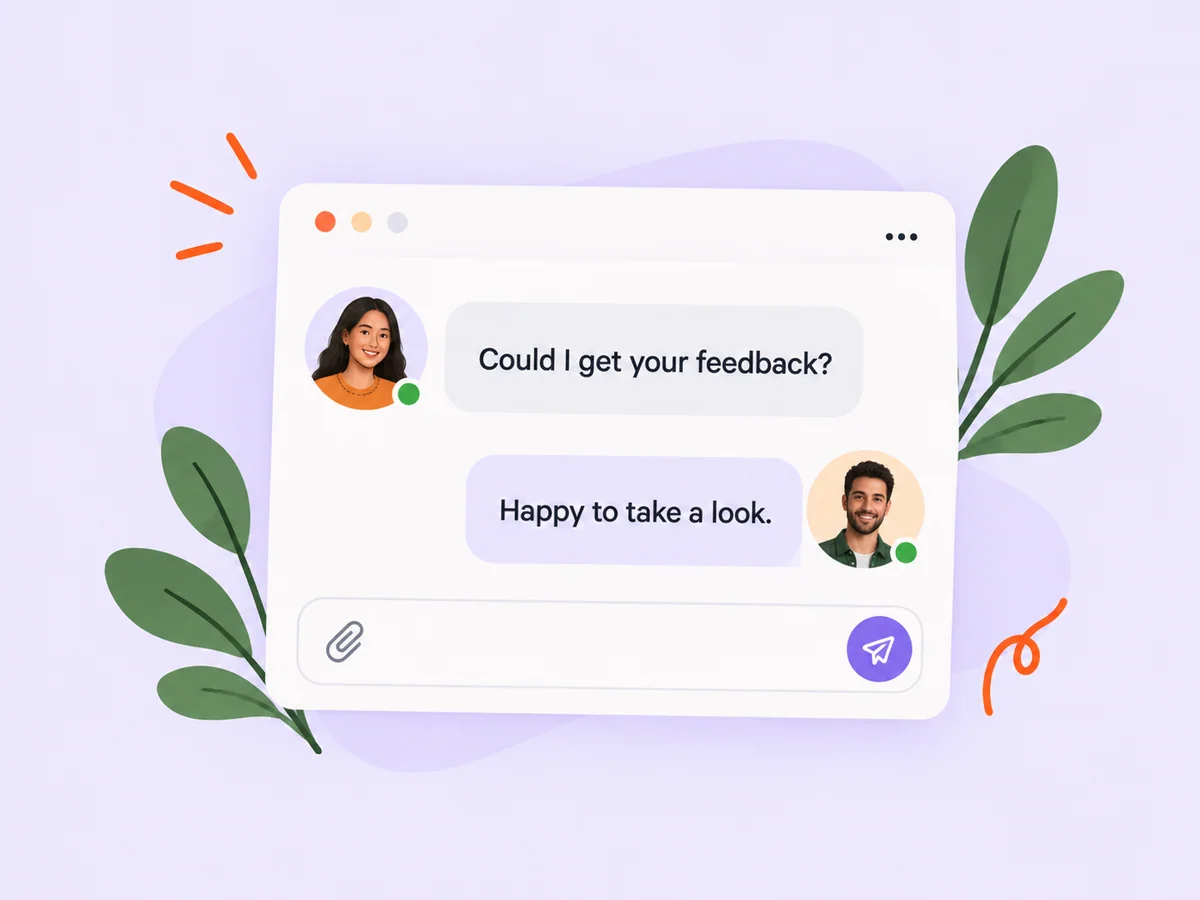
From idea to action
How to get started
Review the founder’s work
Check their profile, product, and available collaboration options. Identify a concrete overlap with your own goals. Read enough of the founder’s public work to explain why the opportunity fits them. Avoid sending the same broad offer to people with unrelated products or interests.
Write a clear proposal
Explain what you want to explore, why you chose this founder, and what you can contribute. Describe the task, the context, and the contribution you can provide. Include a clear first step that lets the recipient assess the request without having to design the project for you.
Agree on the next step
Review the response and use the accepted conversation to settle expectations before starting work. Use the private conversation to clarify open questions. Start with the smallest useful exchange, then decide together whether a broader collaboration is worth pursuing.
Find your starting point
Choose a startup collaboration with a clear first task
Use a private collaboration request when a public discussion has revealed a clear opportunity to work together. Two founders might exchange onboarding reviews, compare approaches to a similar workflow, or explore complementary skills. Define the initial task and what each person will contribute. An accepted request opens a conversation; the working arrangement still needs to be discussed directly.
Start by describing what the other person would actually do. Reviewing one flow, commenting on a draft, or discussing a specific decision is more concrete than helping with growth. A focused beginning lets both people learn whether their expectations and working styles are compatible.
An example to adapt
Example: propose a reciprocal product review
Imagine you are preparing a beta release for a project-planning tool. You find a founder who has shared thoughtful usability feedback and propose that they try the first project-creation flow. In return, you offer to review a technical setup screen in their product.
If the request is accepted, agree on which task each person will attempt and what observations to return. Keep the report centered on expectations, confusion, and completion. This illustrative exchange produces a defined first step without assuming either founder is joining the other’s team.
Make the most of it
Write collaboration requests that are easy to assess
Make the proposal specific to the person receiving it. Refer to their product or experience, explain the opportunity, and offer a practical starting point. Founder collaboration works better when both sides understand the effort involved and the intended outcome. Avoid presenting a vague idea as a settled partnership, and leave room for the other person to adjust the scope.
Use the conversation to resolve assumptions early. If you cannot yet describe the scope, propose a discovery discussion and say what you hope to clarify. Respect a declined request and keep any accepted exchange within the expectations both founders have actually agreed on.
Good questions, clear answers
About Founder collaborations
How do I start a founder collaboration on Buildside?
Find a relevant founder, read their public work, and send a private proposal explaining the opportunity and your contribution. Suggest a small first task, such as exchanging feedback on an onboarding flow. If the request is accepted, use the conversation to agree on scope and expectations. Acceptance does not settle commercial terms or create a cofounder agreement.
What should I include in a proposal?
State the opportunity, the contribution you are seeking, what you can offer, and a manageable first step. Keep it relevant to the recipient’s work. For a feedback exchange, name the workflow and the questions you want answered. For complementary work, explain the missing perspective and how your own contribution would support the shared task.
Does accepting a request settle the working arrangement?
Acceptance opens the conversation. The founders still need to agree on their responsibilities and expectations for any work they choose to do together. Clarify scope, timing, and how work will be reviewed directly with the other founder. A platform request cannot substitute for those decisions between the people doing the work.
Can I propose a small feedback exchange?
Yes. A bounded feedback exchange is a practical way to explore working together. Describe the screen or workflow you want reviewed, the audience it serves, and the feedback you can offer in return. Keep the initial request manageable so both founders can decide whether the exchange is useful.
How is a collaboration request different from a public post?
A public post invites community discussion about something you share. A collaboration request addresses a particular founder with a specific opportunity. Use the public feed for broad learning and the private proposal workflow when you have a clear reason to discuss working with an individual.
Founder collaborations