




















Founder Matches
Find a cofounder or collaborator with Founder Matches
Founder Matches helps you explore relevant people when you want to find a cofounder, meet a collaborator, or get a fresh perspective on your product. Buildside uses founder context, goals, and expertise to suggest connections. Explain what you need and what you can offer, then assess each person’s work before deciding whether an introduction makes sense.
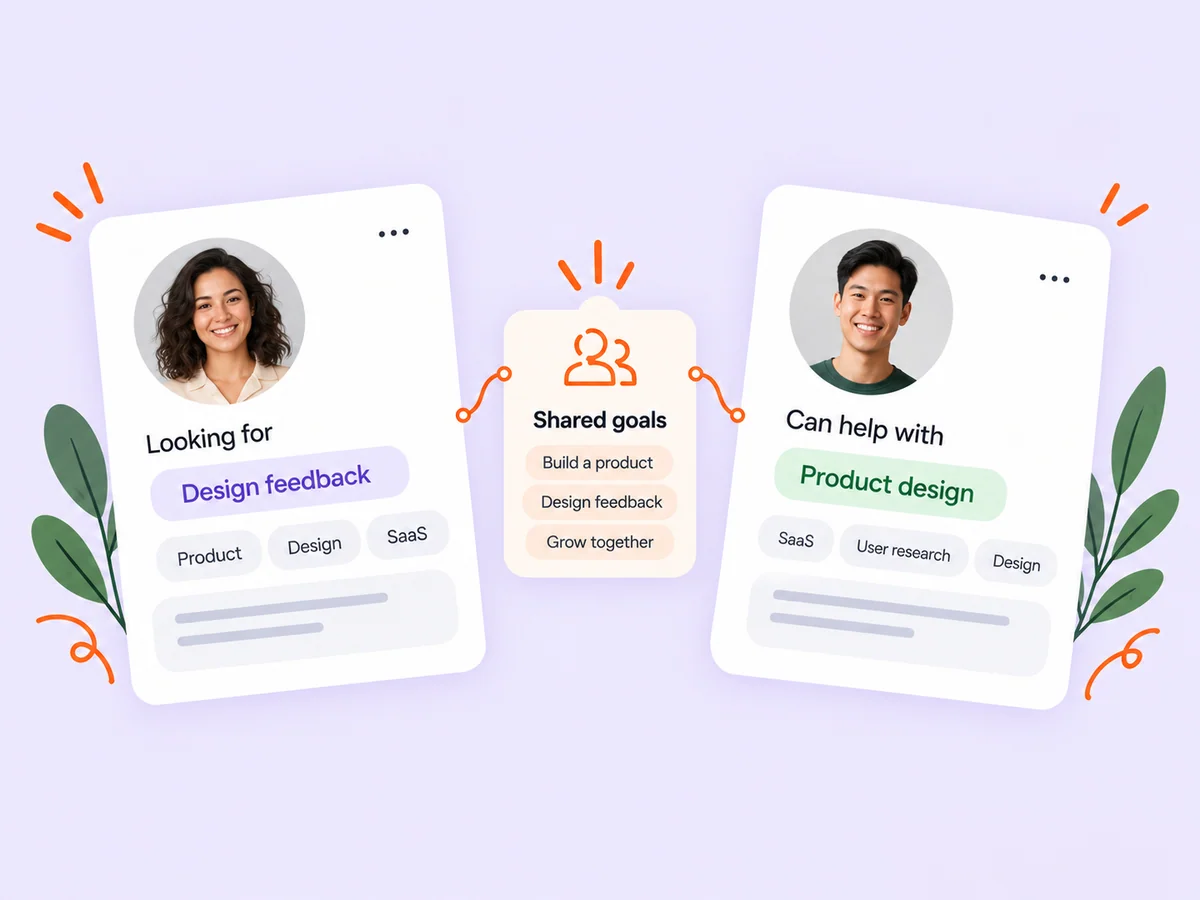
A closer look at Founder Matches
A cofounder search involves more than finding someone with a missing skill. You need to understand interests, working expectations, and the problem both people want to solve. Founder Matches provides a starting point for that exploration. Recommendations can also support smaller collaborations, such as reviewing an onboarding flow or discussing a beta launch, without implying a long-term partnership.
Buildside can suggest founders from available public profile context, and a current matching brief can add more detail about your needs and goals. This makes the feature useful both for discovering peers and for exploring complementary experience. A recommendation is still an introduction to investigate: it does not establish availability, mutual interest, or a commitment to collaborate.
Make it useful
Explore founder matches by goals and expertise
Open recommended founder profiles to understand the work behind a suggestion. Read about the person’s expertise, product, and public journey. A recommendation is a starting point for discovery; the profile helps you assess whether the connection fits your stage and what you want to discuss.
Look at why a person could be relevant to the problem you described. Similar interests can help with exchanging experience, while different skills can be useful when you need another perspective. Read the profile before deciding which applies. Avoid assuming that someone wants a co-founder role simply because their expertise complements yours.
Explore founders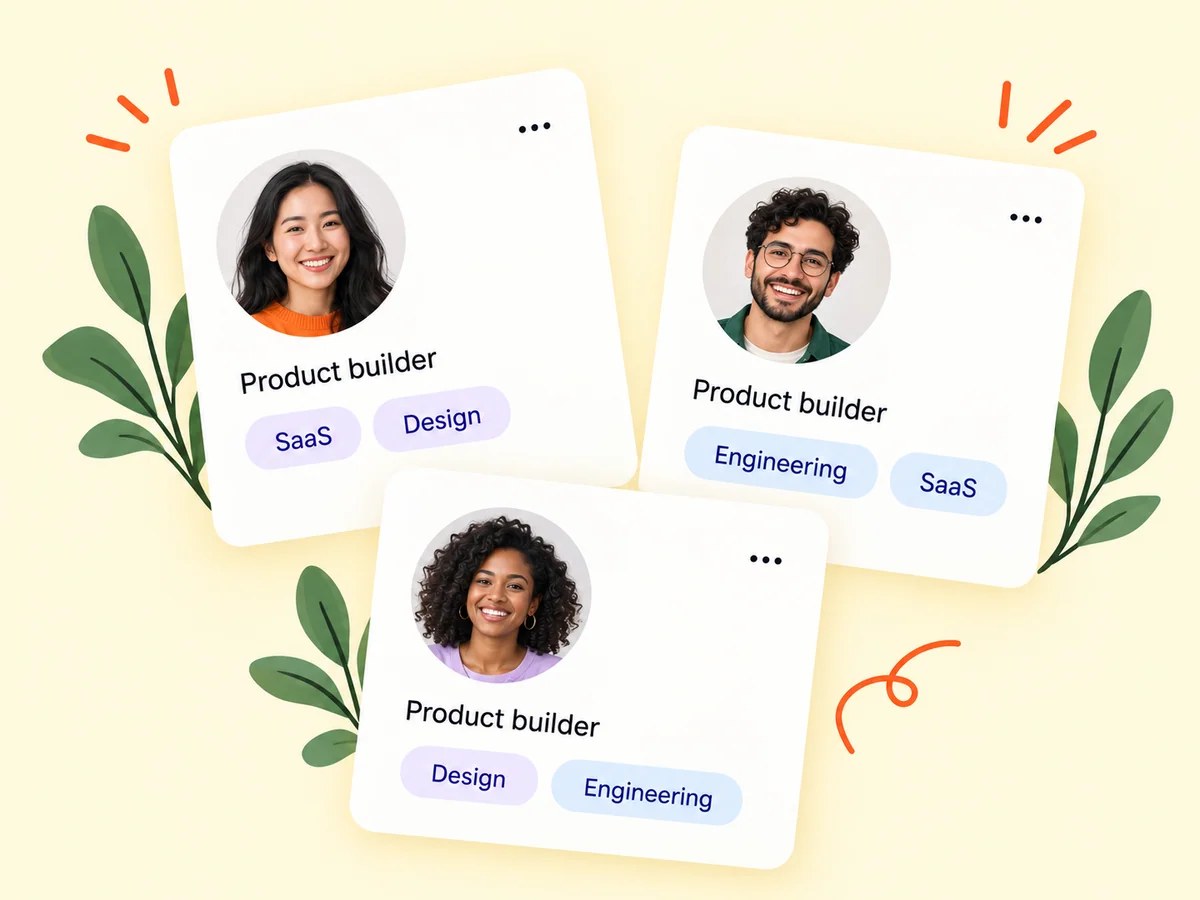
Keep building
Give a cofounder introduction a practical first step
When a recommendation looks relevant, explain the opportunity in concrete terms. Describe your current challenge, the contribution you are seeking, and the help you could offer in return. Buildside’s collaboration workflow can carry that proposal into a private conversation when the other founder accepts.
Keep an initial proposal small enough to evaluate. A request to review one signup flow is easier to understand than an invitation to help grow an entire company. If the conversation develops into a larger project, discuss its scope directly. Recommendation and introduction controls help people connect; they do not settle the working arrangement.
Explore collaborations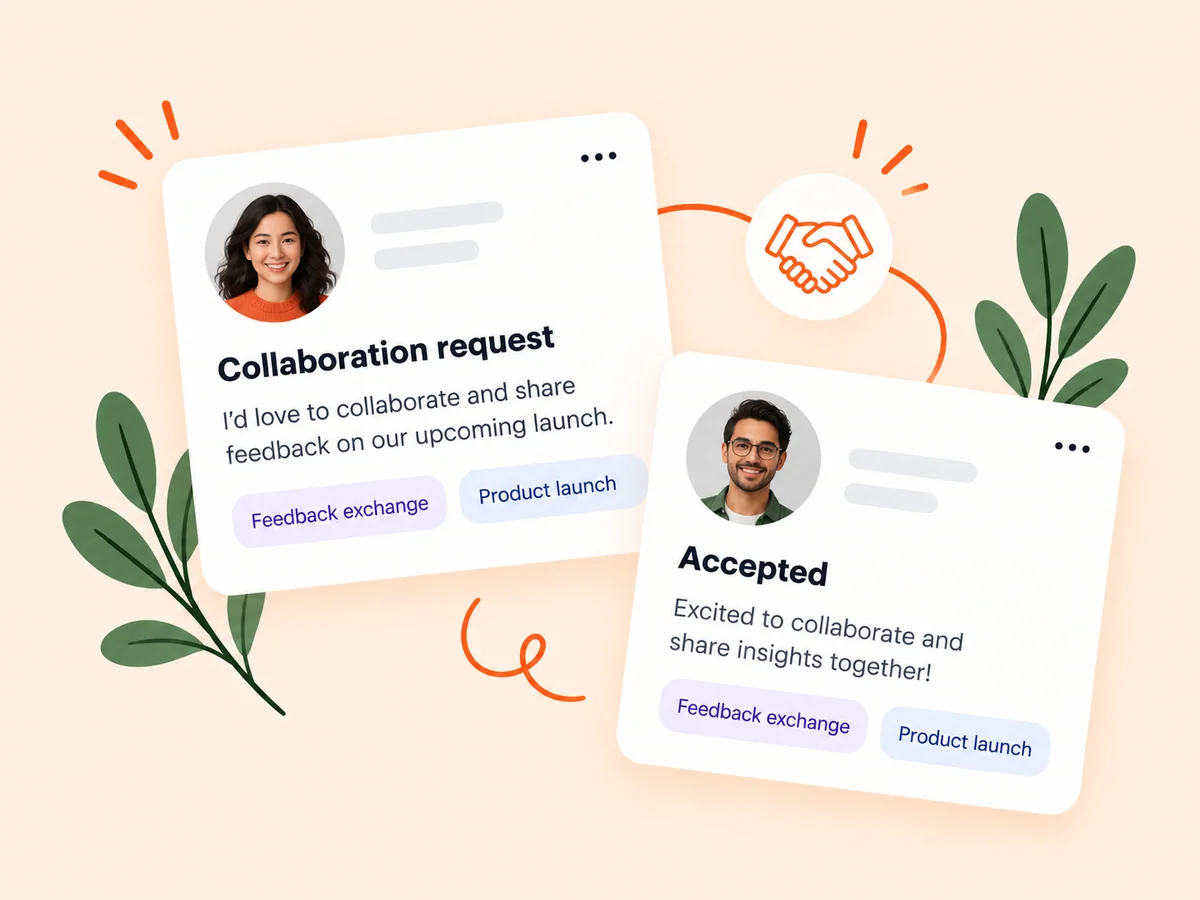
From idea to action
How to get started
Describe your current goals
Add the expertise you bring and the kind of help you are looking for. Keep the description specific to your current work. Describe a current decision, not every long-term ambition. Explain the customer, product stage, and kind of contribution that would help you make progress right now.
Explore the recommendations
Read the founder’s profile and product context before deciding whether a suggestion is useful to you. Consider both the stated fit and the founder’s current public information. An interesting background may be relevant even when it does not match every preference you described.
Make a focused introduction
Use the available contact or collaboration controls and respect the founder’s preferences. Propose a small, clear next step. Use the settings available for recommendations and introductions to reflect your preferences. Keep consent and contact boundaries clear when deciding how to continue a promising connection.
Find your starting point
Use founder matching for cofounders, peers, and feedback
Use matching when you can describe the kind of help that would move your work forward. A technical founder might want a product designer’s perspective on onboarding. A founder exploring a cofounder relationship might start by discussing the customer problem and each person’s availability. A small, clearly scoped conversation helps both people judge whether a larger collaboration is worth exploring.
Describe these needs directly rather than asking for a broad ideal partner. The more specific the conversation, the easier it is to understand why a recommendation might fit. Use the directory alongside matching when you want to explore a person’s work in more detail.
An example to adapt
Example: find perspective on a beta launch
Suppose you are preparing an early version of a planning tool. Your brief explains that you want feedback on the first project-creation flow and can offer technical feedback in return. A relevant suggestion introduces a founder whose public work includes onboarding experiments.
Read their profile and propose an exchange around one workflow, including the audience and the questions you want answered. If both people agree, use the conversation to settle what each will review. This is a hypothetical introduction pattern, not a claim that a match guarantees a reply or a successful collaboration.
Make the most of it
Keep your cofounder search and collaboration goals clear
Keep your founder matching context specific and current. Explain your product stage, the skills you bring, and the contribution you are seeking. When exploring a potential cofounder, discuss commitment and working preferences directly instead of treating a recommendation as proof of compatibility. Use an initial conversation to understand the person and agree on a manageable next step.
Review suggestions with an open but deliberate approach. Similarity alone is not enough to establish fit, and a different background can still offer useful insight. Use the available pause, preference, and contact controls when your capacity changes, and respect the same choices from other founders.
Good questions, clear answers
About Founder Matches
How can I find a cofounder on Buildside?
Explore Founder Matches and founder profiles, describe your goals and the help you need, and review people with complementary experience. Start a relevant conversation through the available introduction or collaboration options. Buildside can help you discover potential connections, but both people need to assess commitment, compatibility, responsibilities, and working expectations before choosing a cofounder relationship.
Is a match a guaranteed co-founder relationship?
No. A recommendation identifies a potential connection. The people involved decide whether their skills, expectations, and working styles fit. Treat a possible co-founder conversation as something to explore over time. Goals, availability, responsibilities, and working style need direct discussion beyond the information on a recommendation card.
Can I control how I am introduced?
Founder Matches includes preferences for introductions. Review your settings and the other founder’s available contact options before reaching out. Recommendation participation and introduction settings serve different purposes. Review the controls shown in your account and keep them aligned with whether you want to discover people, receive suggestions, or take part in introductions.
Do I need a matching brief to discover suggestions?
Recommendations can use eligible public profile information even without a matching brief. Adding a clear, current brief gives Buildside more context about what you need and what you can offer. It also helps you evaluate whether a suggested person is relevant to the decision you are working through.
What makes a useful first message to a recommended founder?
Refer to the shared interest or complementary experience that made the suggestion interesting. Explain your current challenge, include only the context needed to understand it, and propose a manageable next step. Give the recipient room to decline or suggest another approach without treating the recommendation as mutual consent.
Founder Matches