




















Saved posts
Save and bookmark startup community posts
Saved posts let you bookmark useful Buildside conversations and return when the lesson becomes relevant to your work. Keep founder experiences, product feedback, and launch discussions in a personal saved collection. Use those posts as references for a real decision, with the original context available when you want to understand why another builder chose a particular approach.
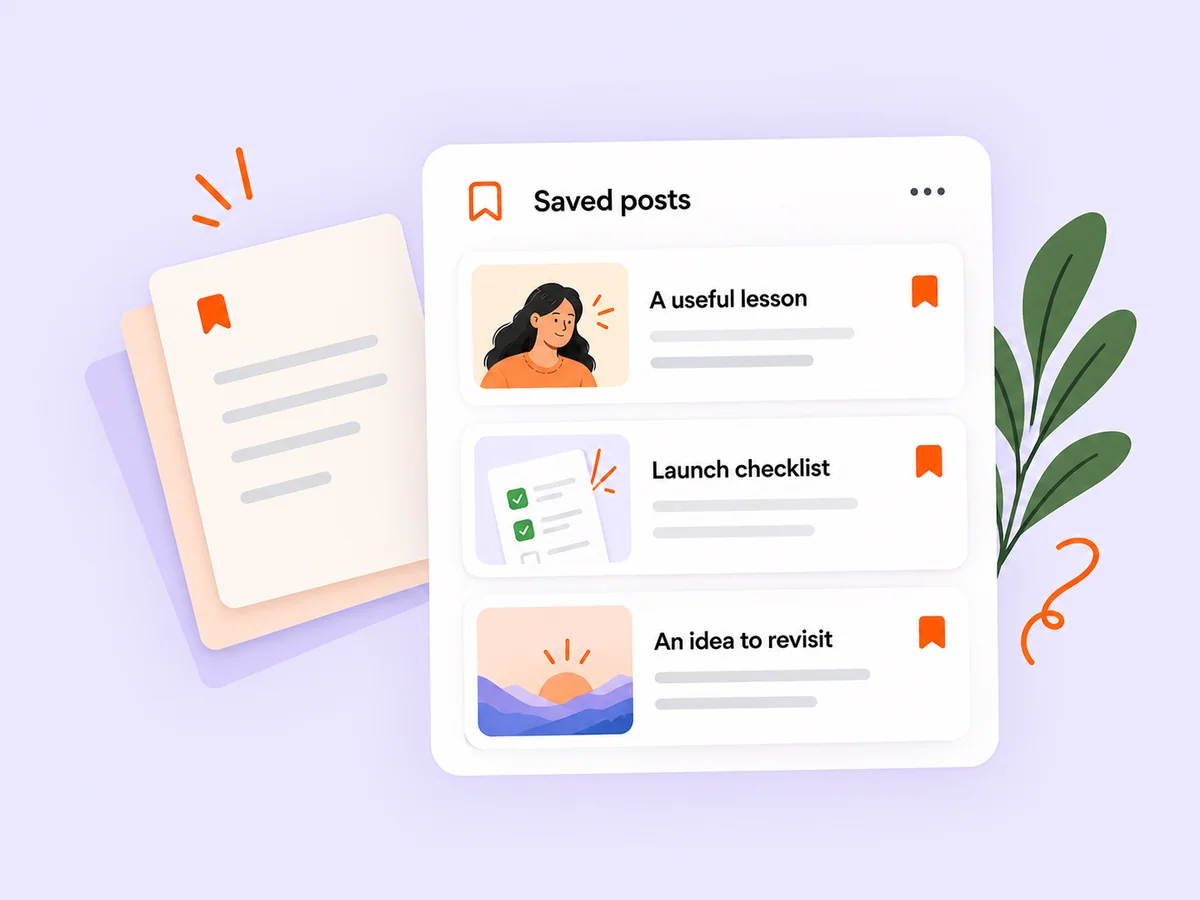
A closer look at Saved posts
Startup community advice often becomes useful after the day you first read it. A founder’s onboarding lesson might matter when you redesign setup; a launch discussion may help when you prepare your own release. Saving the post keeps a route back to that context. It is a bookmark to community content, separate from saving an unfinished post you are writing yourself.
Research often happens before you are ready to act on it. You might encounter an onboarding lesson while working on infrastructure or read a useful product question weeks before designing that workflow. Saving a post lets you return to the source later. The next step is to understand the original circumstances and decide what, if anything, applies to your own product.
Make it useful
Bookmark founder lessons with their original context
Save posts that explain the reasoning behind a result, not just the result itself. When you return, read the discussion and the founder’s context before applying the lesson to your own product. Different audiences and product stages can make the same tactic useful in different ways.
Choose posts with enough detail to assess the lesson later. A useful reference explains the audience, the decision, and the observation behind the conclusion. When returning to it, read the replies and check for later clarification. A saved headline is less informative than a source that preserves the reasoning behind the claim.
Explore the feed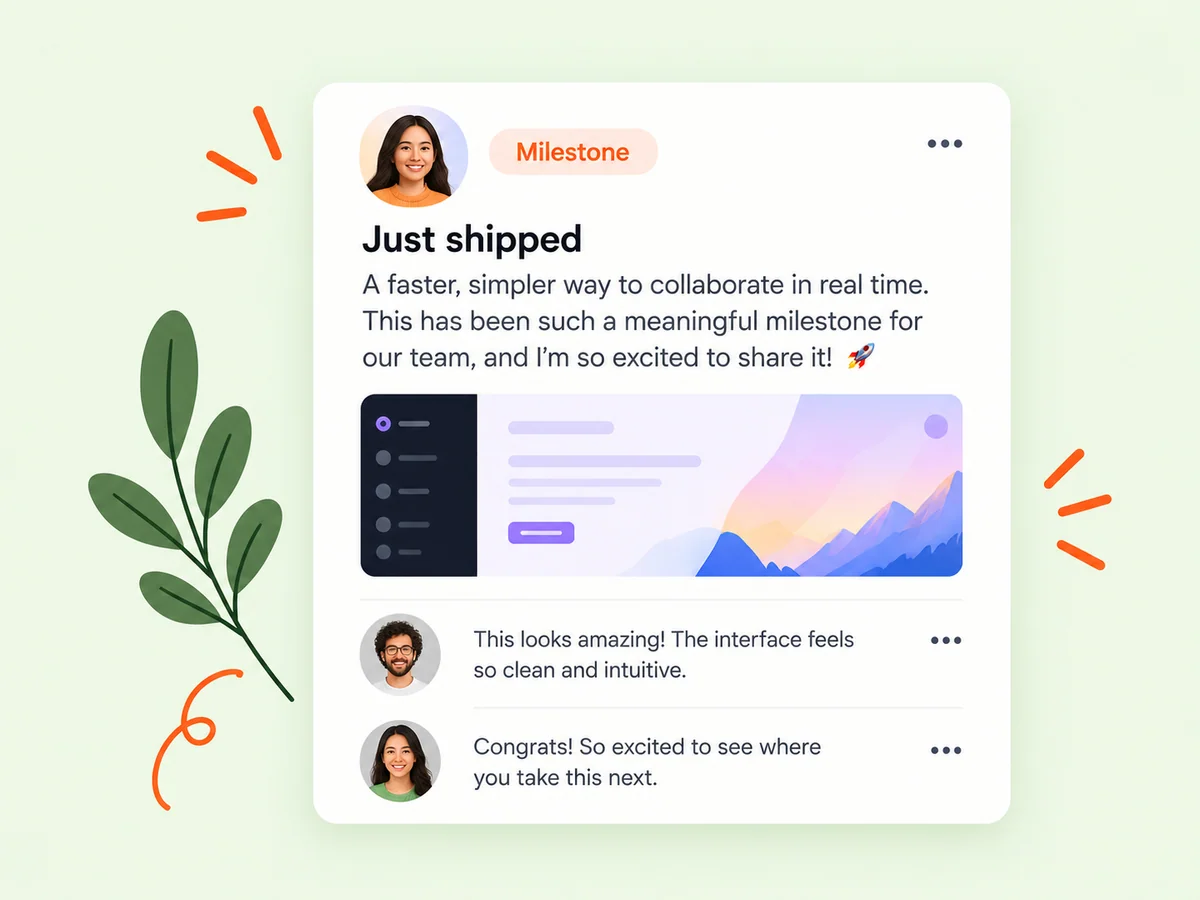
Keep building
Use saved product research to inform a new update
Use what you learn as a starting point for your own experiment or reflection. A saved post remains a reference; a draft is where you develop the story of your own work. Add your experience and acknowledge relevant inspiration when sharing a new update with the community.
Use the source as a prompt for your own question rather than a substitute for your own work. If another founder’s approach inspires an experiment, describe what you changed, the context you tested, and what you observed. Acknowledge the relevant inspiration while keeping your results distinct from the original author’s experience.
Explore saved drafts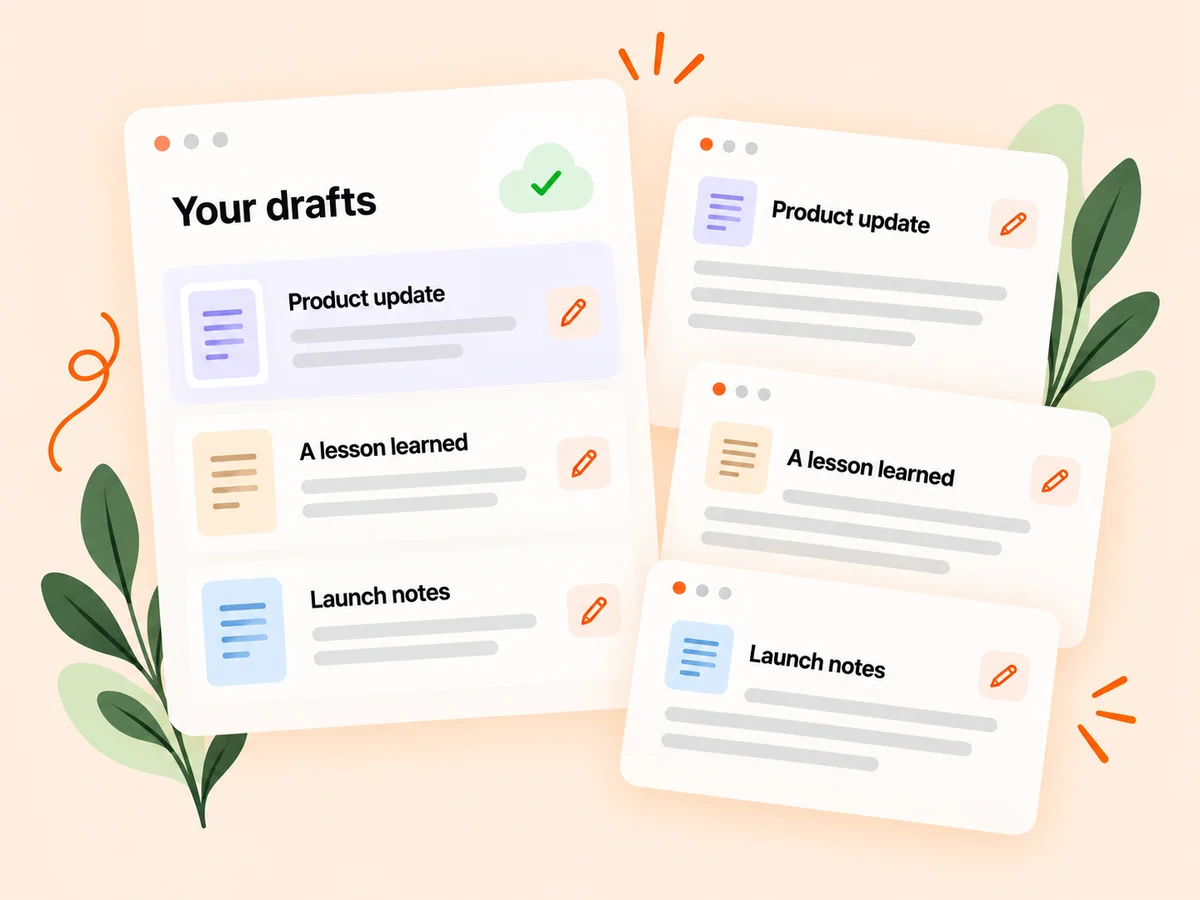
From idea to action
How to get started
Save a post that matters to you
Use the post’s save control when you find a lesson, idea, or discussion you want to revisit. Save a post because it relates to a real question, task, or future decision. Knowing why it matters makes the collection easier to use when you return.
Return to your saved collection
Open Saved posts through your profile to find the references connected to your account. Reopen the original post and discussion before applying the idea. Check the intended audience, timing, and limits so you do not carry a conclusion into a different context without noticing.
Review the lesson in context
Read the post and its discussion again before deciding how it relates to your current work. Choose one specific idea to investigate in your own product. Keep a record of what you test and use your own evidence when deciding whether the approach is useful.
Find your starting point
Save startup advice for a decision you expect to revisit
Save a post when it contains reasoning or evidence you may need again. A useful bookmark might describe a product experiment, explain a launch decision, or include a discussion that clarified a recurring problem. Return when you have a comparable question and check whether the original circumstances match. The purpose is to preserve a reference, not assume another founder’s experience will transfer unchanged.
Use the collection deliberately rather than saving every interesting update. A focused set of references is easier to revisit than a large backlog with no clear purpose. The important question is what the post can help you understand or investigate when you return.
An example to adapt
Example: revisit an onboarding lesson before a redesign
Suppose you save a founder’s explanation of why they reduced setup requirements. Later, when you redesign your own onboarding, reopen the post and examine the audience, task, and evidence behind that decision. Notice whether those conditions resemble yours.
You may choose a smaller experiment instead of copying the whole approach. After testing, write your own account of what happened and reference the inspiration where appropriate. This illustrative workflow keeps community learning connected to original investigation.
Make the most of it
Apply bookmarked advice to your own product situation
When revisiting saved posts, separate the original observation from the conclusion someone drew. Consider product stage, audience, and constraints before applying the lesson. Startup content is most useful as a starting point for your own questions and experiments. If you refer to another founder’s experience in a public update, acknowledge the source and explain what you tested in your own situation.
Return to useful references when you have a concrete question. Read the discussion and any clarification rather than relying on your memory of the headline. Use the source to sharpen the next decision, then let your own product evidence determine what you do.
Good questions, clear answers
About Saved posts
How do I bookmark Buildside posts to read later?
Use the save action on a useful community post, then return to the Saved area in your profile to revisit it. Saved posts can hold references to founder lessons, product feedback, and launch discussions. They are different from private post drafts: a bookmark points back to existing community content, while a draft preserves something you are preparing to publish.
Is saving a post the same as saving a draft?
No. Saved posts are references to existing community content. Saved drafts are your own unfinished posts that you have not published. Keep these workflows separate when preparing an update. Saving a useful source does not create an unfinished post in your composer or imply that the source’s experience is your own.
Can saving a post help with product research?
It can help you keep useful community observations in one place. Review the source context and combine it with evidence from your own product before acting. Treat saved material as a source of hypotheses and questions. Your audience, product stage, and constraints may differ from those of the founder who originally shared the lesson.
What kinds of posts are worth saving for later?
Save material that explains a decision you may need to make, a workflow you want to investigate, or a concrete lesson with enough context to assess. A useful saved post should help you recover the original reasoning, not merely repeat an appealing claim without evidence or conditions.
How can I use a saved post without copying another founder’s story?
Identify the question or approach that interests you, then investigate it in your own product. When you write about the result, describe your own decisions and evidence. Acknowledge relevant inspiration and avoid presenting someone else’s observations, wording, or customer experience as something you personally established.
Saved posts